


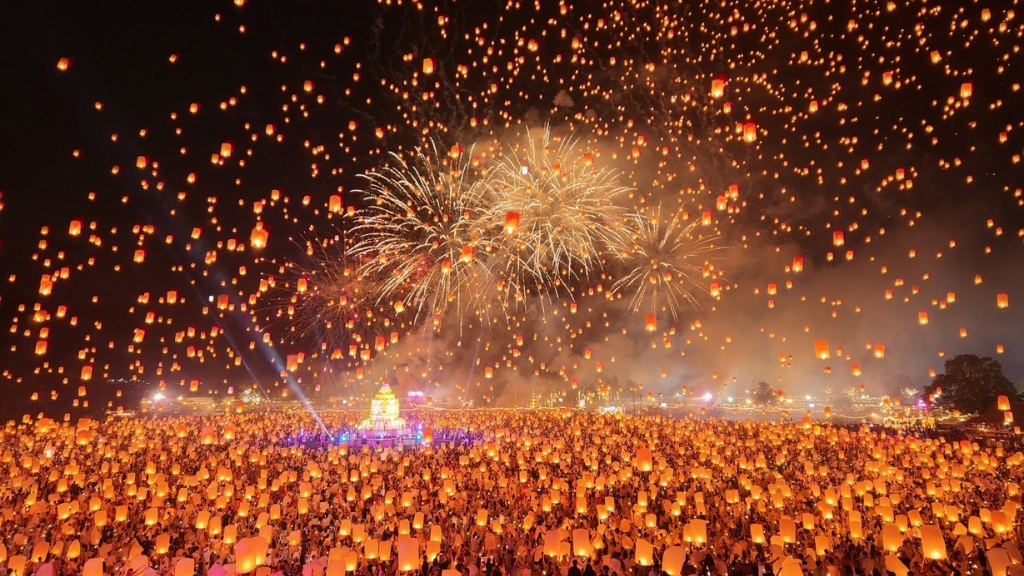
Every November, Chiang Mai takes on a different atmosphere as Loy Krathong and Yi Peng fill the city with candlelight, floating baskets and glowing lanterns. Along the Ping River, krathongs drift gently across the water, while thousands of lanterns lighting up the night sky create one of Thailand’s most memorable sights.
But a little local knowledge goes a long way. From choosing the right celebration and booking tickets in advance to understanding lantern release rules and avoiding transport disruptions, these practical tips will help you experience the festivals at their best.
Table of Contents
What are Loy Krathong and Yi Peng?
Every November, Thailand comes alive with candlelit waterways and glowing lanterns drifting into the night sky. In Chiang Mai, two traditional festivals, Loy Krathong and Yi Peng, take place around the same full moon, creating one of the most memorable cultural experiences in northern Thailand.
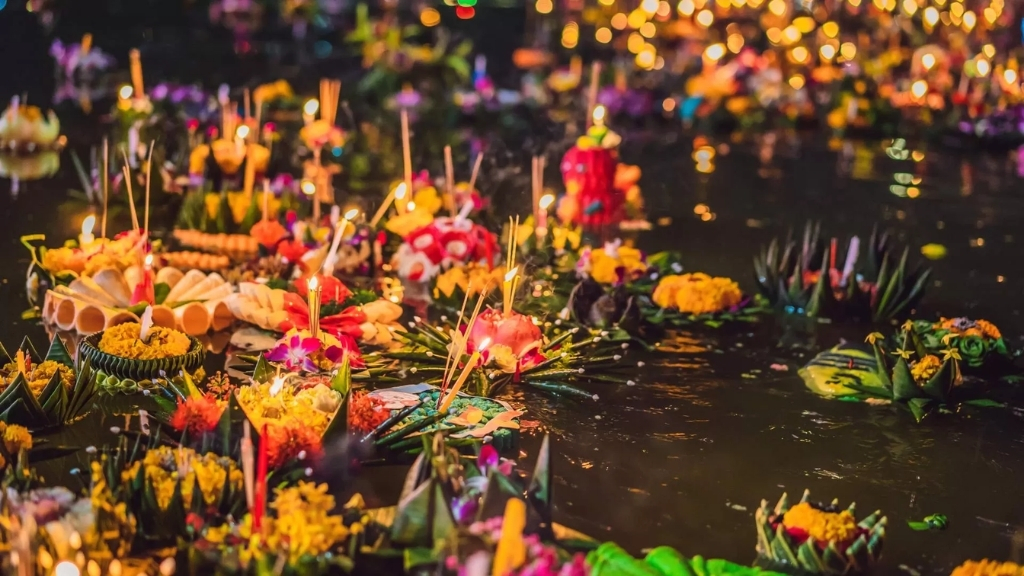
Loy Krathong is celebrated throughout Thailand. As night falls, people gather by rivers, lakes and ponds to set afloat small, decorated baskets known as krathongs, adorned with flowers, incense and a candle. The ritual is a way to pay respect to the water goddess, express gratitude for water and symbolically leave behind misfortune and negative feelings.
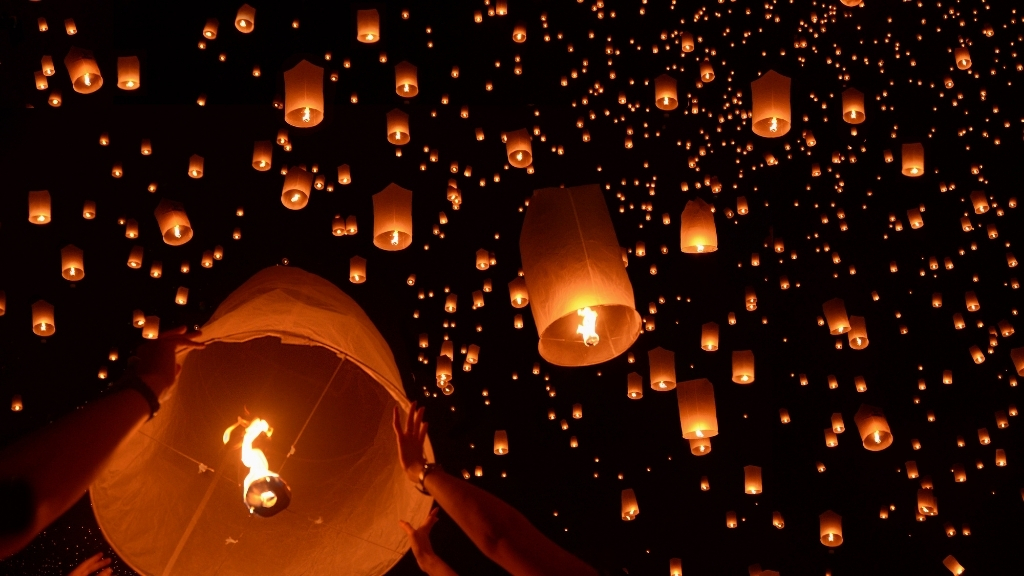
Yi Peng, rooted in the traditions of the Lanna people of northern Thailand, is particularly associated with Chiang Mai. Its most recognisable sight is the release of illuminated paper lanterns into the night sky. Traditionally linked to Buddhist merit-making and spiritual reflection, the lanterns also carry hopes and wishes for the future.
Although the two festivals are often celebrated around the same time in Chiang Mai, they have distinct traditions and symbolism.
| Loy Krathong | Yi Peng | |
|---|---|---|
| Main tradition | Floating decorated baskets on water | Releasing illuminated paper lanterns into the sky |
| Where to celebrate | Throughout Thailand | Mainly Chiang Mai and northern Thailand |
| Symbolism | Expressing gratitude and letting go of misfortune | Making merit and expressing hopes for the future |
| Atmosphere | Candlelit riversides and quiet moments of reflection | Lantern-lit skies and lively cultural celebrations |
In Chiang Mai, the main festival celebrations are scheduled for 24 and 25 November 2026. The two festivals overlap, and published guides do not always agree on which evening corresponds to each celebration. If you plan to attend a specific ceremony or ticketed lantern-release event, check the organiser’s official schedule before making arrangements. the parade night with the Tourism Authority of Thailand (TAT) or the municipality in early November.
Festival itinerary: How to spend two days in Chiang Mai
The main celebrations of Loy Krathong and Yi Peng in Chiang Mai take place on 24 and 25 November 2026. If you have two days, the best approach is to combine a ticketed sky lantern event outside the city with an evening exploring the traditional festivities around the Old City and Ping River. Check the confirmed schedules before assigning each activity to a specific date
| Day | During the day | Evening |
|---|---|---|
| Day 1: Sky lantern release | Explore Chiang Mai’s Old City in the morning, visit Wat Chedi Luang and have lunch before heading to your shuttle pickup point. | Attend a ticketed lantern-release event outside the city, with cultural performances, dinner and the coordinated release. |
| Day 2: City festival and Loy Krathong | Visit Wat Phan Tao and the temples around the Old City. Buy a krathong from a local stall and check the official parade schedule. | Find a viewing spot near Tha Phae Gate or along the confirmed parade route, then walk towards the Ping River to experience the riverside celebrations and float your krathong where permitted. |
The order can be reversed if your ticket is for the second night. If you prefer not to pay for a lantern-release event, spend both days exploring Chiang Mai at a relaxed pace and dedicate the main festival evening to the free city celebrations.
Day 1: Join a ticketed sky lantern release
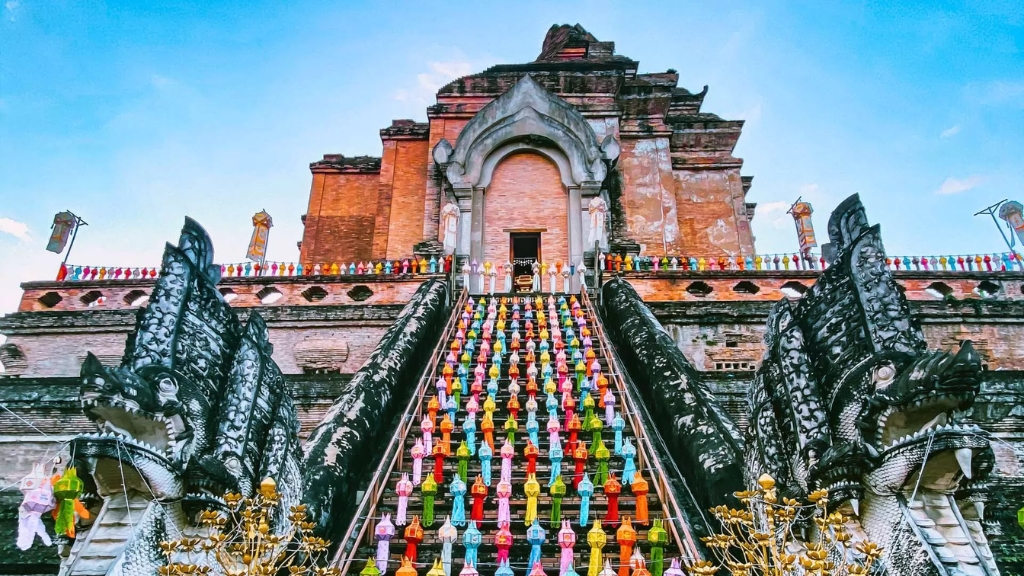
Start the morning with a walk through the Old City rather than planning a full day of sightseeing. Wat Chedi Luang is a good stop for its historic chedi and Lanna architecture. Have lunch nearby, return to your hotel if necessary, and leave plenty of time to reach the designated shuttle pickup point.
Ticketed events take place outside central Chiang Mai. For 2026, the CNX Loy Krathong Sky Lantern Festival is advertised for 24–25 November at Miracle Land in Mae Taeng, with shuttle transfers and an afternoon-to-evening programme. Check your booking carefully, as different organisers use different venues and pickup points
Useful tips
- Book your ticket and return transfer in advance. Do not assume you can arrange transport back to the city easily after the event.
- Follow the departure time printed on your ticket, not an itinerary found online.
- Bring a screenshot of your e-ticket and the pickup address.
- Keep the rest of the day free. The event involves several hours of performances, dining and ceremonies, followed by a potentially slow return journey.
Day 2: Explore the free festival in the city
Late afternoon: Wat Phan Tao and the Old City
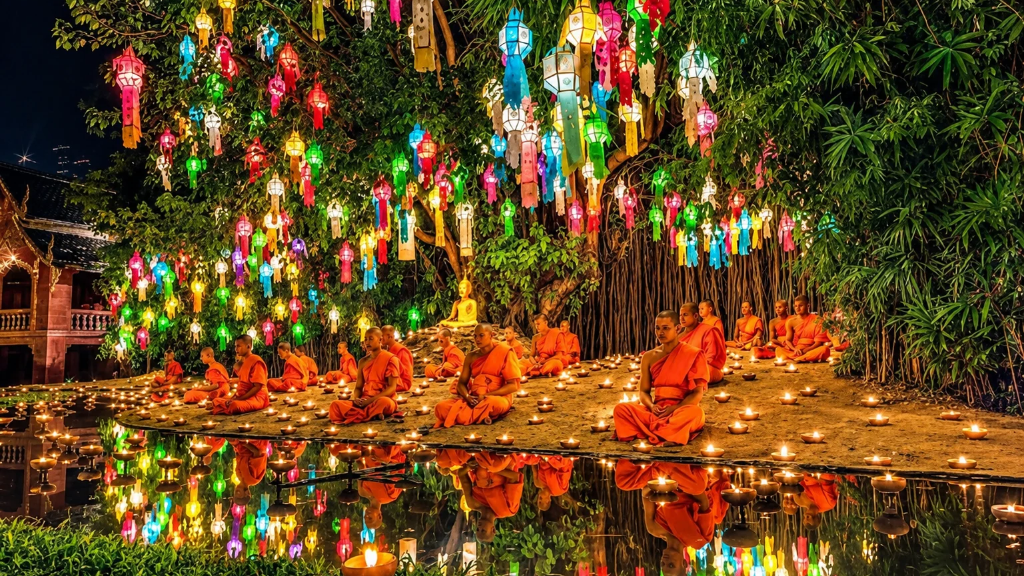
Visit Wat Phan Tao before dusk to see its traditional wooden architecture in daylight. During festival celebrations, temples and surrounding streets may feature decorative lanterns and candlelight. Access and displays vary, so follow any temporary restrictions and avoid spending too long in a queue.
Early evening: Tha Phae Gate and the parade route
Head towards Tha Phae Gate or the section of Ratchadamnoen Road included in the official parade route. Arrive early if you want to watch the procession from the roadside. Rather than trying to follow the parade through dense crowds, choose one viewing point and stay there.
Later in the evening: The Ping River
After the parade, walk towards the river for the Loy Krathong celebrations. Nawarat Bridge is a well-known gathering point, but it can become extremely crowded. If access is restricted or the area feels too congested, look for an alternative permitted riverbank nearby.
Buy a krathong made from natural materials such as banana trunk and banana leaves. Follow local instructions about where to release it, and never enter the river or lean over an unsafe edge to get a photograph.
Useful tips
- Wear comfortable shoes: walking is often more practical than taking a short taxi ride through festival traffic.
- Carry some cash for snacks and krathong stalls, but keep valuables secure in crowded areas.
- Do not assume you can release a sky lantern in the city. Use only authorised event venues and follow local restrictions.
- Check the municipal programme for the parade time and route before leaving your hotel. Previous years’ schedules are useful references, not guarantees for 2026.
Two days are enough to experience both sides of the festival without rushing from one attraction to another. For a memorable Thailand travel experience, reserve the first evening for your booked lantern event and the second for exploring Chiang Mai’s lively streets, temple decorations and candlelit riverside celebrations. If you release a krathong, place it gently on the water from the riverbank or steps, and make sure it contains only biodegradable materials.
Where to stay and getting around Chiang Mai during the festival
Choosing the right place to stay in Chiang Mai can make Loy Krathong and Yi Peng much easier to enjoy. During the festival, traffic builds up around popular gathering points, some roads close to vehicles and finding a ride after the evening celebrations can take longer than expected.
For most first-time visitors, staying within walking distance of the Old City is a practical choice. It makes visiting temples, watching the parade and exploring the festival streets easier without relying on transport during the busiest hours.
Where to stay in Chiang Mai
Choosing where to stay in Chiang Mai during Loy Krathong and Yi Peng can make a real difference to your festival experience. Some areas put you within walking distance of temple ceremonies, parade routes and the Ping River, while others offer a quieter stay but require more planning to get around
Old City and Tha Phae Gate
The Old City is a convenient base for exploring Chiang Mai’s temples and joining the free festival celebrations. Restaurants, cafés and guesthouses are easy to find, while Ratchadamnoen Road and Tha Phae Gate provide access to some of the main festival activities.
- Best for: First-time visitors, couples and travellers who want to experience the traditional city celebrations.
- Where to look: Accommodation within walking distance of Tha Phae Gate or Ratchadamnoen Road, preferably on a quieter side street.
- Useful tip: Check whether the hotel remains accessible during parade road closures. Staying close to the celebrations is convenient, but a property directly beside a crowded gathering point may be difficult to reach with luggage.
Near the Ping River
The riverside is a good option for travellers who want to experience Loy Krathong, when people gather to float decorated baskets on the water. Staying nearby means less travel at the end of the evening and easier access to riverside restaurants.
- Best for: Visitors who want to focus on the river celebrations and candlelit atmosphere.
- Where to look: Accommodation within walking distance of a designated riverside festival area.
- Useful tip: Check which river access points will be open during the festival. A river-view room does not necessarily guarantee convenient access to the places where krathongs can be released.
Nimmanhaemin
Nimmanhaemin has a more contemporary atmosphere, with cafés, boutiques, restaurants and nightlife. It suits travellers who prefer a lively neighbourhood outside the historic centre, although reaching the main festival areas generally requires transport.
- Best for: Visitors interested in cafés, shopping and nightlife, or those whose ticketed event has a convenient pickup point nearby.
- Where to look: Accommodation within easy reach of your confirmed shuttle meeting point.
- Useful tip: Do not assume every lantern-release event departs from MAYA mall. Pickup locations depend on the organiser and ticket category, so check your booking before choosing where to stay.
When to book your accommodation
Accommodation demand increases around the festival, particularly for small guesthouses in the Old City and boutique hotels near the river. Booking once your dates are confirmed gives you more choice of location and room type.
Before confirming a reservation, keep these points in mind:
- Compare the total cost. Check taxes, breakfast, cancellation fees and minimum-stay requirements rather than comparing nightly rates alone.
- Look for flexible cancellation. A refundable rate can be useful if your flight or ticketed event schedule changes.
- Check the exact location. A hotel advertised as being in the Old City may still be a considerable walk from your preferred parade viewing point.
- Confirm late check-in. If your flight arrives in the evening, make sure the property can accommodate your arrival time.
- Match your stay to your itinerary. Two nights may be sufficient to experience both festival evenings, provided your arrival and departure times allow it. An extra night is worth considering if you arrive late, have an early flight or expect to return from a ticketed event well after the ceremony.
Getting to Chiang Mai
Chiang Mai International Airport (CNX) is the most convenient arrival point for most visitors, particularly those travelling via Bangkok or another regional hub. Travellers coming from Bangkok can also consider the overnight train. Sleeper services offer an alternative to flying, but popular departures may sell out during busy travel periods. Book transport once your dates are settled, especially if you need to reach a ticketed event on a specific evening. Allow a buffer between your arrival and the event rather than relying on a flight or train arriving just a few hours beforehand.
If you plan to fly out the morning after a lantern release, consider the late return journey before choosing your departure time. Check your airline’s check-in requirements and allow sufficient time to reach the airport.
Getting around during the festival
Walking around the Old City
Walking is often the most practical way to move between temples, parade viewing areas and nearby festival streets once the evening crowds arrive. Wear comfortable shoes, carry water and allow extra time to cross busy streets.
Temporary barriers, road closures and pedestrian restrictions may change the usual routes. Follow local signs and police instructions rather than relying entirely on a map.
Grab, Bolt and red songthaews
Ride-hailing services and red shared taxis can be useful for daytime journeys or trips between neighbourhoods. However, expect longer waits and possible fare increases during peak hours. Drivers may also need to collect passengers away from restricted roads.
Arrange your ride before the streets become crowded and agree on a practical pickup point outside the busiest areas. For short journeys around the festival centre, walking may be faster and cheaper.
Shuttle transfers to ticketed events
For a ticketed sky lantern release outside Chiang Mai, the organiser’s return shuttle is usually the most practical option when it is included in the ticket. The venue may be tens of kilometres from the city, and finding a driver for the return journey after the ceremony can be difficult.
Before the event, confirm the pickup address, boarding time, return arrangements and any luggage restrictions. Save your ticket and meeting-point instructions offline, and arrive early enough to find the correct departure area. If you are travelling independently, arrange return transport in advance rather than assuming a vehicle will be available after the event.
Scooters and rental cars
Renting a scooter can be convenient for exploring Chiang Mai outside the festival period, but navigating unfamiliar roads, dense crowds and temporary closures is more difficult during the celebrations. Parking near popular gathering points can also be limited.
Unless you are experienced, properly licensed and comfortable with local traffic, other transport options are preferable. If you rent a vehicle, park legally outside the busiest areas and walk the final stretch. Before leaving your hotel each day, check the festival programme, save your destination and return route, and carry enough cash for small purchases. A little preparation can save considerable time when the celebrations are at their busiest.
What to prepare before you go
A little preparation can make the Loy Krathong and Yi Peng celebrations in Chiang Mai much easier to enjoy. Book any ticketed events in advance, check the latest local announcements and plan how to get back to your accommodation before the crowds build up.
Before you travel
- Book ticketed events through official channels. Some lantern-release ceremonies take place at designated venues outside central Chiang Mai and require advance tickets. Check the event date, location, transport arrangements and what the ticket includes before paying.
- Save your ticket offline. Keep a screenshot or downloaded copy on your phone in case the mobile network becomes slow in crowded areas.
- Check your flight status regularly. Lantern releases can affect aviation operations around Chiang Mai during the festival. Check your airline’s updates and official airport notices, especially if you are flying on 24 or 25 November 2026. Leave enough time for airport transfers and avoid tight connections.
- Look for updated festival announcements. Check information from Chiang Mai authorities and the Tourism Authority of Thailand for the latest programme, road closures, designated celebration areas and lantern-release restrictions.
- Plan your return journey. Roads around popular venues and the old city can become congested. Confirm your transport in advance rather than relying on finding a taxi or ride-hailing service at the end of the evening.
What to pack for the festival
Chiang Mai can feel cooler after dark in November, particularly if you spend several hours outdoors. A few practical items will help you stay comfortable.
- A light jacket or scarf: Useful for the cooler evening air.
- Comfortable walking shoes: You may need to walk between crowded streets, temples and riverside areas.
- Modest clothing: Bring clothes that cover your shoulders and knees if you plan to visit temples.
- Small Thai baht notes: Handy for food stalls, small purchases and local transport.
- A secure crossbody bag: Keep your phone, cash and other valuables close in busy areas.
- A power bank: Useful for checking maps, tickets and transport details throughout the evening.
- Mosquito repellent: Helpful when spending time beside the river or in outdoor areas.
- A reusable water bottle: Stay hydrated while walking between festival locations.
There is no need to bring a lighter for your krathong or lantern. Follow the instructions provided by vendors and event organisers, particularly where candles, open flames or lantern releases are involved.
Sky lantern rules and flight disruptions
Sky lantern releases are subject to local regulations and must not be treated as an unrestricted festival activity. Chiang Mai authorities introduced strict controls for Yi Peng in previous years, including designated no-release areas and penalties for unauthorised releases. The precise rules for 2026 should be checked through official announcements closer to the festival.
Do not release a lantern simply because it is available to buy. Choose an authorised event if you want to take part in a mass release, and follow the organiser’s instructions. Fireworks and other activities involving open flames may also be restricted in certain areas.
Lantern activity can also affect flights at Chiang Mai International Airport. An official aviation notice has identified periods of sky lantern activity affecting airport operations on 24 and 25 November 2026. This does not mean that every flight will be cancelled, but schedules may be affected.
Before travelling, check directly with your airline and allow extra time for your journey to the airport. If your itinerary is flexible, avoid making a tight connection around the festival dates. Do not assume that every flight outside the evening period will operate as usual.
Temple etiquette during the festival
Temples are important places of worship during Loy Krathong and Yi Peng, not simply sightseeing stops. Visitors can help preserve the atmosphere by following a few basic rules.
- Cover your shoulders and knees when entering temple grounds or buildings.
- Remove your shoes wherever instructed.
- Keep your voice low during prayers and ceremonies.
- Ask permission before photographing monks or local people, especially during religious activities.
- Follow signs and instructions from temple staff.
- Avoid touching monks if you are a woman, in keeping with local religious customs.
A respectful attitude makes it easier to appreciate the spiritual side of the celebrations, beyond the lanterns and photographs.
How much does Loy Krathong and Yi Peng cost?
For a three-night trip to Chiang Mai during Loy Krathong and Yi Peng, budget around $700–1,300 per person. This estimate covers flights, accommodation, meals, local transport and some sightseeing, but excludes a ticketed sky lantern event.
Travelling on a budget may cost around $700–850, while a more comfortable trip with better accommodation and extra activities could reach $1,000–1,300 or more. Prices depend on when you book, where you stay and how you spend your time in Chiang Mai. If you want to attend an organised mass lantern release, allow an additional $150–200 per person for an entry-level ticket. Some 2026 events include return transfers, dinner and lanterns, but inclusions vary by organiser.
Loy Krathong and Yi Peng are among the most memorable times to visit Chiang Mai, when candlelit krathongs drift along the river and the city comes alive with Lanna traditions. With a little planning and respect for local customs, it is easier to enjoy the celebrations beyond the crowds and discover what makes these festivals so special.
Thinking of including Chiang Mai in your next trip to Thailand? Explore the festival at your own pace, or get in touch with Hanoi Voyages to plan a tailor-made journey that combines Yi Peng with northern Thailand’s temples, mountain landscapes and local experiences.




 Google
  Facebook
  Tripadvisor
  Trustindex


