


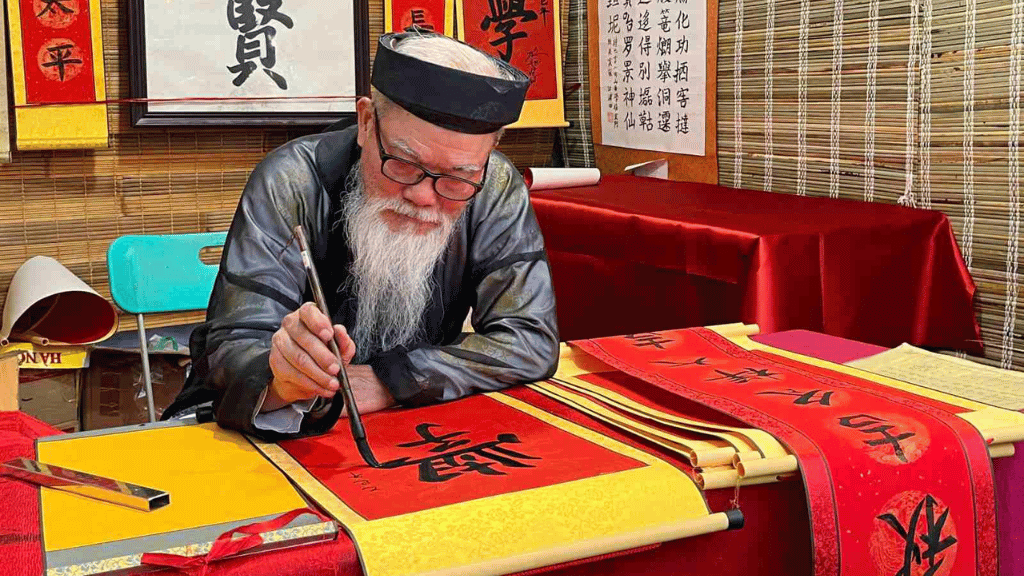
During a walk through Vietnam, it is easy to come across red scrolls, handwritten characters and calligraphers quietly working with ink and brush. These elegant strokes are not simply decorative. They are part of a cultural tradition that has long connected writing with art, personal wishes and Vietnamese values.
Vietnamese calligraphy offers a different way to understand the country’s culture. Behind each character lies a combination of language, symbolism and artistic expression, with words often chosen to convey wishes for happiness, prosperity, longevity or peace. Exploring this tradition therefore means looking beyond the beauty of the characters to discover the meanings and stories they carry.
Vietnamese calligraphy took root during the period of Chinese domination, roughly from the 2nd century BC to the 10th century AD. The country adopted Chinese characters, known as “chu Han”, as its official script. The Vietnamese made the art their own and used it to transcribe their language and thought. Around the 10th century, they created “chu Nom”, an original script derived from Chinese characters but adapted to Vietnamese sounds and vocabulary. For nearly a thousand years, chu Han and chu Nom coexisted and gave rise to a rich calligraphic tradition, engraved on steles, temples and manuscripts.
From the 17th century, Western missionaries, notably Alexandre de Rhodes, developed a romanisation of the Vietnamese language: “Quoc Ngu”, based on the Latin alphabet. It did not truly replace chu Han and chu Nom in administration and education until the early 20th century, with the last mandarin examination using chu Han held in 1919. It then became the official national script. This transition revolutionised the practice of calligraphy by giving it a new graphic medium. A new art of calligraphy was born, blending traditional techniques with the modern alphabet.
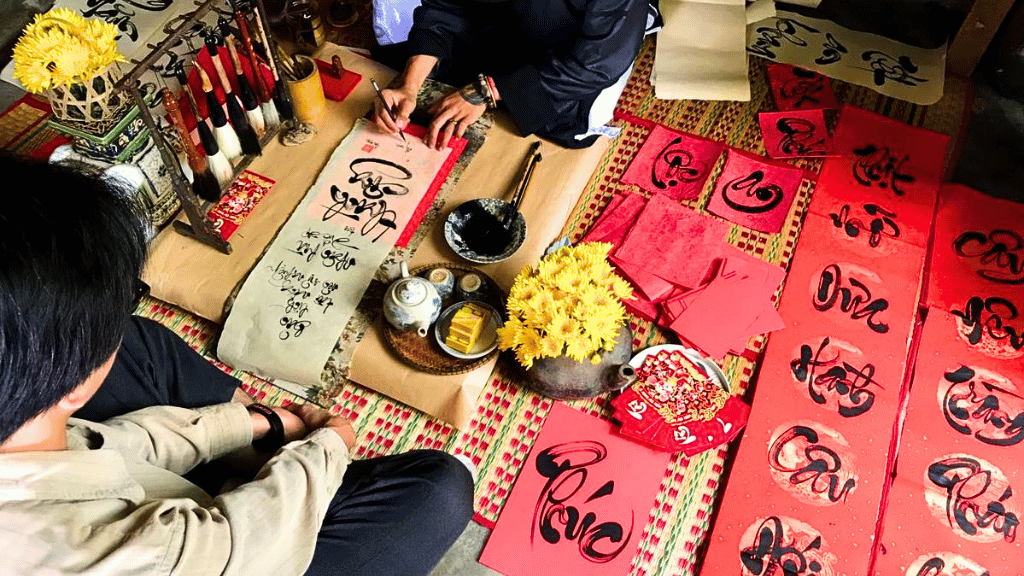
Today, calligraphy in Vietnam, called “Thu Phap”, is a traditional art that keeps all three scripts alive: chu Han, chu Nom and Quoc Ngu. It is far more than simple writing. It is a true form of meditation that demands patience and concentration and reflects the personality of the calligrapher.
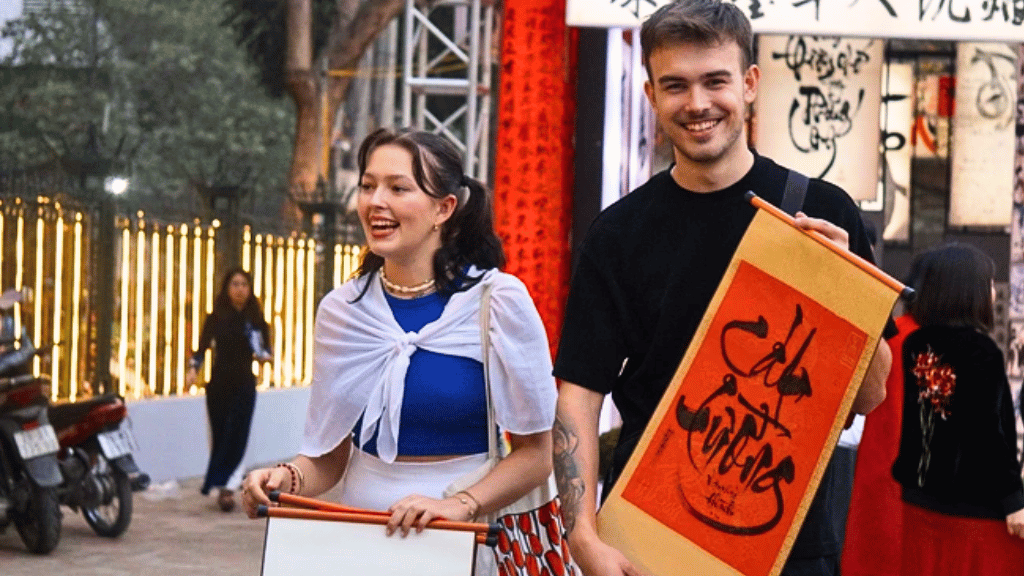
Modern Vietnamese calligraphy is not content to survive with ink and paper. It is reinventing itself. Contemporary artists are exploring new techniques and bringing in digital tools and new materials. They draw on international influences such as Japanese minimalism and Western abstract expressionism while upholding ancestral traditions. This openness to outside influences enriches the art through the creativity of young talents and makes it more dynamic and relevant in today’s world. Yet this creativity remains respectful of the past even as it looks to the future. Some calligraphers also promote traditional Vietnamese culture by teaching the art to younger generations.
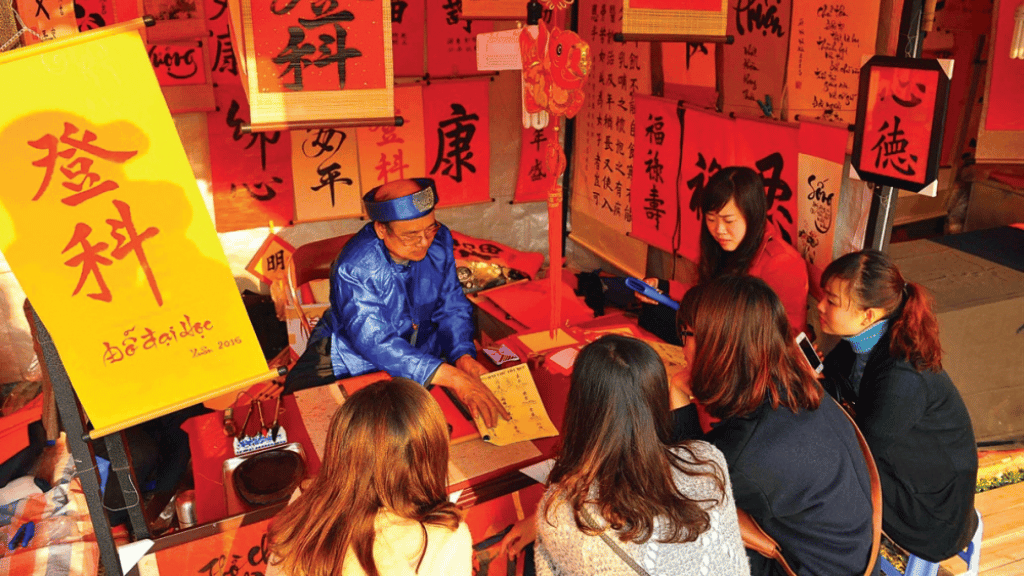
Another cherished custom is “xin chu”, the tradition of asking for a calligraphy “letter”. During Tet, the Lunar New Year, it is customary to receive and offer good wishes for peace, happiness, success, health, prosperity, luck and everything one hopes for in the coming year. At the Temple of Literature in Hanoi, calligraphy is a living tradition and a scholarly art deeply rooted in the history of Vietnam’s first university, the Quoc Tu Giam, founded in 1076. The master calligraphers there make themselves available to the public. In the traditional manner, with brush and Chinese ink, they write out each person’s wishes to be offered to loved ones for the year ahead.
Every year at Tet, usually in late January or early February depending on the lunar calendar, the Hoi chu Xuan (Spring Calligraphy Festival) takes place around Van Lake within the Temple of Literature. Visitors who would like to try the art for themselves can sign up for introductory calligraphy classes in Hanoi.



 Google
  Facebook
  Tripadvisor
  Trustindex


