


Vietnam has just added another feather to its culinary cap. On September 23, Taste Atlas, one of the world’s best-known food guides, released its Top 100 Asian Beverages, and four Vietnamese drinks made the cut: iced milk coffee, black coffee, egg coffee and lotus tea. India’s mango lassi, a creamy blend of yogurt and fresh mango, took the top spot. For anyone travelling in Vietnam, the list doubles as a handy tasting guide, with something for every hour of the day.
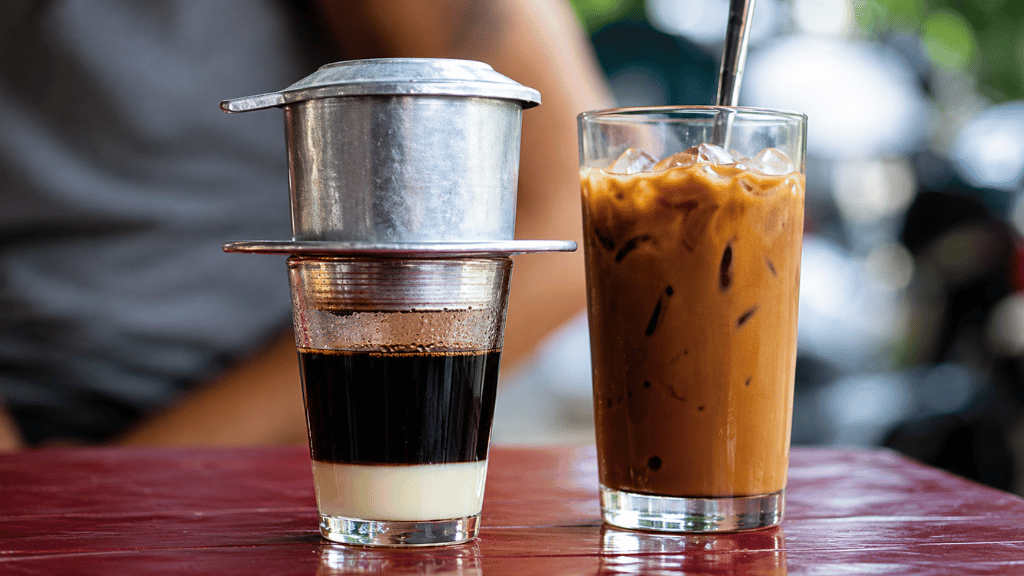
Leading the Vietnamese pack is iced milk coffee, which came in tenth overall with a score of 4.2 out of 5. Taste Atlas sums it up as strong coffee, sweet condensed milk and ice. The classic recipe calls for Vietnamese-grown Robusta beans, ground medium to coarse and brewed through a small phin filter perched on a tall glass. Robusta is bolder and more bitter than Arabica, and the condensed milk smooths out those sharp edges. Since the coffee drips slowly, the trick is to be patient: let it finish, stir, then add the ice. You’ll find it everywhere from corner cafés to sunny city terraces, which makes it the perfect antidote to a hot, humid afternoon.
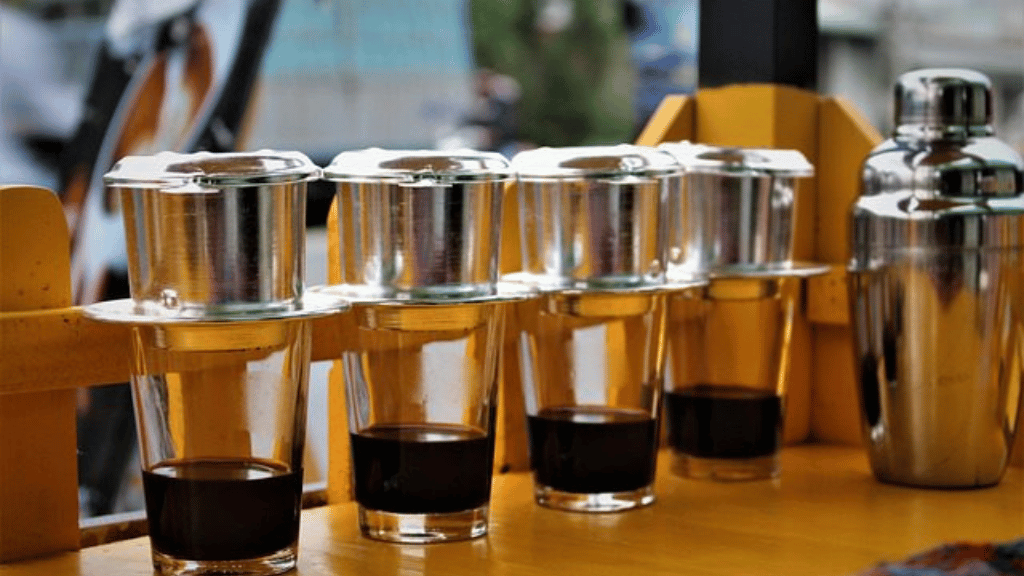
Black coffee earned its own spot too, a sign that Vietnam’s coffee culture has fans well beyond those who like it sweet. It follows the same tradition as its iced cousin, with Robusta and a phin filter, but delivers a more intense, unapologetically bitter cup. It suits travellers who like their coffee strong and want to taste the bean itself, with no milk or sugar to hide behind. Served hot or over ice, it is a great place to start if you want to understand the Vietnamese love of coffee.
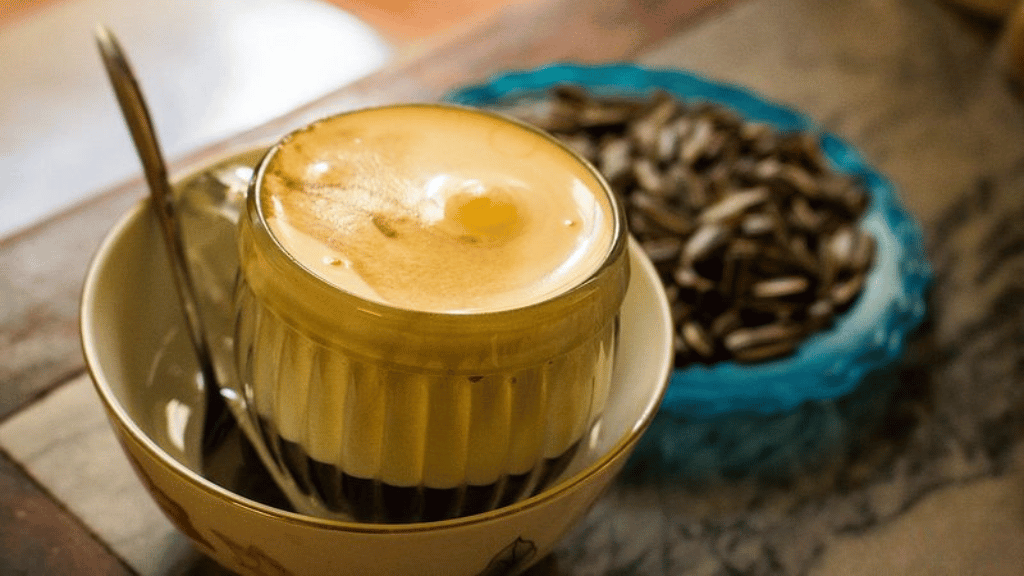
Then there is egg coffee, a Hanoi icon with a story to match. Taste Atlas traces it back to the 1950s, when Nguyễn Văn Giảng first came up with the recipe. More than seventy years on, his café in Hanoi is still serving customers under its third generation of owners. The drink is a coffee crowned with a silky cream of egg yolk whisked with sugar and condensed milk. The texture is closer to a light mousse, so it feels as much like dessert as a drink and is best enjoyed slowly, by the spoonful or in small sips. Settling into one of these cafés, some tucked inside old houses in the heart of the city, gives you a taste of Hanoi’s character and a slice of its history in a single cup.
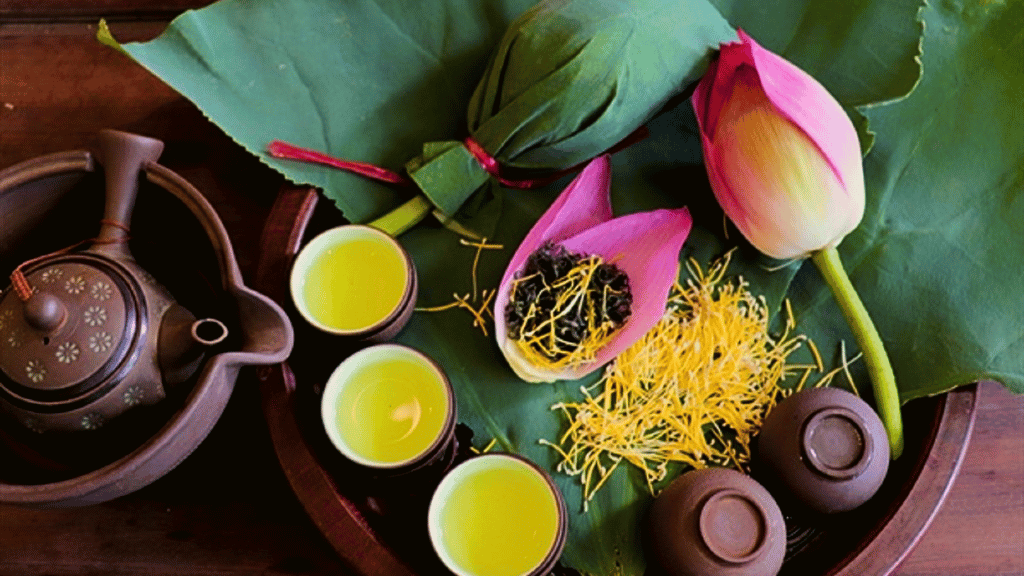
Finally, lotus tea occupies a special place in Vietnamese culture. It is poured at traditional festivals and important celebrations. According to Taste Atlas, the finest (and priciest) lotus tea comes from the West Lake area of Hanoi. This delicate infusion, scented with lotus blossoms, is traditionally served in small cups meant to be shared around the table. Its gentle floral aroma is a world away from the punch of Vietnamese coffee and invites you to slow down. It also makes a charming souvenir, ideally bought from local producers or specialist shops in Hanoi, particularly around West Lake.
As for the ranking itself, it draws on 12,173 ratings, of which 7,809 were counted as valid by the system, coming from online users and food experts. Its aim is to showcase local dishes and drinks, celebrate culinary heritage and tempt readers to try specialities they have never tasted. The starting list was compiled from existing ratings, awards and local recommendations as well as press coverage, blogs and consumer reviews.




 Google
  Facebook
  Tripadvisor
  Trustindex


