


In the northern highlands, traditional textiles are closely connected to the identity and daily life of local communities. Among the most distinctive examples is the Hmong tradition of working with indigo, a craft passed down through generations and still practised in several mountain villages today.
Indigo dyeing in Vietnam begins with the leaves of the indigo plant, which are transformed into natural blue dyes used to colour clothing and traditional fabrics. Achieving the desired shade requires patience and repeated steps, from preparing the dye and soaking the cloth to drying it and repeating the dye baths. More than a way of colouring fabric, this craft reflects Hmong knowledge, craftsmanship and cultural heritage. Read on to discover how the process works, what indigo means in Hmong culture and where you can experience this tradition in northern Vietnam.
Table of Contents
Indigo dyeing and its place in Hmong culture
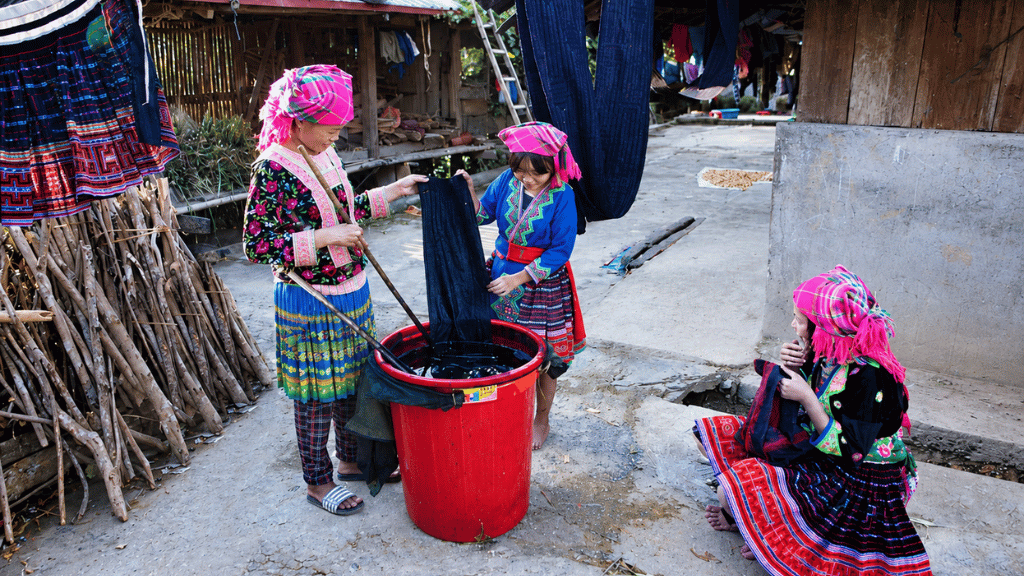
For the Hmong communities of northern Vietnam, indigo dyeing is more than a traditional way of colouring fabric. It is part of a broader textile tradition that connects plants, clothing, craftsmanship and cultural identity. To understand how this deep blue is made and why it remains important, it is worth starting with the plant itself.
The indigo plant is a small leafy shrub that can easily blend into the gardens and fields around Hmong homes. During the warmer, wetter months, particularly from May to August, the plants grow well in the humid conditions of the northern mountains. Families harvest the leaves when they are ready and begin preparing them for dyeing, following techniques that have been refined and passed down through generations.
What indigo blue means to the Hmong
Indigo blue has an important place in Hmong textile traditions and is closely associated with traditional clothing. For many Hmong communities, making and wearing indigo-dyed garments is a way of maintaining a visible connection with their cultural heritage.
The colour is also closely linked to the natural environment in which Hmong communities have lived for generations. Producing it requires knowledge of local plants, seasonal conditions and traditional dyeing techniques. The finished fabric therefore represents more than an aesthetic choice: it reflects a relationship between people, nature and inherited craftsmanship.
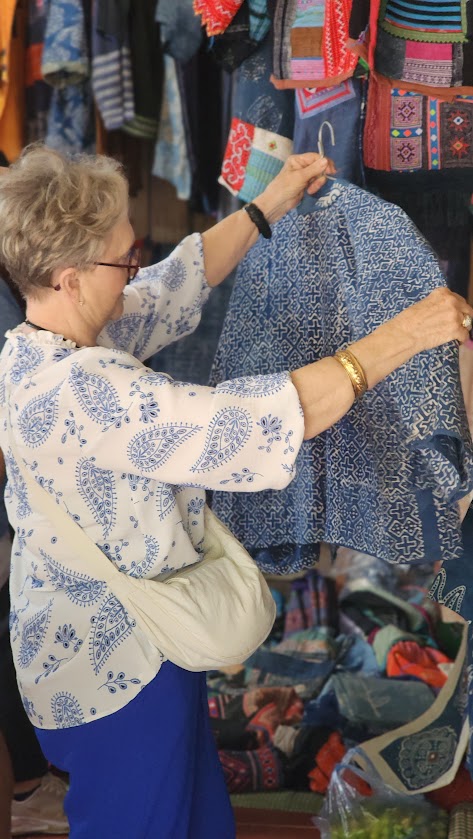
Traditional indigo-dyed clothing can also carry a sense of identity and belonging. Patterns, embroidery, fabric and colours vary between Hmong communities and regions, so textiles can reflect local traditions as well as individual craftsmanship. For visitors, looking closely at these garments offers a more meaningful way to understand Hmong culture than simply seeing indigo as a beautiful shade of blue.
A tradition of indigo dyeing passed down through generations
The knowledge required to produce indigo textiles is traditionally learned within the family and community. Children gradually become familiar with the different stages of textile making by watching older family members work. Depending on the household and community, girls may learn skills such as preparing hemp fibres, spinning thread, weaving fabric, preparing indigo dye and decorating finished garments.
Learning takes place through observation and repeated practice rather than through written instructions. Younger members watch how experienced women prepare the dye, judge the colour and handle the fabric, then gradually begin carrying out parts of the process themselves. Over time, these techniques become practical knowledge passed from one generation to the next.
For Hmong women in particular, textile-making has traditionally been an important part of cultural education and family life. Skills such as embroidery and textile production can carry social as well as practical significance, reflecting a woman’s ability to preserve and contribute to the family’s textile traditions.
How indigo dyeing works in Vietnam: from leaf to dye
Visitors who watch the process for the first time often wonder the same thing: how can a simple plant produce a colour so intense and so long-lasting? The answer lies in a slow, meticulous process, a kind of everyday alchemy that you can follow step by step.
Step 1: fermenting the indigo leaves
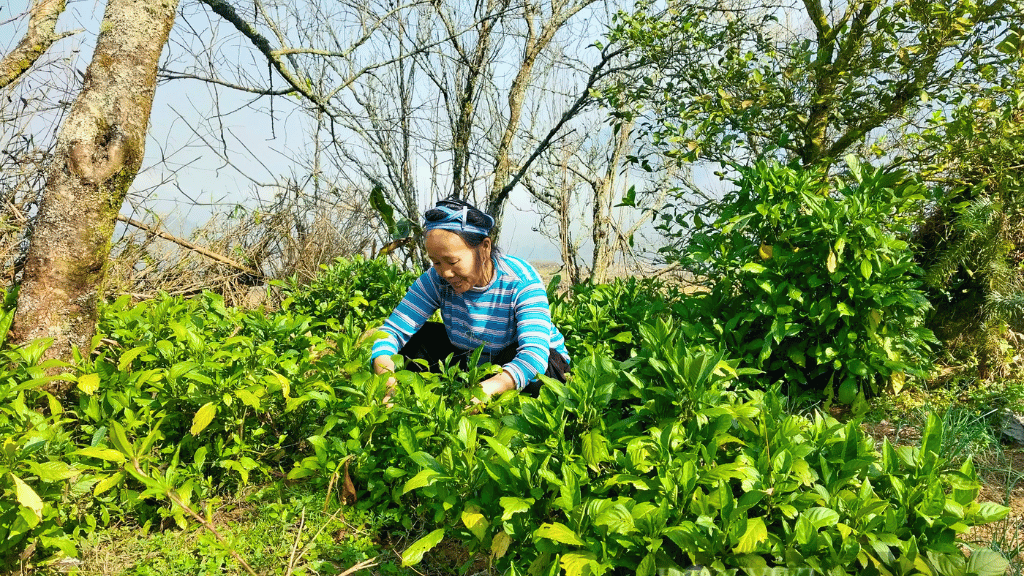
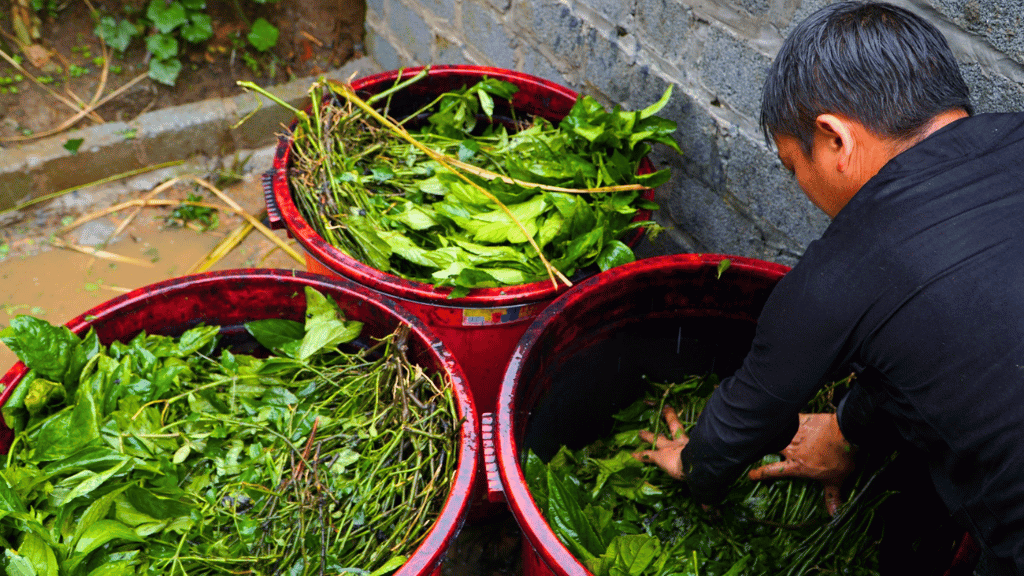
It all begins out of sight, in large wooden or stone vats filled with spring water. Freshly cut indigo leaves are submerged and left to steep for anywhere from three to seven days. If you walked past one of these vats at that stage, you would notice a distinctive smell, earthy and slightly fermented, a sign that the process is well under way. Every day the women return to stir the mixture by hand, tending it like a delicate preparation. Gradually the water takes on a pigment that the eye cannot yet see.
When the waiting is over, they strain the liquid to remove the spent leaves, then add lime or wood ash. This is the moment the magic truly happens. The mixture turns cloudy and starts to foam lightly, and a thick, dark paste slowly settles at the bottom of the vessel. Known locally as “cao cham”, this paste is the real treasure of all the work. Concentrated and almost greasy to the touch, it can be stored in sealed jars and used throughout the year, long after the harvest season has ended.
One detail sets the Hmong apart in the world of indigo dyeing in Vietnam. Many other ethnic groups in the north prefer a quick extraction with boiling water. The Hmong stay loyal to this slower method of cold fermentation, convinced that only it yields a blue deep and resilient enough to last for years on clothes worn every day.
Step 2: dyeing the cloth and watching the colour change
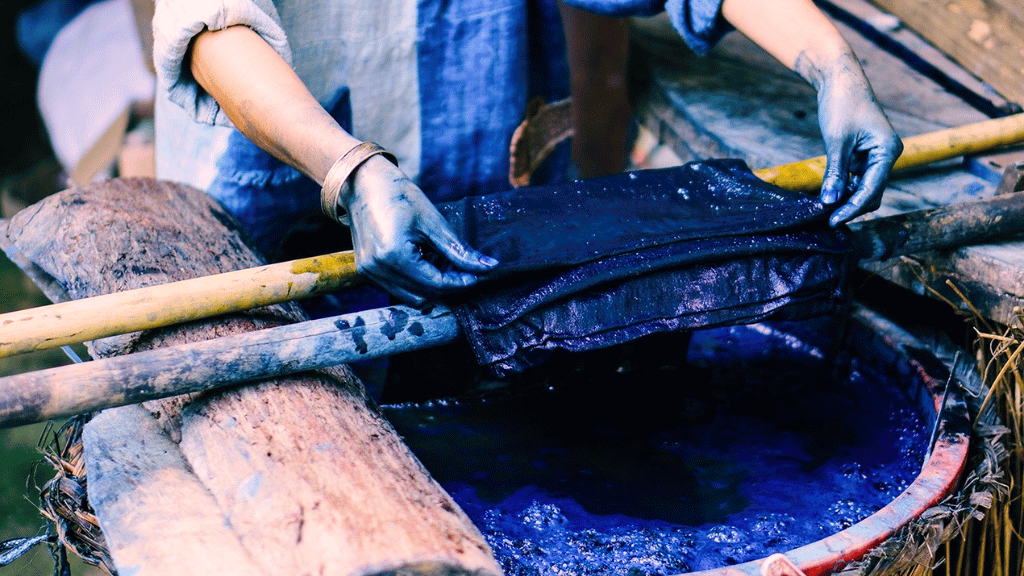
For visitors, this is probably the most spectacular part, the one that stays in the memory long after the trip is over. Before dyeing, a small amount of the concentrated paste is diluted in lukewarm water. Some families add grated ginger or plant ash, following recipes passed down in secret from household to household. The cloth, already handwoven from hemp or flax fibres, is then immersed in the bath for about ten minutes.
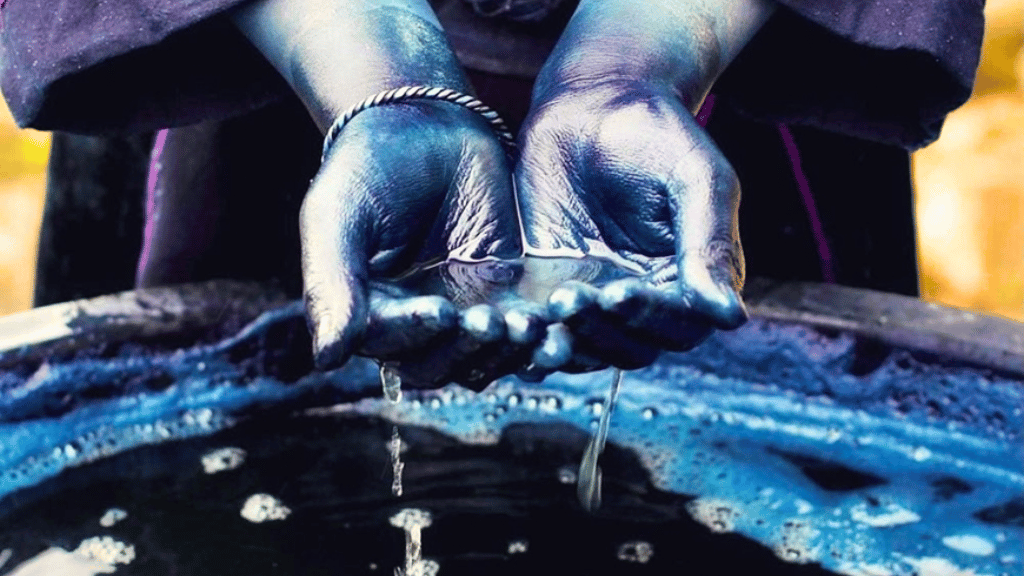
What happens next is close to a magic trick. When the cloth comes out of the bath, it isn’t blue yet. It is a murky green, almost disappointing for anyone expecting the famous shade right away. Only on contact with the air does the colour transform. Oxygen does its work, and within minutes the green turns to blue, then to a darker and deeper blue. If you are lucky enough to witness it, you will see the artisans slowly unfold the fabric in the open air, a bit like watching a photograph develop.
This cycle of dipping and airing is never done just once. It is repeated again and again, sometimes around twenty times, over several days or even weeks when the weather is damp. Each pass adds another layer of colour, much like applying coat after coat of paint to build a richer tone.
Step 3: drying, finishing and polishing the fabric
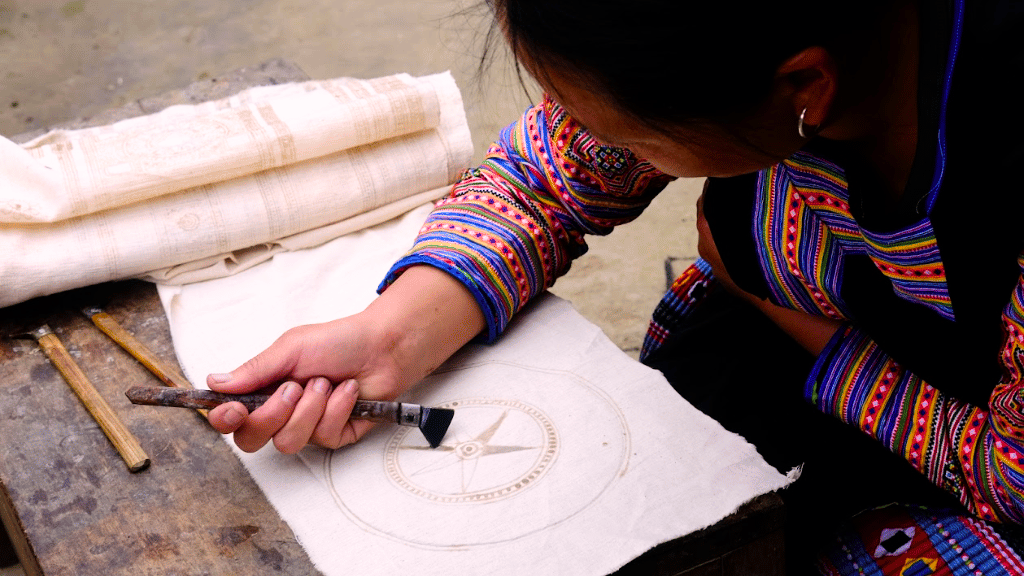
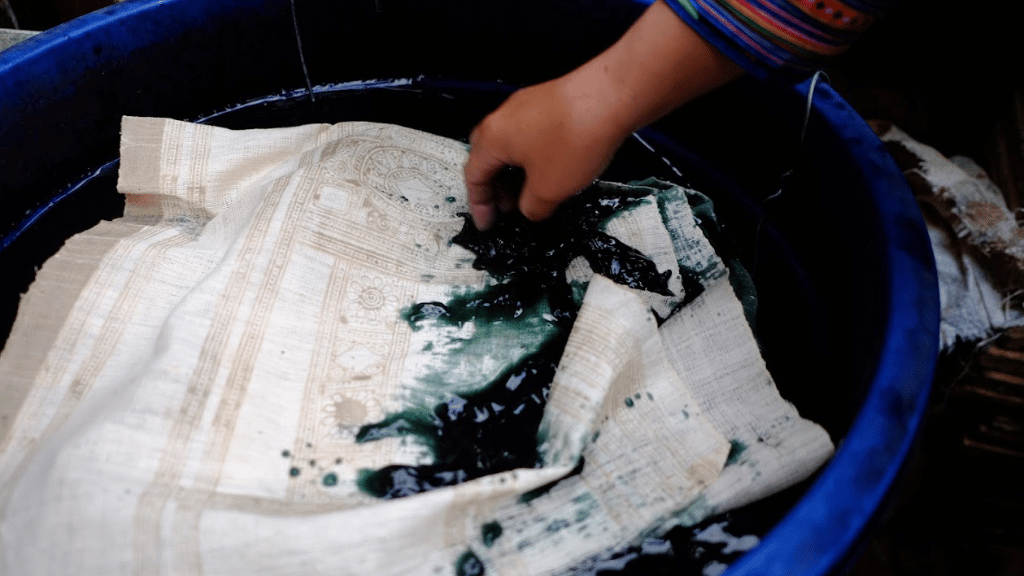
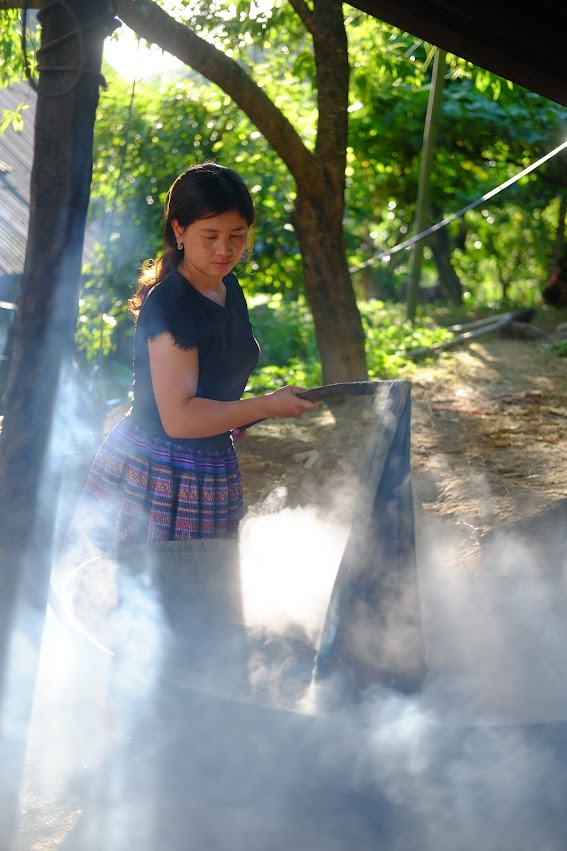
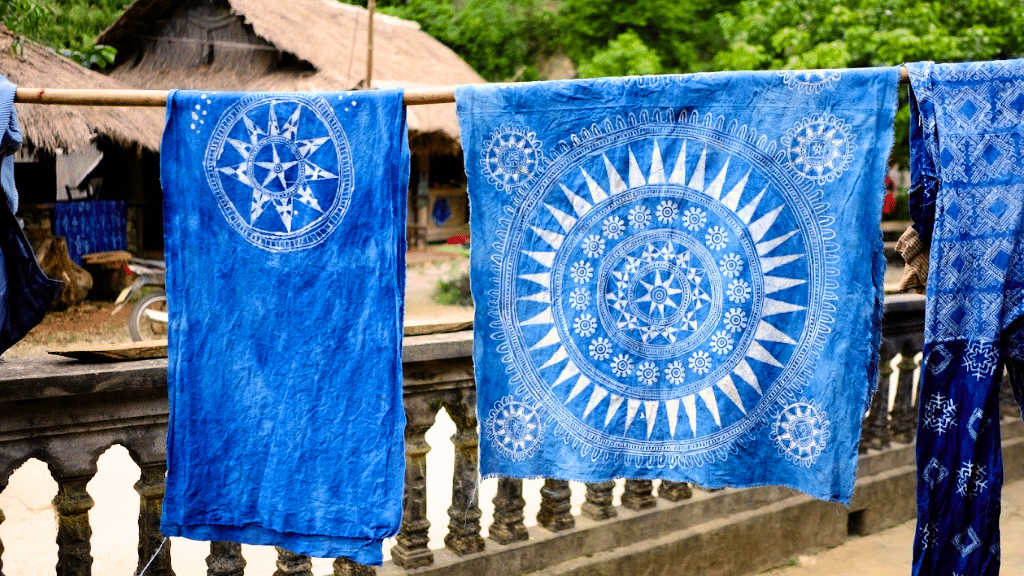
Once the colour reaches the desired depth, the cloth is rinsed in clear water to remove traces of lime, then spread out in the sun to dry. If it carries patterns drawn in beeswax before dyeing, one last step completes the process: the fabric is dipped in boiling water to melt the wax. It is another moment of revelation for the visitor, as patterns that were invisible until now suddenly appear in brilliant white against the dark blue background, like a photographic negative coming to life.
To give the fabric a soft, slightly glossy feel, the artisans then burnish it by rolling it under a smooth stone coated with a little indigo, sometimes pressing down with their feet to help the motion. Only after this final step is the cloth ready to be sewn and embroidered entirely by hand, becoming a skirt, a jacket, a bag or a blanket.
Where to see traditional indigo dyeing in Vietnam
Several mountain regions in northern Vietnam offer the chance to discover Hmong indigo dyeing through textile traditions, craft workshops and meetings with local communities.
- Pa Co, Mai Chau : the Blue Hmong keep several textile skills alive here, including weaving, batik and indigo dyeing. Depending on the activities on offer during your visit, you may be able to learn more about these techniques from local artisans.
- Lung Tam, Ha Giang : flax work and indigo dyeing play an important role in Hmong crafts. The local cooperative lets visitors see the work of the women artisans and the different stages involved in making traditional fabrics.
- Muong Hoa Valley, Sa Pa: the Black Hmong villages here also preserve textile traditions linked to indigo. A visit helps you understand the place of natural dyes in local clothing and craft practices.
- Ta Xua, Son La province: local initiatives showcase Hmong expertise in indigo dyeing, with workshops and discovery activities that may help you learn about the plants used and some of the dyeing stages.
Tips for experiencing indigo dyeing in Vietnam
If you would like to discover indigo dyeing in Vietnam, a few simple tips can help you prepare for a more authentic and respectful experience:
- Check the timing in advance: Indigo dyeing follows seasonal rhythms, so the process you want to see may not be taking place during your visit. Ask your guide or local host before travelling to the village.
- Ask before taking part: Some families or artisans may allow visitors to observe or try part of the process, while others may prefer to demonstrate the craft themselves. Always ask for permission before joining.
- Wear practical clothes: Indigo dye can leave permanent stains on fabric. If you are invited to try dyeing, wear clothes and shoes that you do not mind getting stained.
- Allow enough time: Traditional dyeing involves several stages and repeated dye baths. Do not expect the whole process to be completed during a short visit.
- Respect local traditions: Avoid touching fabrics, tools or dyeing materials without permission. Follow the instructions of the artisan or local host, especially when entering a family workshop.
- Take photos respectfully: Ask before photographing people, their homes or their textile work, particularly when artisans are working.
- Consider buying locally made textiles: If available, purchasing a handmade indigo-dyed piece directly from local artisans can support the continuation of this traditional craft.
Indigo dyeing in Vietnam offers a closer look at Hmong culture through a craft shaped by nature, patience and generations of knowledge. From preparing the indigo leaves to repeatedly dyeing and drying the fabric, every stage reflects skills that are closely connected to daily life and cultural identity in the northern highlands.
For travellers, discovering this tradition in a Hmong village is an opportunity to go beyond the usual sights and meet the people who continue to keep the craft alive. If you would like to include an authentic indigo dyeing experience in your Vietnam journey, contact Hanoi Voyages for personalised advice and help arranging a visit with local communities.
Let us help you plan an unforgettable trip!



 Google
  Facebook
  Tripadvisor
  Trustindex


