


Just a few hours from Hanoi, the mountain village of Pa Co is home to one of the most remarkable traditional crafts in northern Vietnam: beeswax drawing in Pa Co. This ancient batik technique has been preserved for generations by the local Hmong community, where every motif is carefully created by hand using melted beeswax before dyeing the fabric. Each pattern carries meaning, each step of the process requires patience and every piece reflects a deep connection between people, nature and tradition.
In this guide, you’ll discover:
- What makes Pa Co’s beeswax drawing unique
- How the Hmong batik process works, step by step
- What hands-on experiences await you on the ground
- The meaning behind traditional Hmong patterns
- Practical tips for planning your visit
Table of Contents
What is Hmong beeswax drawing in Pa Co?
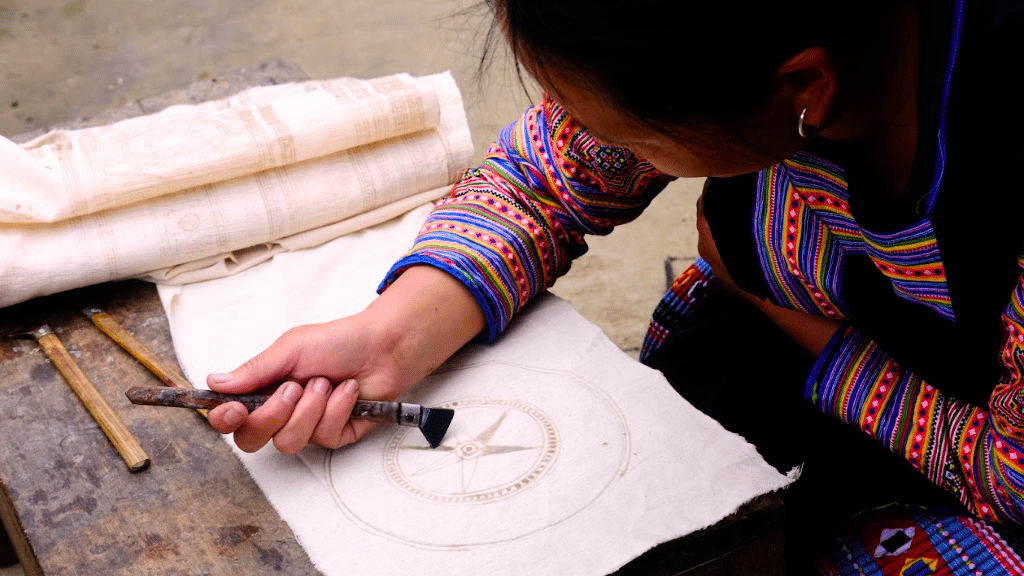
Beeswax drawing or Hmong batik is a traditional resist-dyeing technique in which melted wax is applied to fabric to create intricate geometric patterns before the cloth is dipped in indigo dye. Once the wax is removed, the undyed areas form the design.
In Pa Co, Mai Chau, this craft remains deeply woven into everyday life. Women wear beeswax-decorated garments to weekly markets, family ceremonies, and local festivals. It is not a tourist performance it is a living tradition, passed down from mother to daughter across generations.
For travellers, it represents a rare chance to witness a craft that is still genuinely practised, far from folklorised versions found in more commercialised destinations.
An ancient art, passed down through generations
The craft is intimately tied to Hmong cultural identity. Young girls learn from their mothers and grandmothers, absorbing not just the technique but the symbolic language encoded in every motif. Mastering beeswax drawing is not about copying a pattern – it is about joining a cultural lineage that stretches back centuries.
The Batik process: A meticulous and time-intensive tradition
Behind every finished piece lies a lengthy and demanding process, carried out entirely by hand.
Step 1: Preparing the wax. Two types of beeswax are used: yellow wax (younger) and black wax (older and more aged). Each is prepared separately boiled, filtered to remove impurities then blended in the right proportions and heated together over a small charcoal fire until fluid and workable.
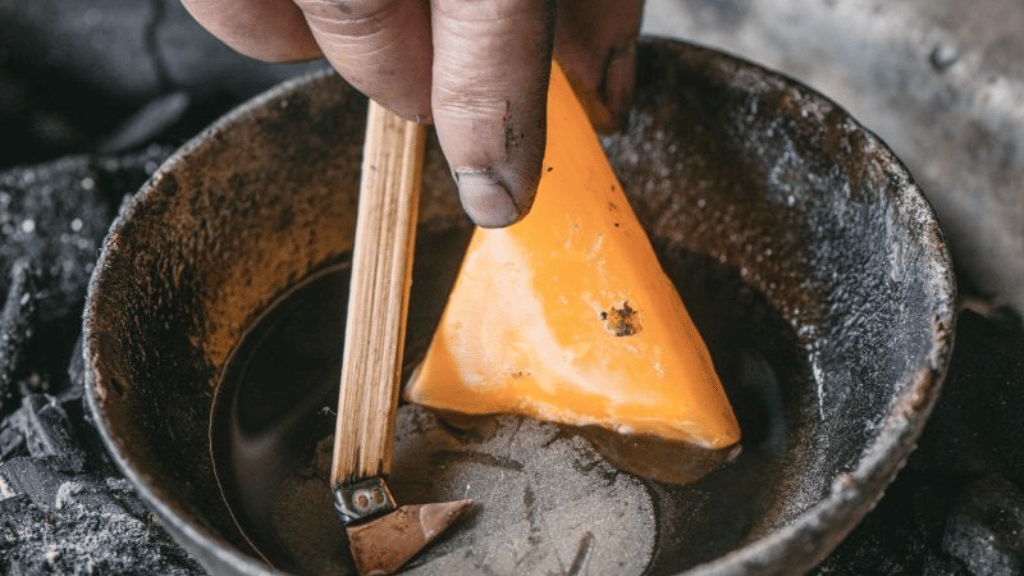
Step 2: Preparing the tools. The primary drawing instrument is a bamboo stylus fitted with a fine triangular copper tip, roughly 7 cm long. Depending on the motif, artisans also use bamboo tubes for drawing circles and even a pig’s tooth to smooth and polish the fabric.
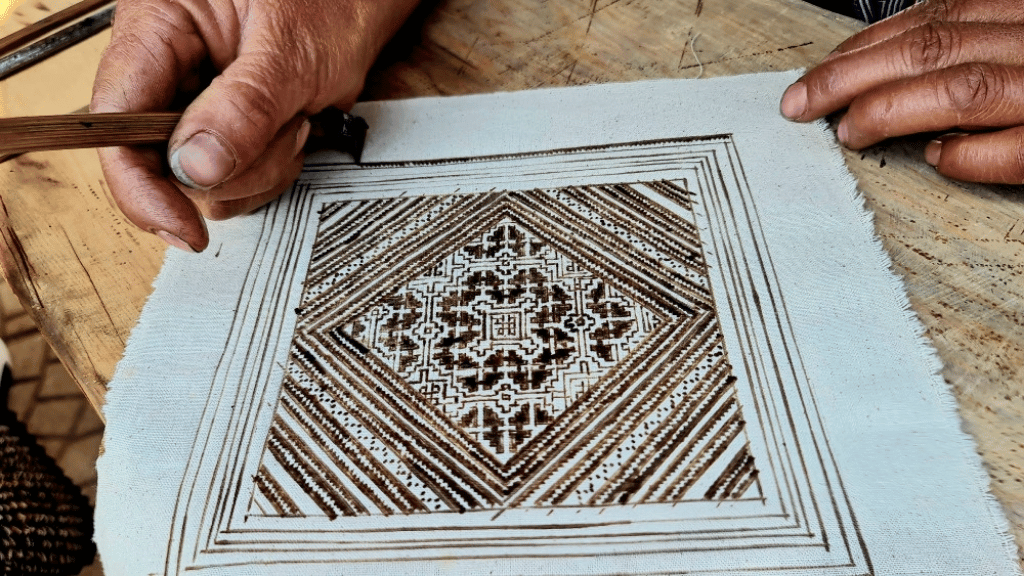
Step 3: Drawing the patterns. The artisan dips the stylus into the molten wax and draws freehand onto raw cloth no stencils, no guidelines. Straight lines, spirals, zigzags, and geometric grids emerge through a slow, controlled gesture that demands years of practice. The wax acts as a resist: wherever it is applied, the dye will not penetrate.
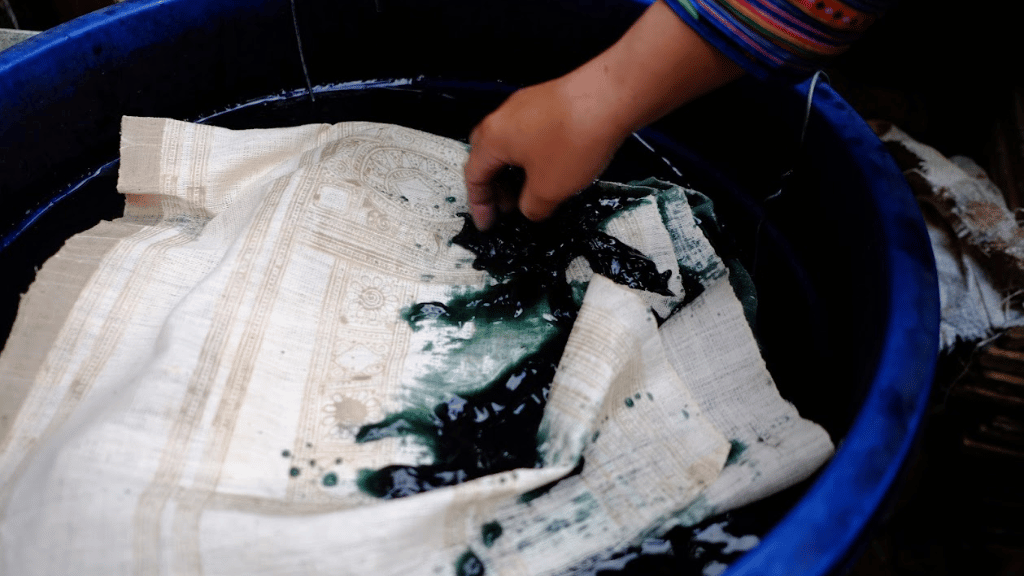
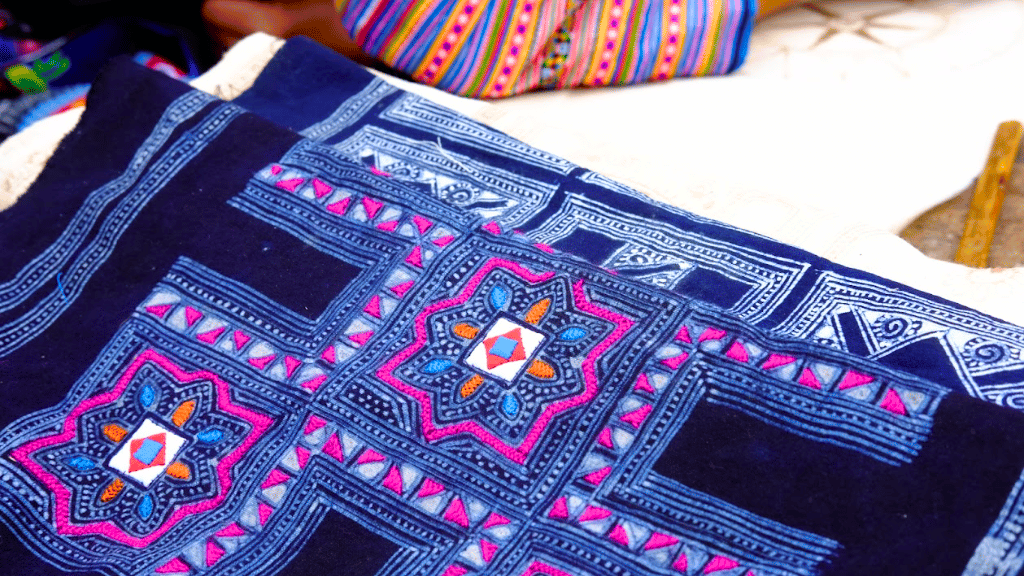
Step 4: Indigo dyeing. Once the wax drawing is complete, the fabric is immersed in indigo dye sometimes repeatedly to deepen the colour. This natural dye, derived from the indigo plant, gives Hmong textiles their characteristic deep blue tone.
Step 5: Removing the wax. The cloth is then boiled in water or steamed to dissolve the wax, revealing the patterns beneath. The contrast between the undyed white motifs and the indigo background creates the finished design.
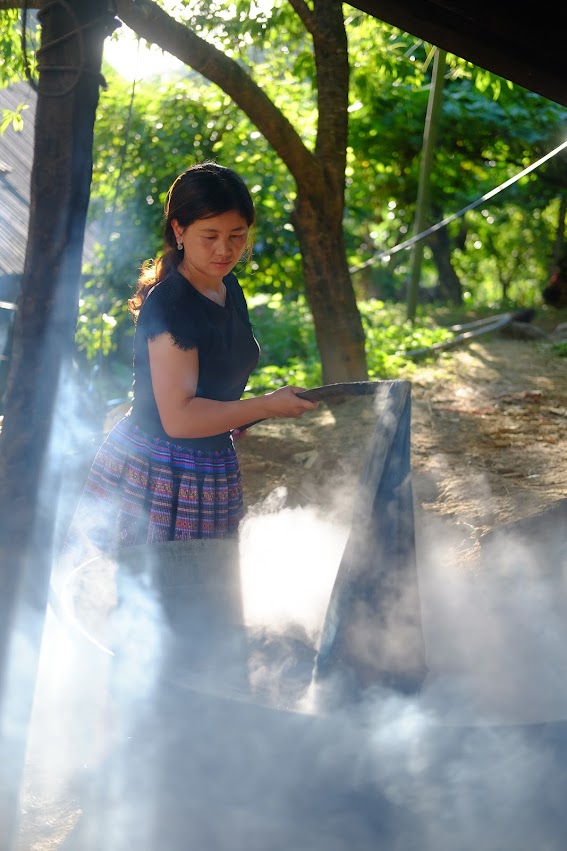
Step 6: Embroidery (optional). In many cases, artisans add hand-stitched embroidery on top of the batik work, layering coloured threads over the wax-resist patterns to add texture, depth and additional detail. This combination of techniques is what gives Hmong textiles their distinctive richness.
A craft that supports entire families
Beyond its cultural significance, beeswax drawing plays a vital economic role in Pa Co. Many families rely on the sale of handmade textiles to supplement their income. When travellers buy directly from local artisans, they are actively contributing to the preservation of this craft – a meaningful alternative to the mass-produced imitations increasingly found in tourist markets across Vietnam.
What do Hmong patterns symbolise?
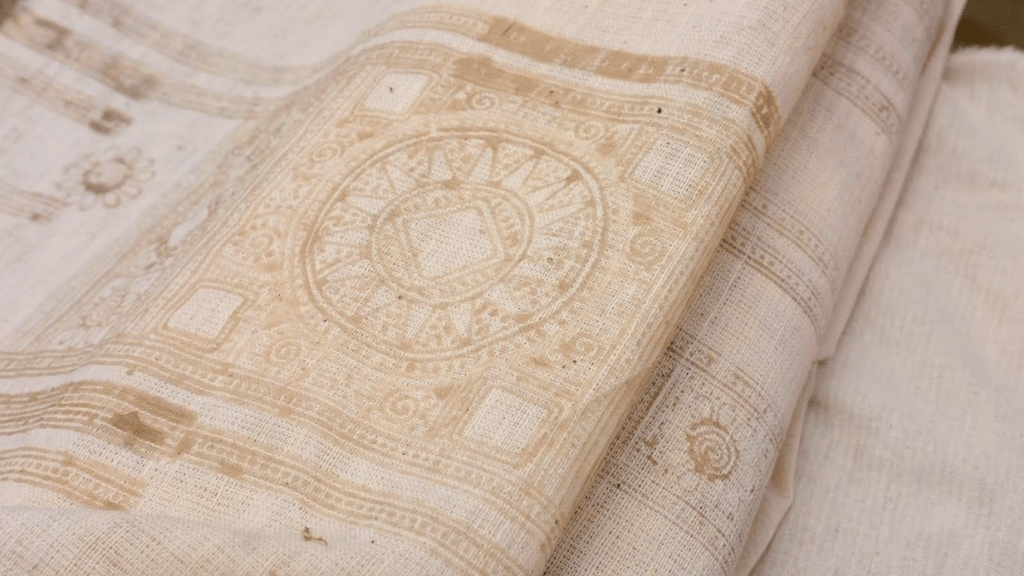
In Hmong beeswax drawing, no motif is purely decorative. Each one carries cultural meaning, rooted in the community’s relationship with nature, spirituality, and social life.
- The spiral (snail motif): One of the most iconic symbols, representing the cycle of life, continuity, and the origins of the Hmong people.
- Parallel lines: Evoking the rice terraces of northern Vietnam’s mountainous landscape – a direct reference to agricultural life and the relationship with the land.
- Squares and diamonds: Associated with stability, balance, and family harmony.
- Crosses and repeated geometric forms: Often understood as protective symbols, believed to ward off malevolent spirits.
- Stylised plant forms: Inspired by local vegetation, these motifs represent fertility, growth, and the surrounding natural world.
Every artisan interprets these symbols in her own way. Two pieces may share the same motif and still look entirely different- which is what makes each one genuinely one of a kind.
These designs are not worn randomly. Specific motifs appear on ceremonial garments, on clothing worn to weekly ethnic markets, or on pieces given as gifts at weddings and important family events. Some patterns are believed to carry protective power attracting good fortune, ensuring prosperity, or marking the identity and origin of the wearer. When you buy or wear a piece of Hmong fabric, you carry that history with you.
What to do when visiting Pa Co for beeswax drawing experiences?
When visiting Pa Co, one of the most meaningful cultural activities you can try is beeswax drawing, a traditional craft of the Hmong people. This hands-on experience allows you to observe local artisans at work, learn about the symbolic patterns used in their textiles and try drawing with beeswax yourself. It is not only a creative activity but also a unique way to connect with the local culture and understand the traditions passed down through generations.
Watch the artisans at work
One of the most authentic ways to experience beeswax drawing in Pa Co is simply to spend time observing Hmong artisans as they work. In many households, you may find a woman sitting quietly by the hearth, carefully guiding a bamboo stylus dipped in warm beeswax across a piece of cotton fabric. The movements are slow, steady and highly controlled, almost meditative, as each line gradually forms the intricate motifs that will later appear once the fabric is dyed. Watching this process up close allows you to truly appreciate the patience, precision and years of practice behind every single pattern.
Join a batik workshop
In some local homes and small community workshops, visitors are welcome to try beeswax drawing themselves under the guidance of Hmong artisans. After a short introduction to the tools including the bamboo pen, melted wax pot and charcoal-heated setup, you will be invited to draw simple motifs onto fabric. It may look easy at first, but you quickly realise how much control and concentration it requires to keep the lines smooth and even. This hands-on moment is often one of the most memorable parts of a visit, as it offers a real connection to a craft that has been preserved for generations.
Discover traditional paper-making
If you wish to go further in your cultural exploration, beeswax drawing can often be combined with a traditional dó paper-making experience in the same area. Locals will show you how bark is processed, soaked and hand-pounded into thin sheets of natural paper using time-honoured techniques. The result is a beautifully textured material that reflects the rhythm of village life, slow, simple, and deeply connected to nature.
Bring home meaningful handmade crafts
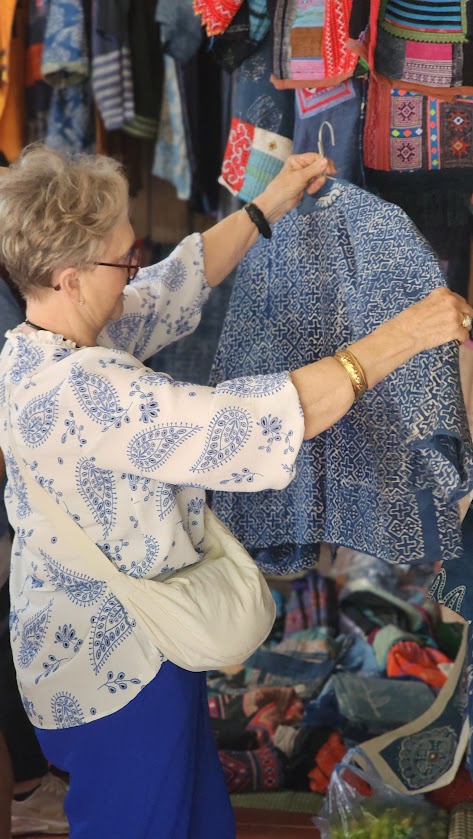
Before leaving Pa Co, you also have the opportunity to purchase handcrafted items made by local families. These include indigo-dyed scarves, embroidered textiles, small bags, and decorative pieces, each one slightly different from the next. Unlike factory-made souvenirs, these products carry the identity, time and skill of the artisan who created them. Buying directly from the community not only supports local livelihoods but also allows you to take home a piece of Pa Co’s living heritage.
Travel tips and useful information for visiting Pa Co
If you are planning a trip to Pa Co, a little preparation will help you enjoy the experience more comfortably and meaningfully. Located in the mountains of Mai Chau, this destination is not difficult to reach, but travel conditions, weather, and timing can make a big difference to your journey. Below are some practical tips to help you plan your visit and make the most of your time in this beautiful highland area.
How to get to Pa Co
Pa Co is located in the mountains of Mai Chau District, Hòa Bình Province, approximately 150 km southwest of Hanoi – a journey of roughly 3 to 4 hours.
- By private car or taxi: The most comfortable and flexible option, ideal for a short trip or those combining Pa Co with other nearby villages.
- By bus or minivan: Buses run regularly from Hanoi to Mai Chau town, from where local transport can take you onward to Pa Co.
- By motorbike: For experienced riders, this is a rewarding route through dramatic mountain scenery – though road conditions can be challenging.
Best time to visit
- March to May: Mild temperatures, lush green landscapes, good road conditions.
- September to November: Dry season with clear skies and beautiful mountain views – arguably the best overall window.
- Weekends: Pa Co’s local ethnic market takes place on weekends, making it the ideal time to combine craft discovery with authentic market culture.
How long should you stay?
- Half a day: A quick introduction to the village and its crafts.
- Full day: Time for a workshop, a walk through the valley, and meaningful encounters with residents.
- 1–2 nights (homestay): The most rewarding option full immersion with market, meals, and evening village life.
Costs and budget for beeswax drawing in Pa Co
Visiting Pa Co for beeswax drawing is quite budget-friendly, and most prices are set directly by local Hmong families, making it both simple and transparent.
- Beeswax drawing workshop: A hands-on experience usually costs around 5 to 15 USD per person. This includes basic instruction, tools, and a small piece of fabric for practice. Longer or private sessions may cost slightly more.
- Watching the craft: Observing artisans at work is often free, as it usually takes place in local homes. A small purchase or contribution is appreciated if you spend time visiting.
- Handmade products: Small souvenirs like scarves or fabric items range from 3 to 10 USD. Larger or more detailed handmade textiles can cost between 15 and 40 USD, depending on craftsmanship.
FAQs
1. Can I watch the full batik process in Pa Co?
Yes. In Pa Co, it is entirely possible to observe artisans at work across all stages — from drawing the wax motifs to the indigo dyeing and sun-drying. There is no performance involved; this is simply how life works here.
2. What kinds of products are made using this technique?
Beeswax batik is used to create ceremonial robes, everyday skirts, scarves, bags, wall hangings, and decorative accessories. Many pieces are worn at festivals, markets, and family celebrations.
3. Can I combine Pa Co with other villages near Mai Chau?
Easily. Pa Co pairs well with Ban Lac and Pom Coong, two other villages in the Mai Chau valley with distinct cultural characters and craft traditions of their own.
4. Is the batik here still genuinely traditional?
More so than in many other places. Pa Co has not yet been heavily shaped by mass tourism, and most products are still made by hand by local women using traditional methods. That authenticity is precisely why it’s worth the trip.
5. Can I find Hmong batik elsewhere in Vietnam?
Yes.
Sapa and Ha Giang also have Hmong batik traditions. However, in more heavily visited areas, some products are partially machine-made. Pa Co currently offers one of the most authentic examples of this craft still in daily practice.
Experiencing beeswax drawing in Pa Co is more than a cultural activity – it is a chance to slow down, sit with someone whose hands carry centuries of knowledge, and leave with something genuinely made. With the right guide and a little time, this corner of northern Vietnam will give you one of the most human moments of your journey.



 Google
 Facebook
 Tripadvisor
 Trustindex


