


If you’re looking for an authentic cultural experience in northern Vietnam, visiting Pa Co village in Mai Chau offers a rare chance to explore the traditional art of Do paper making. Tucked away in the mountains and far from the usual tourist routes, this quiet village is where the Hmong community continues to preserve a centuries-old craft using natural materials and time-honored techniques.
Unlike typical tourist activities, discovering Do paper making in Pa Co is not about a staged workshop, it’s about observing real daily life, understanding the cultural meaning behind the craft, and connecting with local people in a genuine way. Whether you’re planning a trip to Mai Chau or simply want to explore traditional crafts in Vietnam, this guide will help you better appreciate the story behind Do paper when you experience it in real life.
Table of Contents
What is Do paper in Hmong culture?
If you travel through the northern highlands of Vietnam, you may come across a craft that, at first glance, seems simple. Handmade paper. Yet Do paper is far more than that. It is one of the most meaningful traditional materials in the daily and spiritual life of the Hmong communities.
Where do paper comes from and why it still matters today
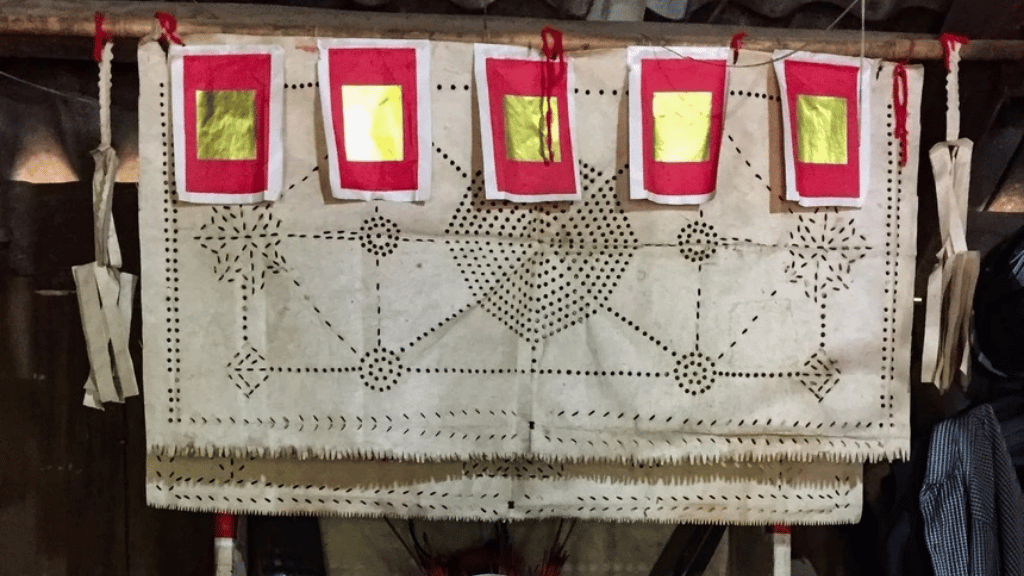
In villages like Pa Co, local Hmong families refer to it as Do paper, though you might also hear the names giấy bản or giang paper. Unlike ordinary paper, this is not made for convenience or mass use. Every sheet carries a purpose, shaped by generations of knowledge and belief.
As you spend time with the villagers, you begin to understand that Do paper holds a deeply symbolic role. It is present in ancestor worship, Lunar New Year rituals, and important family ceremonies. For the Hmong people, it is not just something to write on. It is a medium that connects the visible world with the spiritual one.
Many families still choose to make their own paper by hand, following traditional methods passed down through generations. This is not simply about preserving a craft. It is about preserving meaning. Handmade paper is believed to carry the energy of the household, bringing protection, harmony, and good fortune for the year ahead.
When you see the process up close, it becomes clear that each sheet is the result of patience, care, and intention. And perhaps that is what makes this experience so special for travelers. It offers a quiet but powerful glimpse into a way of life where even the simplest materials carry stories, beliefs, and a deep connection to heritage.
How do paper is made: a traditional handmade process
The first time I watched this process in Pa Co, what struck me most was how little it has changed over time. Do paper is still made entirely by hand, using fibers from the giang tree, a type of bamboo, and techniques passed down through generations of Hmong families. There are no machines, no chemicals involved. Only hands, water, sunlight, and a great deal of patience.
If you spend time with the artisans, they will often walk you through the process step by step, each stage revealing just how much care goes into every sheet:
- Villagers head into the forest to harvest giang bamboo at the right moment of maturity, carefully choosing stalks that are neither too young nor too old.
- The bamboo is then peeled, cut into thin strips, and thoroughly cleaned.
- Next, the fibers are boiled for 12 to 15 hours with tree bark that is naturally rich in resin, helping to bind and strengthen the material.
- After boiling, the fibers are left to soak for two to three days until they soften further.
- Everything is then pounded by hand until it becomes a smooth, even pulp.
- The pulp is carefully filtered to remove any remaining impurities.
- It is diluted with water to reach the right consistency.
- A thin, even layer is spread across a bamboo frame, forming each individual sheet of paper.
- Finally, the sheets are left to dry naturally under the sun, a step that plays a key role in determining the final quality of the paper.
It is a slow and meticulous process. Every stage requires experience and a deep understanding of the material. That is exactly what gives Do paper its unique texture and its warm, natural golden tone, something that no industrial method can truly replicate.
What to expect when visiting Do paper makers in Pa Co
Tucked into Pa Co village, this is not a polished tourist attraction. What you will find here are local Hmong households where families continue to make Do paper as part of their daily life. That is precisely why this place feels so special.
It offers a genuine window into a craft that is still very much alive, far from the usual tourist routes. If you are the kind of traveler who prefers quiet, off-the-beaten-path experiences over a checklist of famous sights, this is somewhere you will truly appreciate.
Watching the craft of do paper up close in Pa Co
When you visit, it is usually the family members themselves who guide you through each stage of the process. There is no formal setup or performance. Instead, you are simply stepping into their space and observing what they do every day.
From preparing and boiling the bamboo fibers to spreading the pulp and leaving it out to dry, everything happens in a simple, open-air setting that blends naturally into the rhythm of village life. The surrounding mountains, the quiet atmosphere, and the unhurried pace all add to the experience.
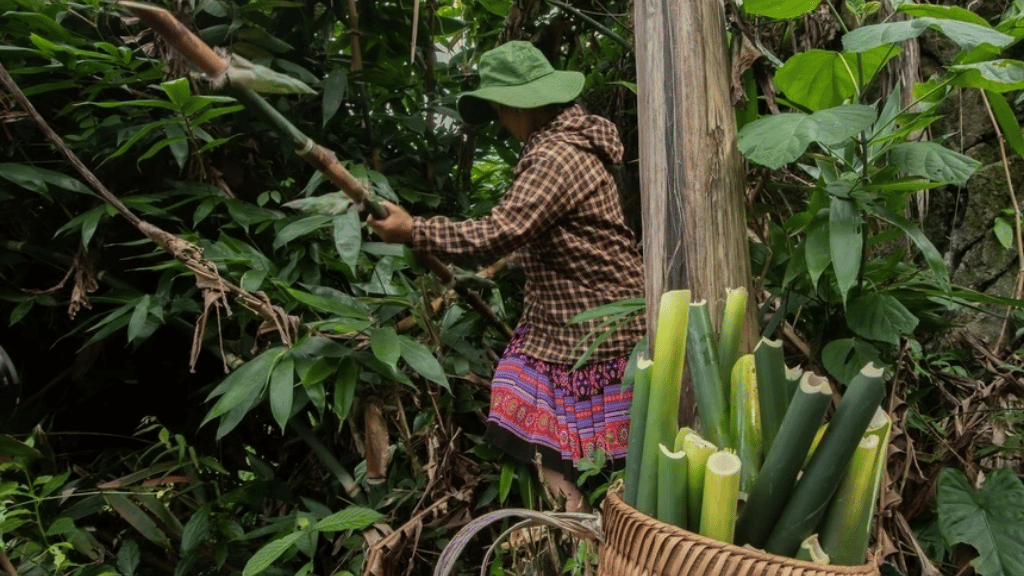
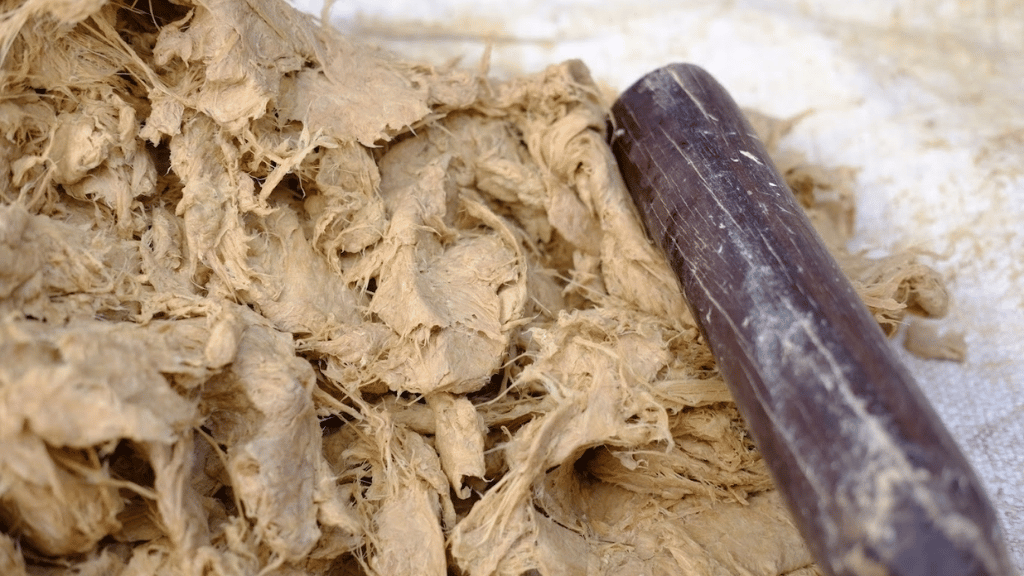
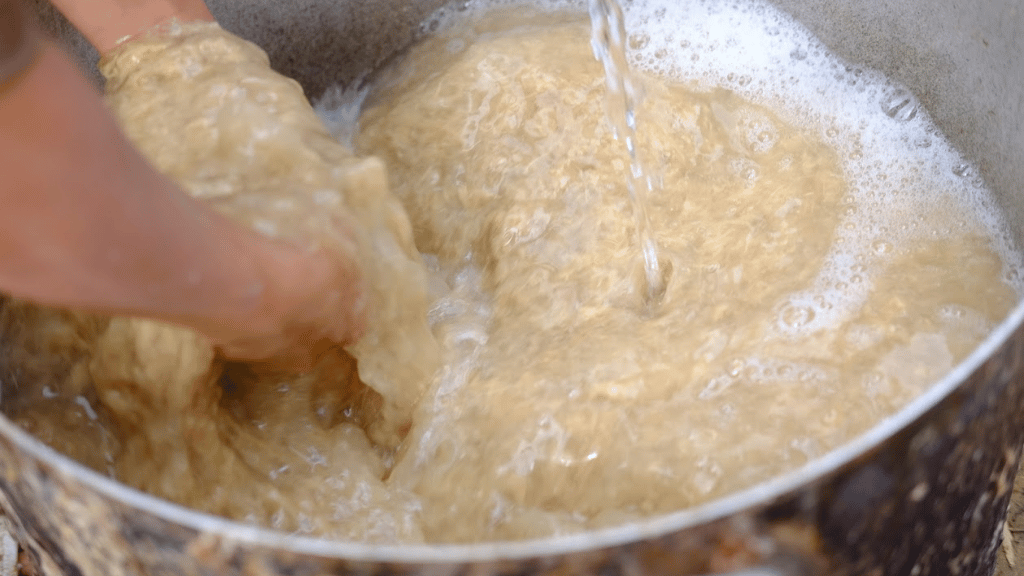
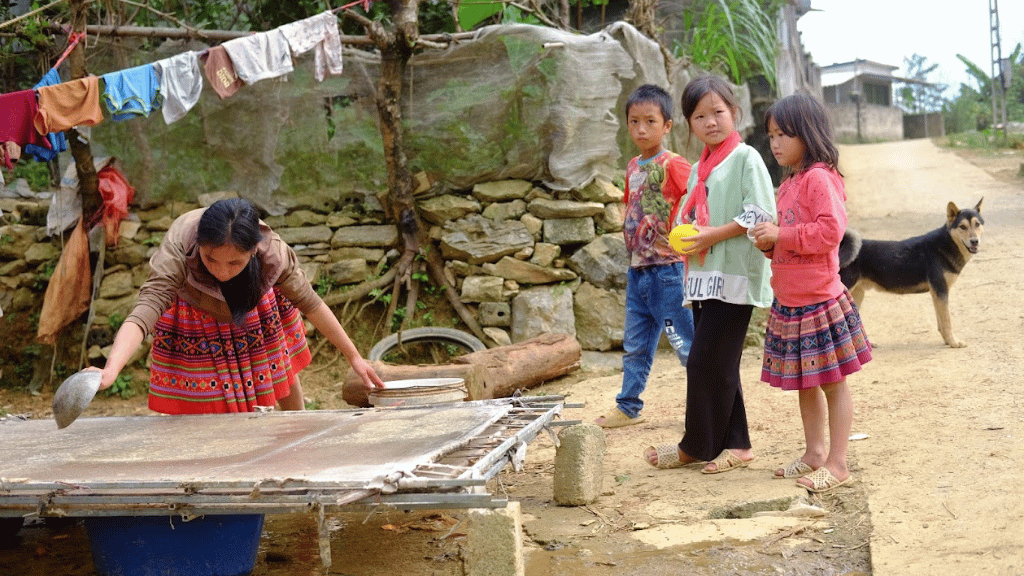
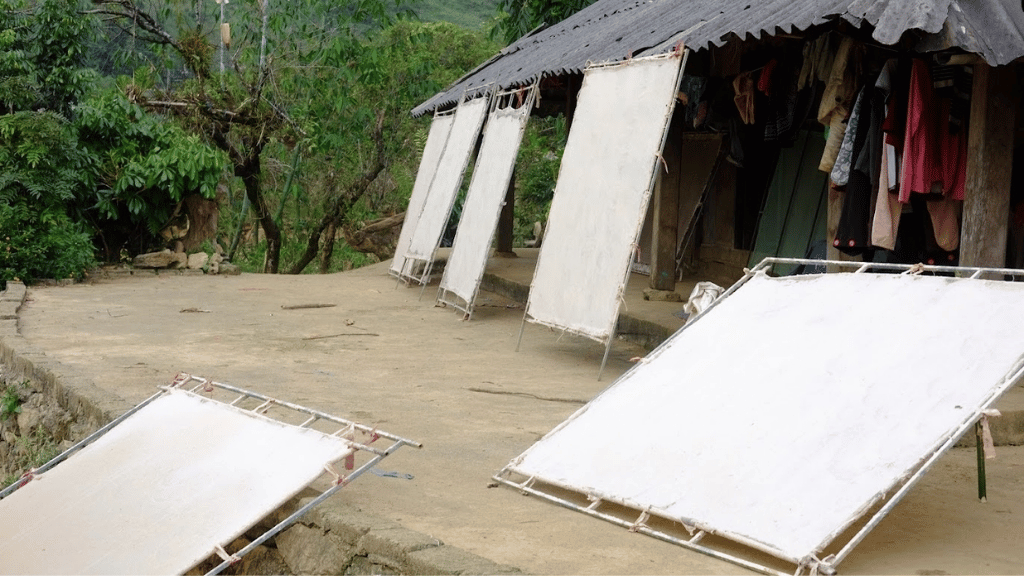
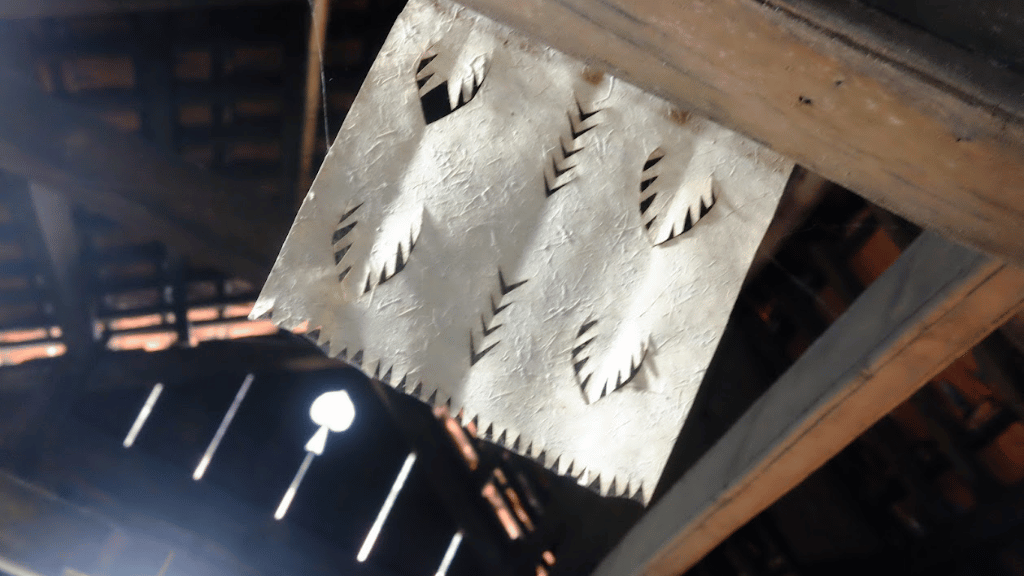
Watching these careful, practiced movements up close gives you a much deeper understanding of the craft. More than that, it offers a meaningful glimpse into Hmong culture in a way that no museum or staged demonstration can replicate.
Getting hands-on with traditional do paper making
Depending on the timing of your visit, you may have the chance to join in and try a few steps of the process yourself. It could be pounding the softened fibers, or carefully spreading the pulp across a bamboo frame to form a sheet.
It often looks simple when the local families do it, but once you try, you will quickly realize it requires a surprising amount of control and coordination to create an even layer. Because this depends on what the household is working on that day, it is not something that can be guaranteed on every visit. In a way, that unpredictability makes the experience feel more genuine and even more memorable when it happens.
If your visit does not coincide with active paper-making, there is still something you can take part in. Many families offer a simple activity where you can create your own Do paper artwork for a small additional cost. It is more accessible than the full process, but it still allows you to touch the material, understand its texture, and appreciate what makes it unique.
Connecting with Hmong artisans through do paper
The real highlight of this experience is not just the paper-making itself, but the chance to spend time with the people behind it.
As you sit with the families, you will start to notice the small details. The way they work together, how naturally the craft fits into their daily routine, and how each person seems to carry a part of the tradition. Conversations here are simple and unforced. Sometimes we translate, sometimes it is just smiles, gestures, and shared moments.
If you are curious, feel free to ask questions. They are often happy to share a little about their life, how they learned this craft, or what it means for them to continue doing it today. There is no formal storytelling, but that is exactly what makes these exchanges feel genuine.
These are quiet moments, but they are often the ones people remember most. Long after the trip, it is not just the process you recall, but the feeling of being welcomed into someone’s home, even just for a short while.
Practical travel information for visiting Pa Co
Planning a visit to Pa Co is not just about adding another destination to your itinerary. It is about slowing down, stepping into a quieter rhythm of life, and experiencing a traditional craft that still holds real meaning for the local community. If approached with the right mindset, this can become one of the most memorable cultural experiences of your journey in northern Vietnam.
Where exactly is it?
Pa Co is a small Hmong village located in Mai Chau district, in the mountainous northwest of Vietnam. Sitting at a higher elevation than the main Mai Chau valley, the village offers a cooler climate and more dramatic scenery, with limestone mountains, misty hills, and winding roads leading in.
Most travelers reach Pa Co from Hanoi, with a journey time of around 4 to 5 hours by car. The drive itself is part of the experience, especially in the final stretch where the landscape becomes more rugged and less developed.
What makes Pa Co particularly appealing is its location along a quieter travel route connecting Van Ho and Pu Luong Nature Reserve. This makes it easy to include in a broader northern Vietnam itinerary without needing to backtrack. Despite its accessibility, the village remains relatively untouched by mass tourism, preserving a genuine and unhurried atmosphere.
Best time to visit
If you want to experience traditional Do papermaking in its most complete and authentic form, timing your visit is important.
The best period is from late November to early February, in the lead-up to Lunar New Year. During this time, papermaking is part of everyday life rather than something arranged for visitors. Local families are actively producing paper for rituals, offerings, and decorations, so you can witness the entire process unfolding naturally, from preparing raw materials to drying finished sheets.
There is a noticeable energy in the village during these months. You may see several households working at once, with materials laid out in courtyards and different stages of production happening side by side.
How long should you spend?
Most visits to Pa Co last between one and two hours, but the experience can vary depending on your level of interest.
In about an hour, you can walk through the workshop, observe key stages of papermaking, and have a brief interaction with the artisans. This works well if you are traveling on a tighter schedule or combining multiple stops in one day.
If you can spend closer to two hours or more, the experience becomes much richer. You will have time to ask questions, try parts of the process yourself, and simply sit and observe. Often, it is these slower, quieter moments that leave the strongest impression.
This is not a place designed for rushed sightseeing. The more time and attention you give it, the more meaningful it becomes.
Tips for making the most of your visit
Visit with a local guide if possible: Communication can be challenging in the village, especially if you do not speak Vietnamese. A good guide not only translates but also explains the cultural context behind what you are seeing. This helps you move beyond observation to real understanding.
Combine it with nearby experiences: Pa Co works best as part of a wider journey. You can pair it with a stay in Mai Chau, explore nearby villages, or continue on to Pu Luong for trekking and nature. Even a short walk around the village adds depth to your visit.
Be respectful and genuinely curious: This is a living community, not a staged attraction. Always ask before taking photos, be mindful of personal space, and show interest in people’s stories. A simple conversation, even through a guide, can create meaningful connections.
Slow down and stay present: Do not treat this as a checklist activity. Some of the most memorable moments come from sitting quietly, watching the artisans work, or listening to them talk about their daily life and traditions.
Be prepared for simple conditions: Facilities are basic, and the setting is informal. Wear comfortable shoes, expect uneven ground, and approach the experience with flexibility and an open mind.
FAQs
1. What is Do paper used for in Hmong culture?
Do paper plays an important spiritual role. It is used for ancestral worship, funerals and New Year rituals, where it acts as a bridge between the living and the spirit world.
2. What is the most unique step in the papermaking process?
The most distinctive step is the hand-lifting of pulp using a bamboo screen. This requires skill and rhythm to create an even, durable sheet without tearing
3. How is this tradition being preserved today?
It is being preserved through daily practice within families, small-scale workshops, and cultural tourism experiences that create income while keeping the craft relevant
4. What can you learn from the local artisans?
You gain insight into both technique and meaning. Beyond the craft itself, artisans share stories about their culture, beliefs, and the role of Do paper in their lives
5. Why is this experience more than just a craft visit?
Because it connects you to living heritage. You are not just observing a product being made, but understanding a tradition that carries cultural identity and spiritual significance
Visiting the Do paper workshop in Pa Co is a chance to slow down and connect with a living craft that still carries real meaning in everyday life. It may seem like a simple stop, but it often becomes one of the most memorable parts of a northern Vietnam journey.
If you are looking to go beyond the usual routes and experience something more authentic, let Hanoi Voyages design a journey that brings you closer to local culture, people, and stories. Reach out to start planning a trip that truly feels like your own.




 Google
 Facebook
 Tripadvisor
 Trustindex


