


Cambodian cuisine is a vibrant blend of fresh ingredients and bold flavors. Must-try dishes include Amok (coconut curry), Lok Lak (stir-fried beef), and Nom Banh Chok (rice noodle salad). Experience the rich tastes and unique spices that make this cuisine truly unforgettable!
Cambodian or Khmer Cuisine

Having a taste of Cambodian cuisine is like making a time leap – going back to the Kingdom of Angkor – the cradle of Khmer civilisation, roots of Khmer cuisine.
Meals in Cambodia usually include more than one dish with contrasting flavours, textures and temperatures. To get this fusion of tastes, their dishes generally contain edible flowers, spices, plenty of herbs, and pickled vegetables.
Cambodian cuisine has been influenced through the years by other countries. From China’s steaming method to Indian curries, Cambodian dishes are now very diversified. Hungry already?! Read more:
A fusion of tastes and colours
Treat your taste buds with plenty of flavours in one single dish.
Cambodian cuisine is also a show for the eyes with the various colours coming from the ingredients used.
See, feel and taste all the colours of Cambodian cuisine.
Regional variations in Cambodian cuisine
Cambodian cuisine varies subtly by region, influenced by history, geography, and available ingredients.
- Phnom Penh: The capital’s cuisine reflects a blend of Khmer traditions with Chinese, Vietnamese, and French influences. Dishes here tend to be more refined and diverse.
- Siem Reap & the Angkor region: This area preserves many traditional Khmer recipes, often using freshwater fish, herbs, and age-old cooking methods tied to temple culture and rural life.
- Coastal areas (Kep, Kampot, Sihanoukville): Coastal cuisine highlights fresh seafood, including crab, squid, and fish. Kampot pepper, one of Cambodia’s most famous products, is widely used.
- Rural countryside: In rural areas, cooking relies on seasonal ingredients, wild vegetables, and simple techniques, offering an authentic glimpse into everyday Khmer life.
Recommended Cambodia cuisine
Cambodian cuisine may appear simple, but its signature dishes are rich in history and flavor.
Amok Trey

Often considered Cambodia’s national dish, Amok Trey is fish curry steamed in banana leaves with coconut milk, lemongrass, and kroeung paste. The texture is soft and custard-like, with gentle, fragrant flavors.
Bai Sach Chrouk
A popular breakfast dish, Bai Sach Chrouk consists of thinly sliced pork marinated in garlic and coconut milk, grilled over charcoal and served with rice, pickles, and light broth.
Lok Lak
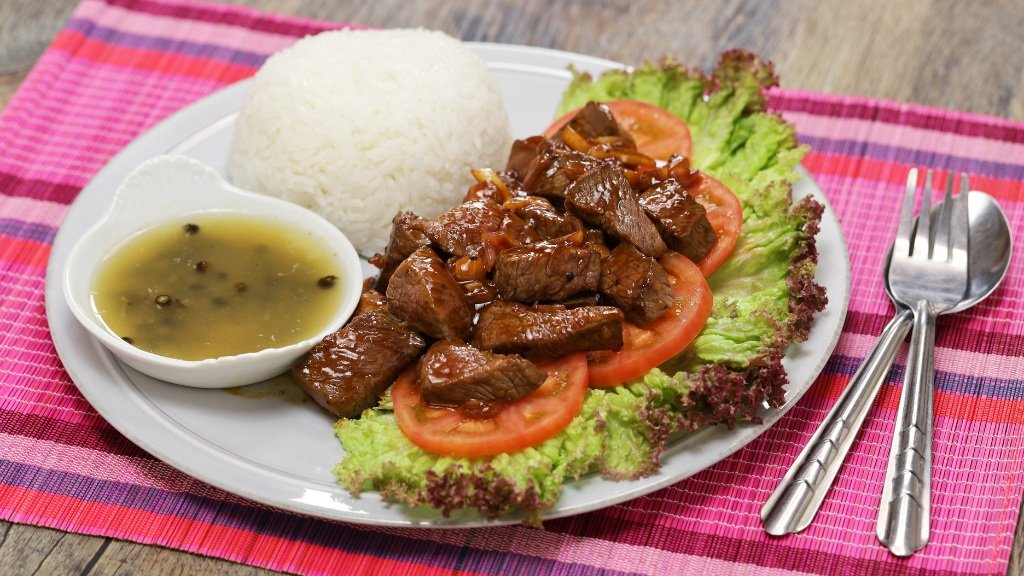
This classic stir-fried beef dish is made with tender beef cubes, onions, and Kampot pepper, served with fresh vegetables and a lime-pepper dipping sauce. It reflects both Khmer tradition and colonial influence.
Nom Banh Chok

Known as Khmer noodles, Nom Banh Chok features rice noodles topped with a light fish-based green curry and fresh herbs. It is a beloved everyday dish across Cambodia.
Kuy Teav
A comforting noodle soup enjoyed for breakfast, Kuy Teav is made with pork or beef broth, rice noodles, and various toppings. Regional variations exist throughout the country.
Street food and home-style dishes
From grilled skewers and fried snacks to simple family meals, Cambodian food culture values freshness, affordability, and shared dining.
Cambodian desserts and snacks
Cambodian sweets are simple, comforting, and closely tied to rice and coconut.
Common ingredients
Desserts often use sticky rice, coconut milk, palm sugar, bananas, and mung beans.
Popular desserts
- Num Ansom: sticky rice cakes wrapped in banana leaves
- Num Krok: coconut rice pancakes
- Chek Ktis: bananas cooked in sweet coconut milk
Traditional sweets
Many desserts are prepared for festivals, religious ceremonies, and family gatherings, reflecting Cambodia’s cultural heritage.
Drinks and beverages in Cambodia
Fresh juices and smoothies
Tropical fruits like mango, pineapple, coconut, and passion fruit are widely used for fresh juices and smoothies.
Herbal tea and Khmer coffee
Cambodia produces strong, rich coffee, often served with condensed milk. Herbal teas are also common in daily life.
Local beer and beverages
Cambodian beer brands are popular and affordable, especially in social and street dining settings.
Dining experiences for travelers
Cambodia offers diverse dining experiences for every type of traveler.
Local eateries vs. fine dining
From simple roadside restaurants to refined Khmer cuisine restaurants, travelers can choose between authentic local flavors and elevated dining experiences.
Cooking classes and food tours
Food tours and cooking classes provide hands-on ways to understand Khmer ingredients, techniques, and culinary traditions.
Vegetarian and international-friendly options
Vegetarian dishes are available, especially near temples, and many restaurants adapt flavors to suit international tastes while preserving Khmer identity.
Want to satisfy your hunger and thirst?
Discover the best places to visit in Cambodia

Let us help you plan an unforgettable trip!




 Google
 Facebook
 Tripadvisor
 Trustindex


