


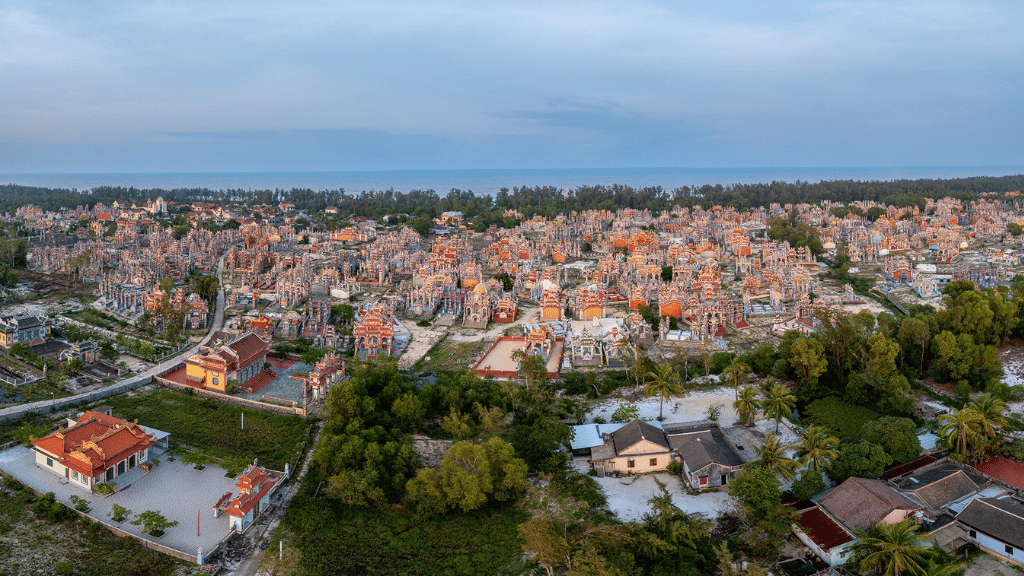
Just outside Hue, on the road toward Danang and within sight of the sea, An Bang cemetery is one of the most unexpected places to visit in central Vietnam. At first glance, its elaborate tombs and colorful architecture may seem like an unusual sight worth a quick photo stop. Spend a little more time here, though, and the cemetery becomes something far more meaningful, offering a glimpse into Vietnamese funeral traditions, family values and one of the most personal sides of local culture.
Ancestor worship runs deep in Vietnamese life, and family memory is treated with real weight here. Many households still think of the ancestral home as a second family house, a place where the living and the dead remain, in a sense, under the same roof. That belief is what built An Bang. Over time, families here have raised an extraordinary field of tombs across some 250 hectares, each one an expression of love and remembrance rather than mere stone.
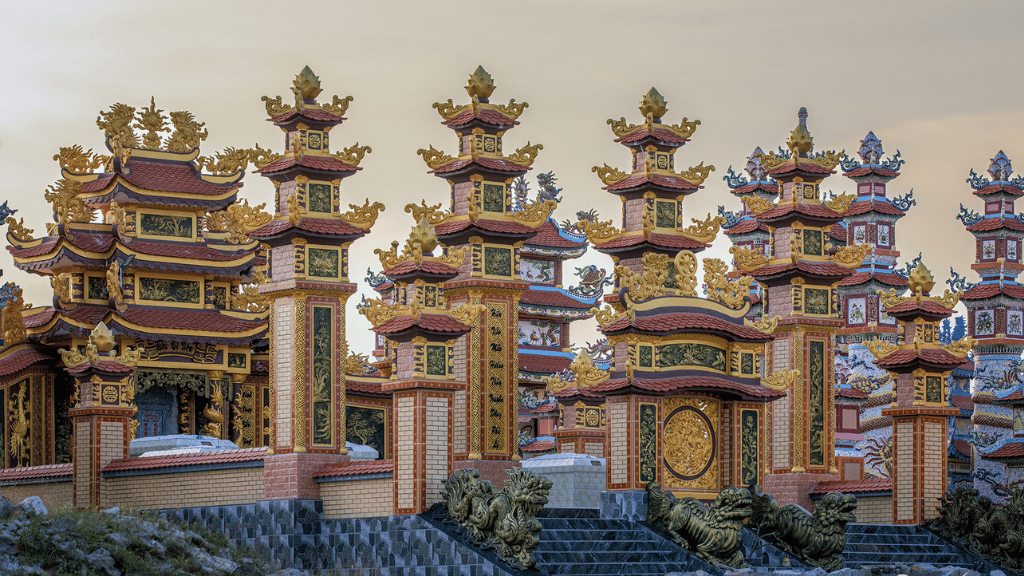
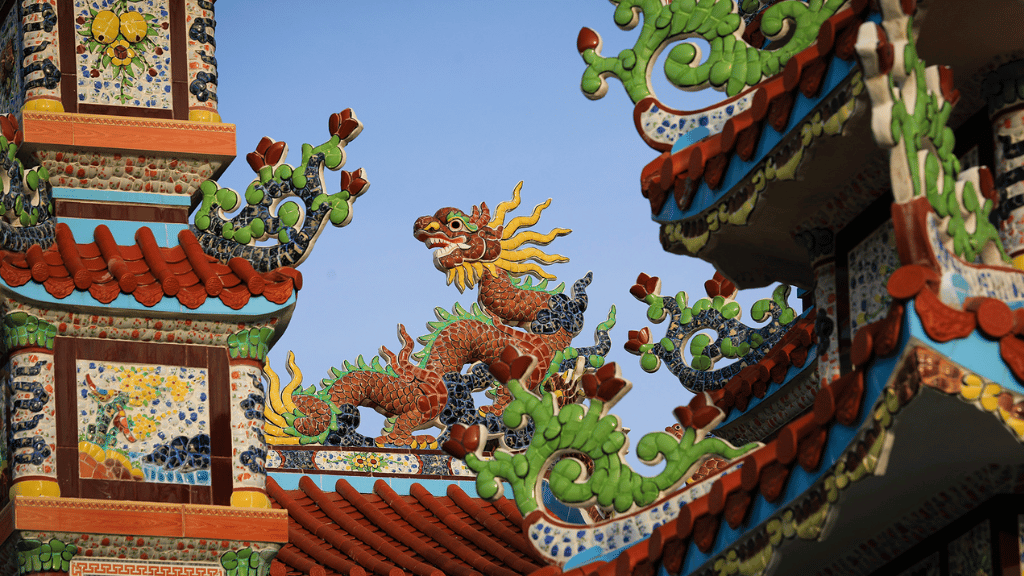
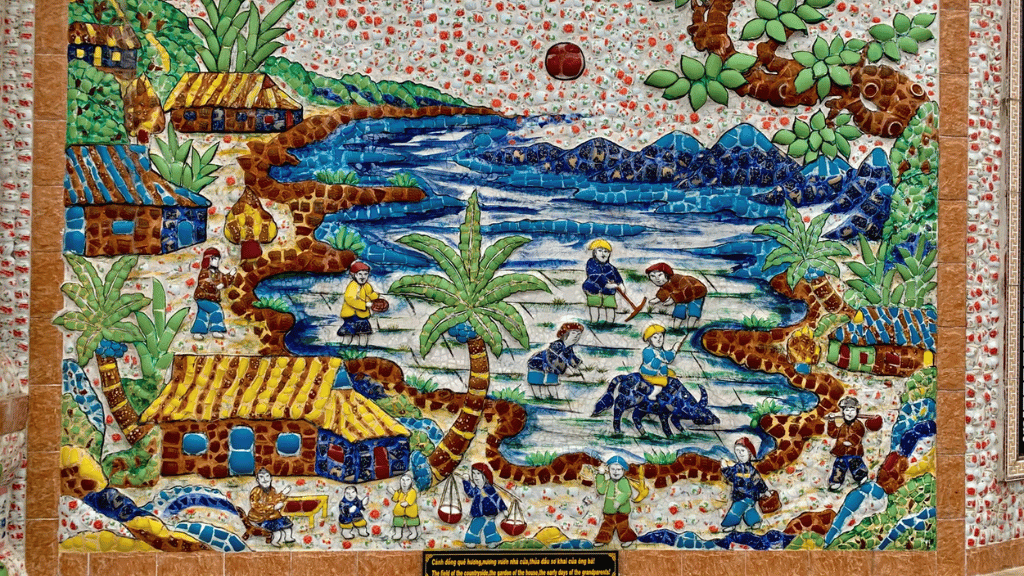
Walk between the graves and you will notice how Buddhist, Taoist and Christian influences sit side by side without friction, a quiet reflection of Vietnam’s spiritual diversity. No two tombs look alike, and no two carry the same story. Local guides, who approach the site with real respect, will often point out a handful of tombs whose grandeur hides a very human family history. An Bang keeps its own records, detailed enough in some cases to trace exactly which family built which tomb and why.
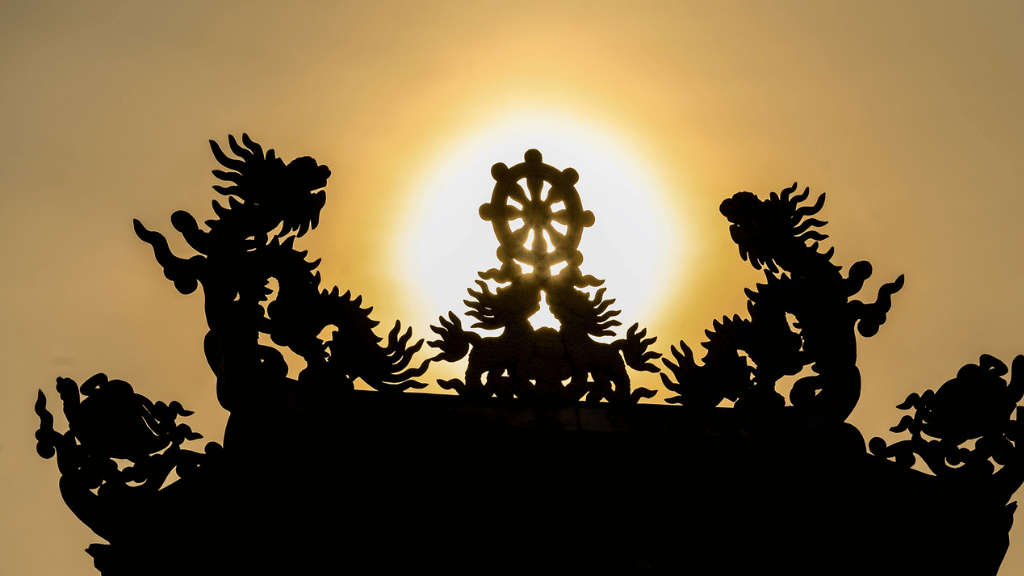
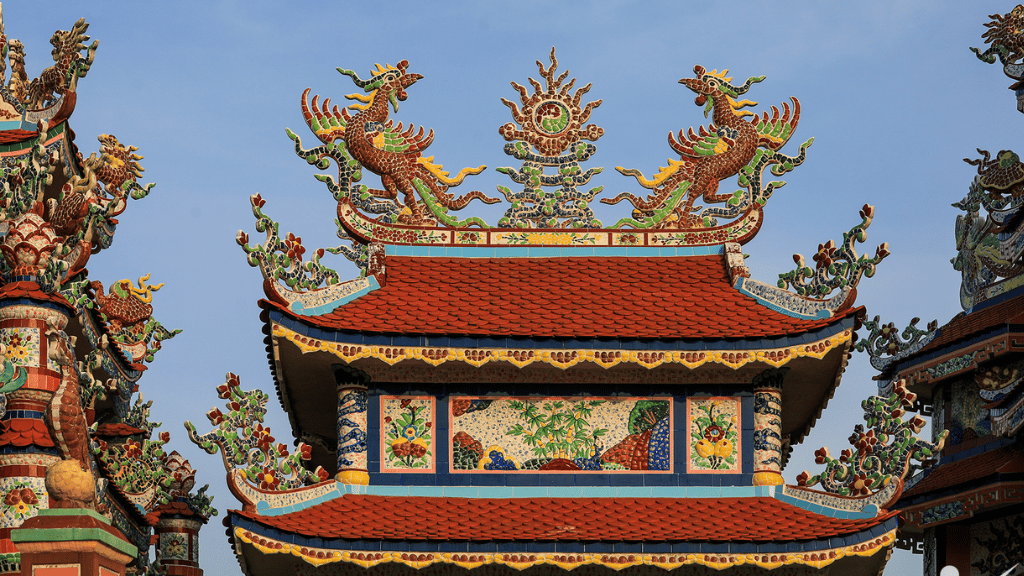
There is a reason so many of these tombs feel so grand. Vietnamese families who settled overseas have often sent money home specifically to fund or upgrade a relative’s resting place, determined to give their ancestors a send off that matches the respect owed to them. The result is part cemetery, part open air gallery: bright ceramic mosaics, sweeping columns, dragons, phoenixes and ornamental flourishes piled on with an imagination that never seems to run out of ideas.
Call it unusual if you like. What An Bang really offers, though, is something rarer on a typical Vietnam itinerary: a genuinely moving, deeply cultural encounter that says more about the country’s values than most temples or museums ever could. It is a stop well worth making time for.




 Google
 Facebook
 Tripadvisor
 Trustindex


