


Mai Chau and Van Ho have a way of drawing you in quietly, through their wide rice valleys, mist-covered mountains and the warmth of local communities who have preserved their way of life for generations. It’s this rare harmony between nature and people that inspired the Hanoi Voyages team to return, not just to see, but to truly experience it again.
Walking through villages, sharing simple moments with local families and rediscovering the region at a slower pace reminded us why these destinations remain so special. If you’re looking for a journey that feels genuine and deeply connected, this is a place worth experiencing for yourself.
An intimate look at nature in Mai Chau-Van Ho
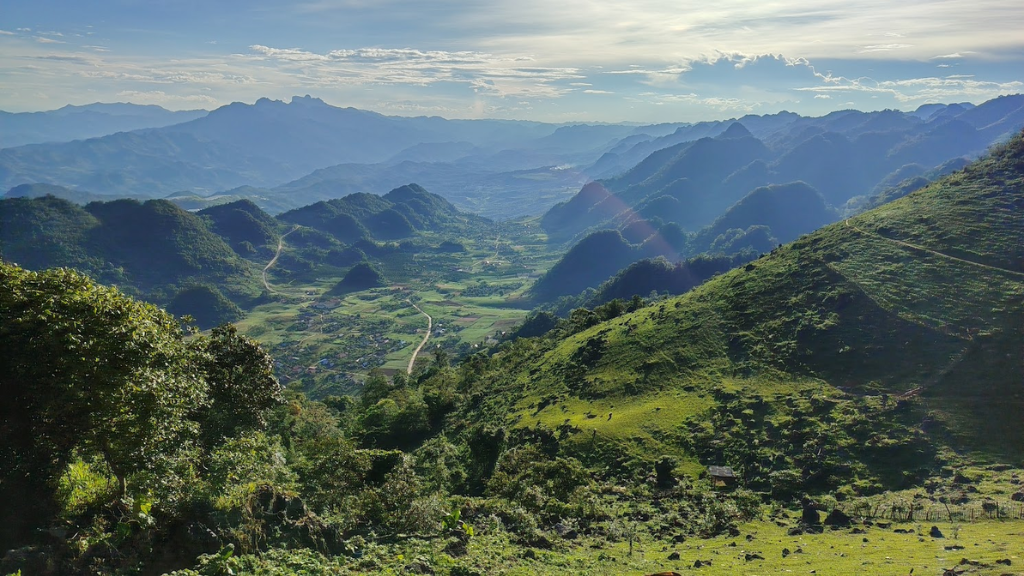
Northwest Vietnam doesn’t slow you down all at once, but little by little, as the road begins to wind and the scenery opens up. On the way to Thung Khe Pass, each turn reveals a broader view, until the Mai Chau valley gradually comes into sight below. It’s not a dramatic reveal, but something more subtle, a landscape that encourages you to pause and take it in properly. Along the road, small stalls selling grilled corn or hot tea create natural breaks, simple moments that fit easily into the journey.
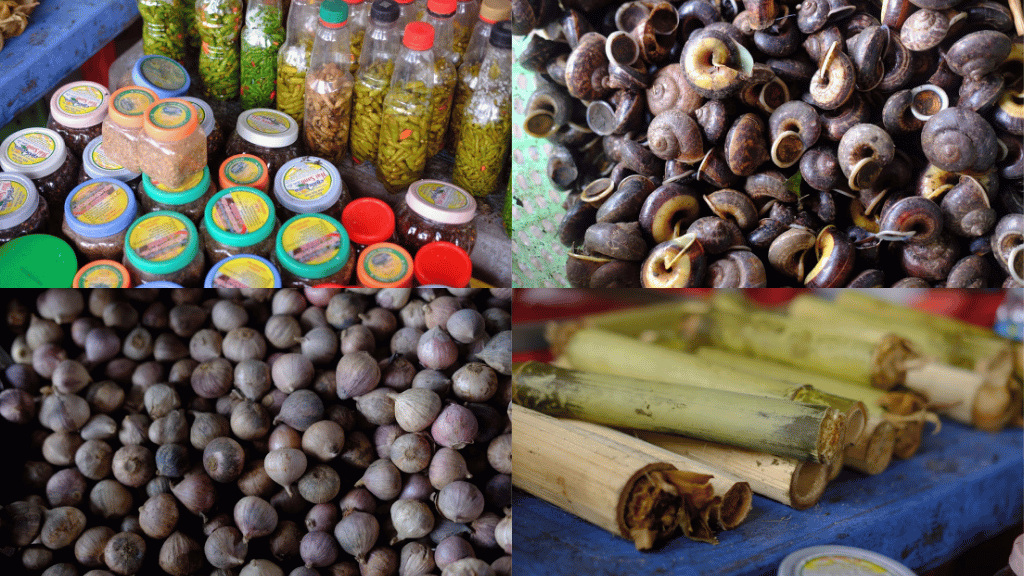
Further down, we stopped at a small Muong market, informal and without any clear structure. Locals were selling what they had brought for the day, going about their routines without paying much attention to visitors. Walking through it felt straightforward and genuine, with quiet exchanges that didn’t try to be anything more than they were.
The trek through Suoi Lin followed the same rhythm. The paths moved between villages, rice fields and small streams, never too difficult but enough to stay engaged. Rather than a series of highlights, the experience came from continuity, from being present as the landscape and daily life unfolded at the same steady pace. Farmers worked in the fields, children watched or waved as we passed and everything felt natural, without any sense of staging.
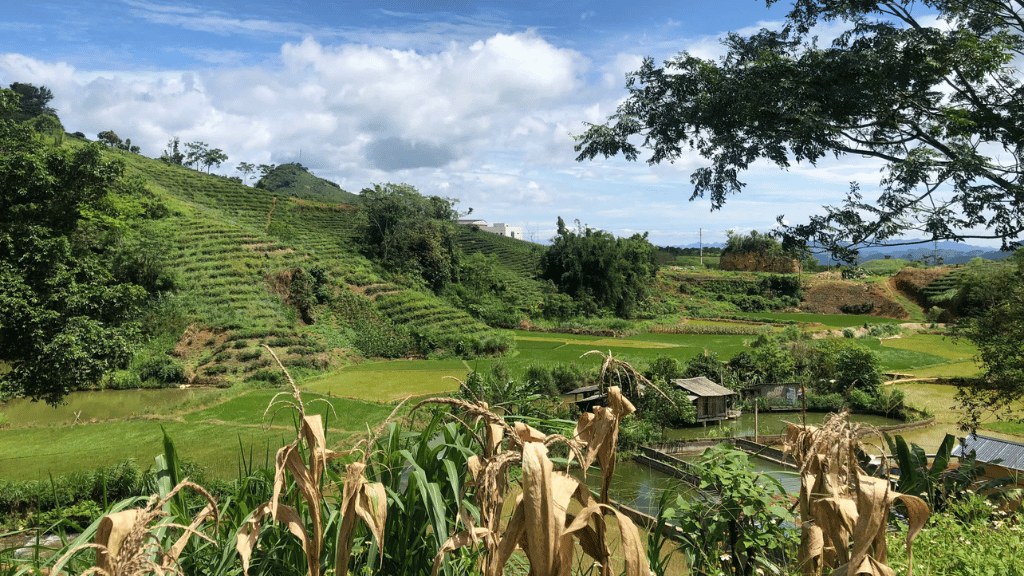
On the final stretch between Pa Khom and Thung Mai, the setting became more remote, with narrower paths and fewer signs of movement beyond the villages themselves. It reinforced the feeling of being slightly removed from the more frequented routes, without ever feeling inaccessible.
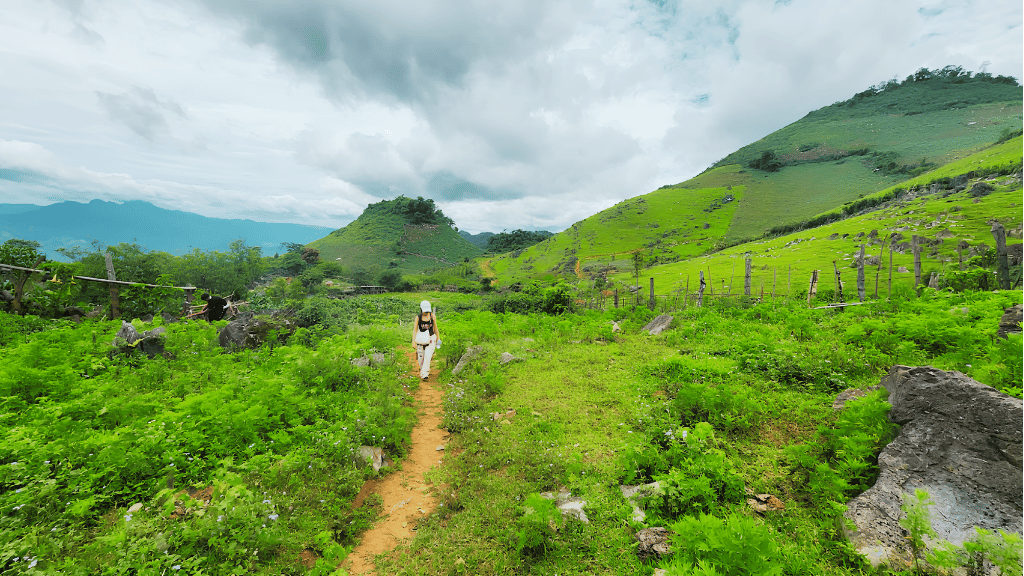
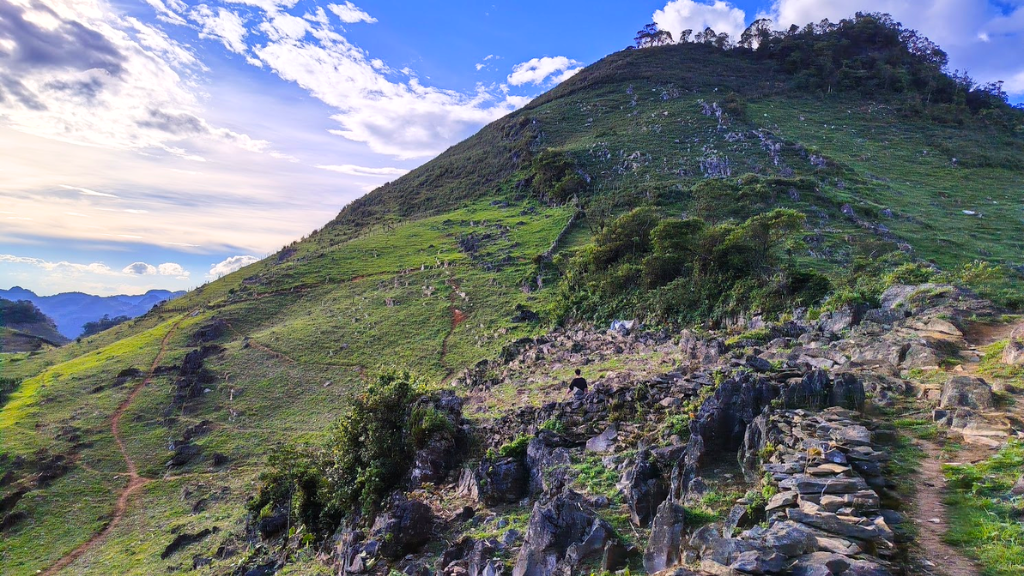
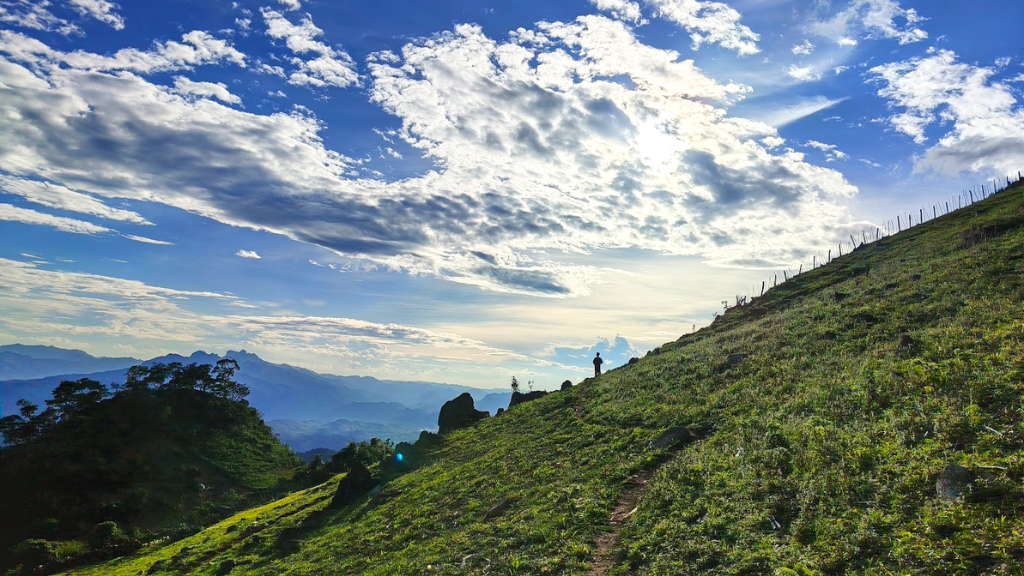
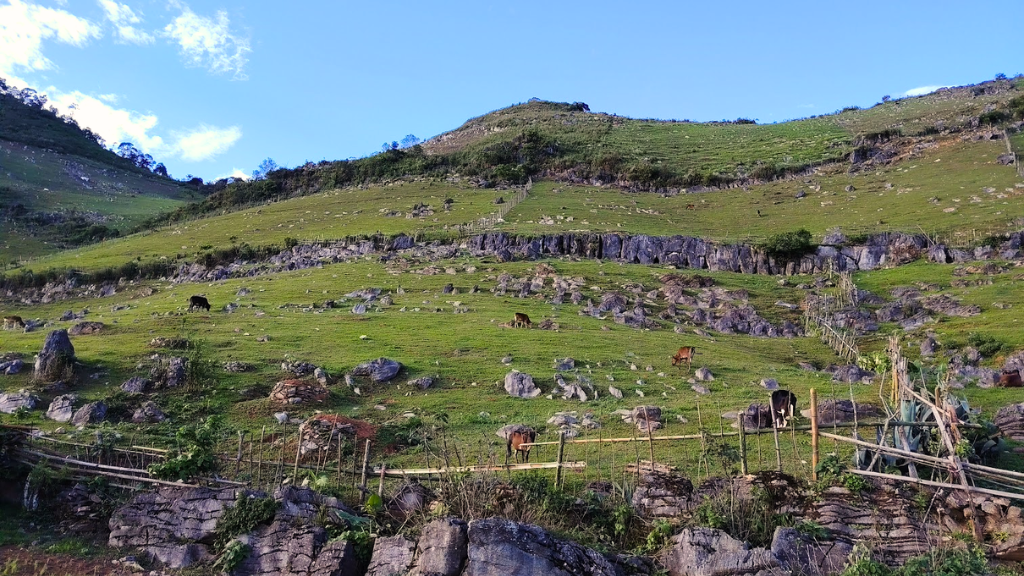
What stands out in the end is not a single moment, but the consistency of the experience. Open landscapes, very little outside interference and the space to move at your own pace make this part of the region feel grounded and unchanged in the best way.
Life in Pa Co: a place you understand by being there
Pa Co isn’t a place you fully grasp just by reading about it. It takes a bit of time sitting quietly, watching daily life unfold to really feel its rhythm. Between the small local markets, rows of wooden houses and the unspoken moments in between, life here continues in a way that feels largely unchanged.
This is also where we were introduced to traditional crafts that have been passed down through generations, with very little influence from modern shortcuts. From the intricate process of beeswax batik painting to the careful, handmade production of do paper, each step reflects a level of patience and attention that’s easy to overlook, but hard to forget once you’ve seen it up close.
Visiting a traditional H’mong house in Pa Co
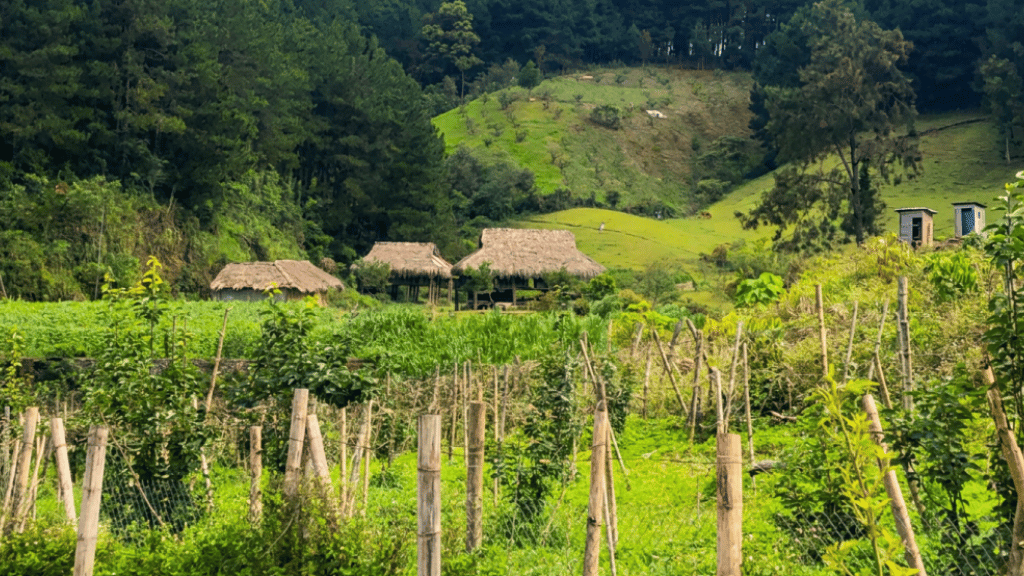
If you have the chance to visit a H’Mong home in Pa Co, it helps to understand how these houses are built and used. They are designed to suit the mountain climate, using rammed-earth walls along with wood and bamboo sourced locally. This combination keeps the house stable and naturally warm, especially during colder months.
A typical house is divided into three main areas, each with a clear purpose. On the left side, you’ll usually find the main kitchen along with the family’s sleeping space. This is where most daily activities take place. On the right, there is a second hearth reserved for guests. If you stay overnight, this is where you’ll be welcomed to rest.
The central area is the most important part of the house. It is the largest space and where the ancestral altar is placed. This is also where the family gathers and where guests are received. When visiting, it’s good to be aware that this space holds cultural and spiritual significance, so a respectful and quiet presence is always appreciated.
Spending time in a H’Mong home is one of the simplest ways to understand local life here. It gives you a clearer sense of how family, tradition and hospitality are part of everyday living in Pa Co.
Beeswax batik in Pa Co: Quiet tradition passed through generations
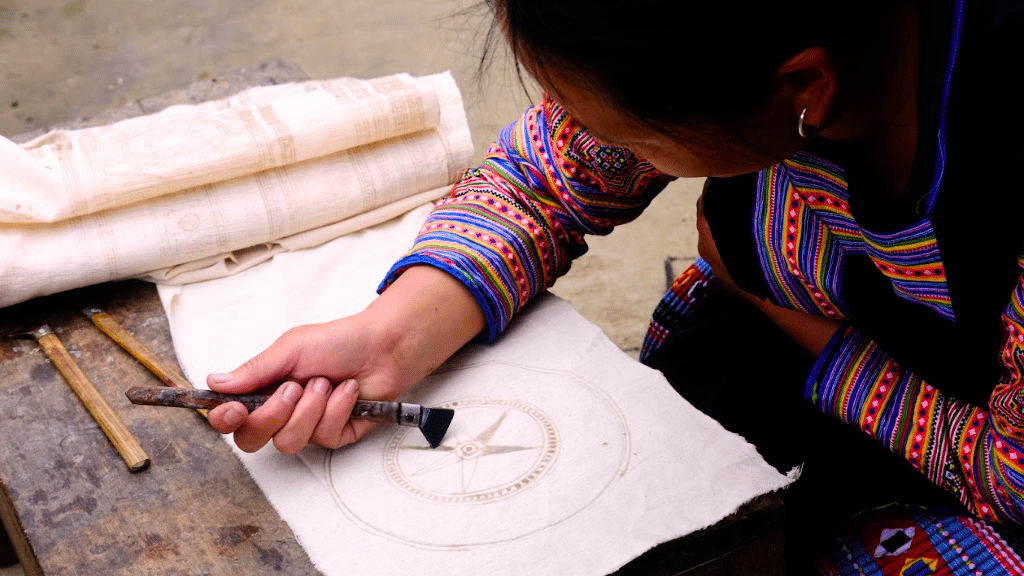
If you spend time in Pa Co, you may come across women working on beeswax batik just outside their homes. This is not a staged activity for visitors, but part of their daily routine. They use a small tool to draw patterns with hot beeswax directly onto fabric, entirely by hand and without any pre-drawn outline. The designs come from experience, built up over many years.
After the wax is applied, the fabric is dyed in indigo. Once it is washed, the areas covered in wax remain undyed, forming white patterns against a dark blue background. The process may look simple at first, but it requires steady hands, patience and a good sense of timing.
For visitors, it’s worth taking a moment to observe quietly rather than interrupt. This craft has been passed down through generations and continues to be practiced in the same way today. Seeing it in person gives you a better understanding of the time and skill behind what might otherwise seem like everyday textiles.
What locals eat in Pa Co and What you can try
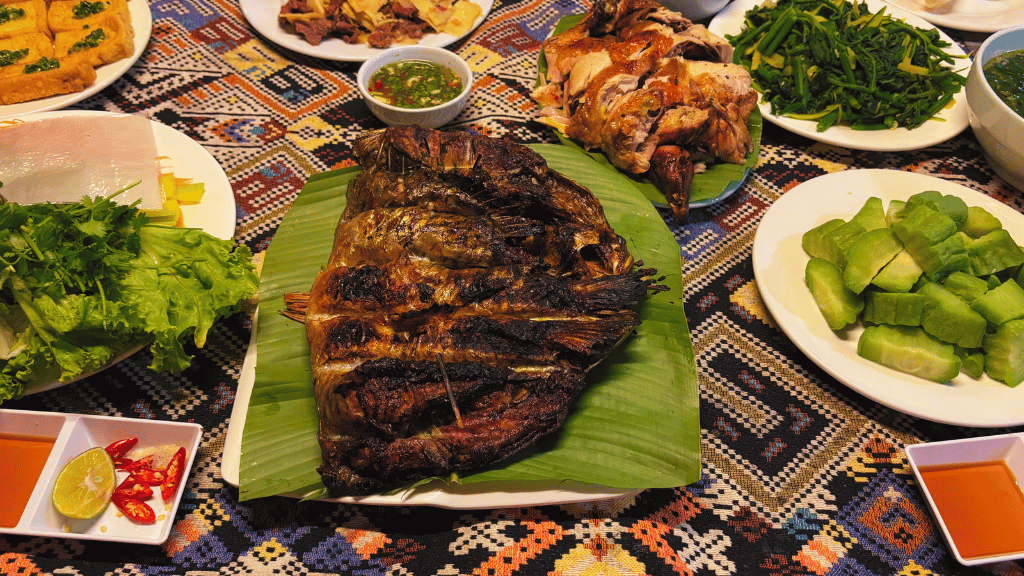
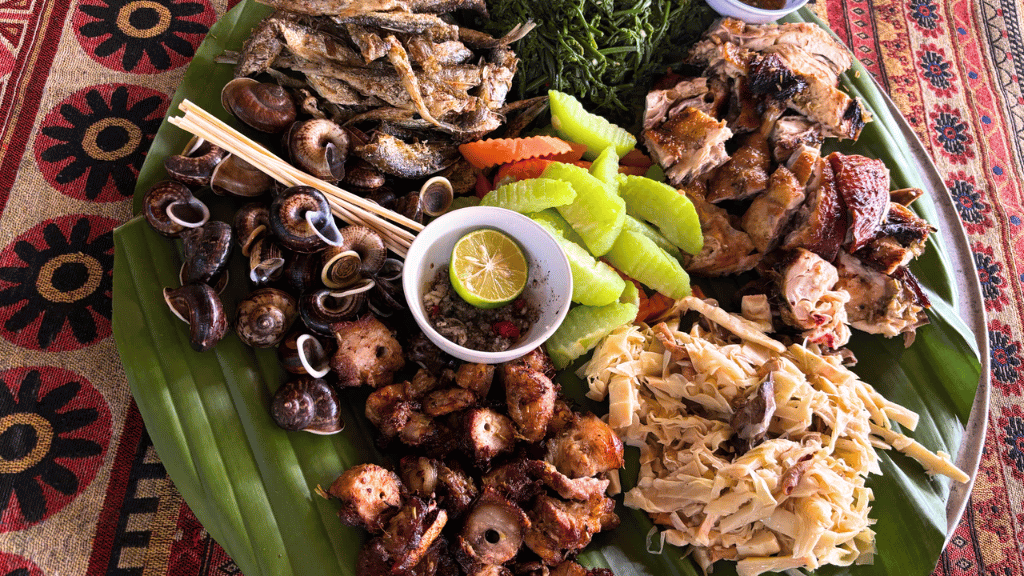
Food in Pa Co reflects the way people live here, simple, seasonal and closely tied to what’s available locally. Most meals are prepared using ingredients grown nearby or sourced from the surrounding mountains and the recipes have remained largely unchanged over time.
When visiting, you’ll often be served familiar local dishes such as grilled chicken, grilled fish, steamed snails and com lam-sticky rice cooked inside bamboo tubes over an open fire. Fresh vegetables, usually picked from village gardens, are always part of the meal and help balance the flavors.
The cooking is straightforward, with an emphasis on freshness rather than heavy seasoning. For visitors, this is a good opportunity to experience how everyday meals are prepared and shared. It may not be elaborate, but it offers an honest and authentic taste of local life in Pa Co.
Exploring culture through music and mua sap
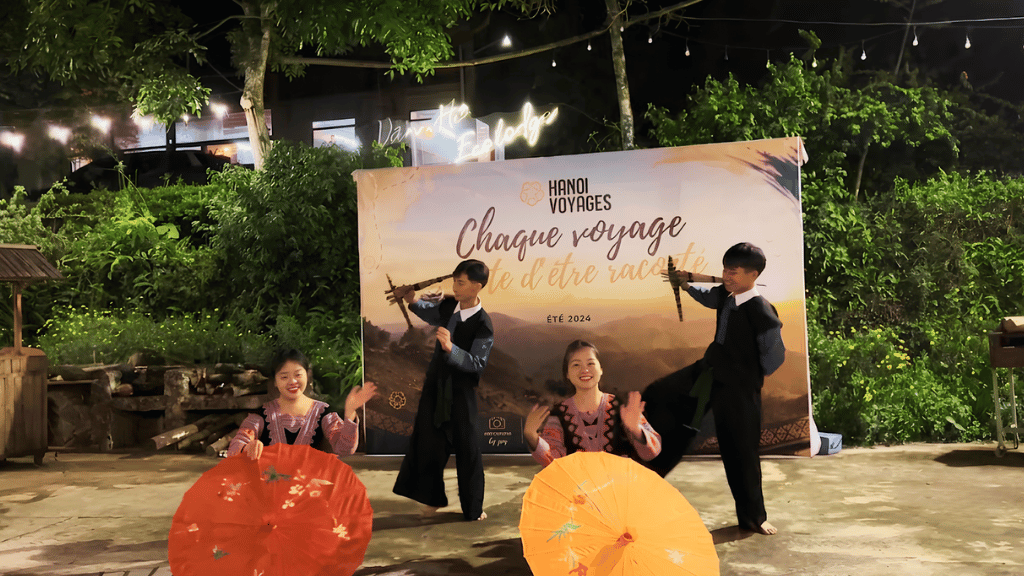
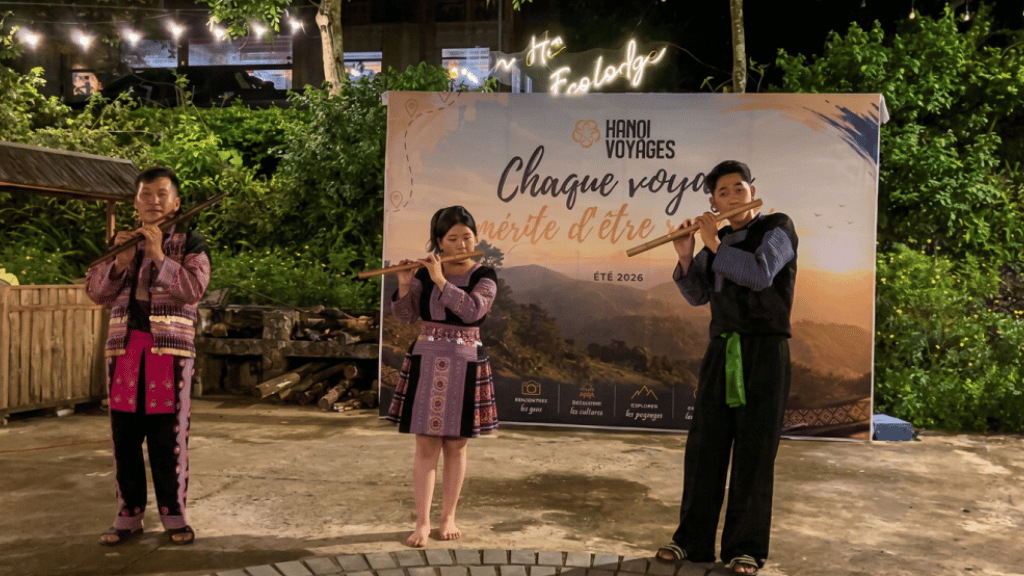
If you stay overnight, the evening offers a chance to experience local life in a more relaxed and informal way. As the sun sets, the atmosphere becomes quieter and you may start to hear traditional music played nearby, often using the khen, a wind instrument closely associated with H’Mong culture.
People sometimes gather in shared spaces or family homes to sing, play music and spend time together. These are not staged performances, but part of everyday life. You may also see múa sạp, the bamboo pole dance, where participants move in rhythm between wooden poles. Visitors are welcome to join and it’s completely fine if you miss a step the focus is on participation rather than perfection.
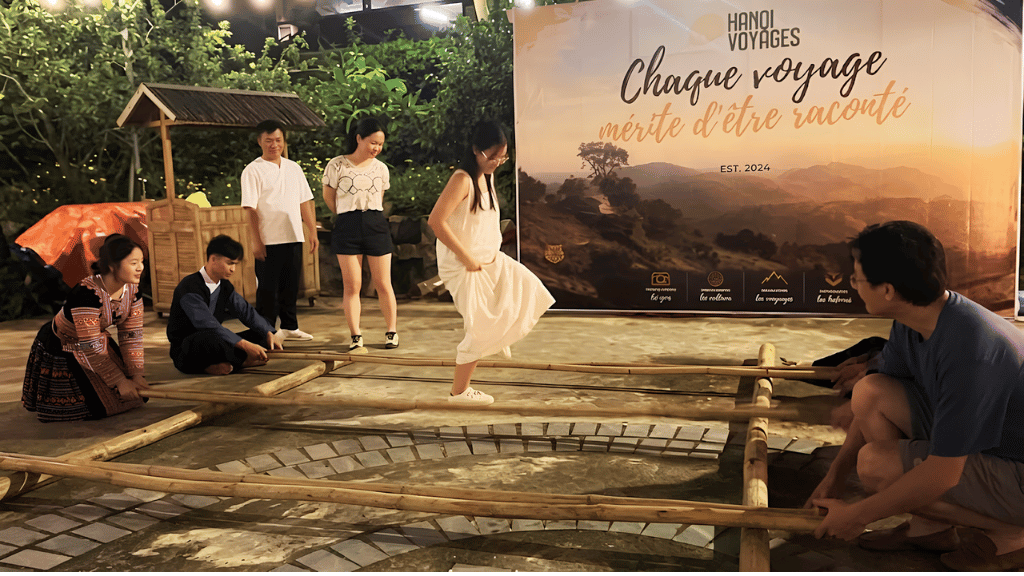
If you choose to take part, simply follow the rhythm and observe how locals move. It’s a simple, natural way to connect, through music, movement and shared moments at the end of the day.
Experiencing local life through volunteering activities in Thung Mai
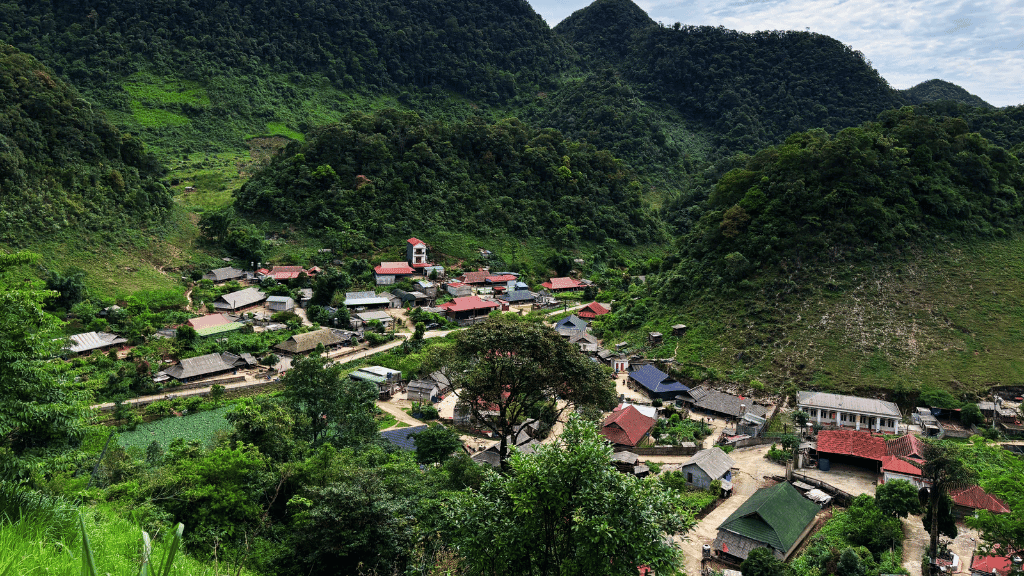
Among all the stops on this trip, the visit to Thung Mai stayed with the team the longest. None of us had been there before. Reaching the village took time, with winding mountain roads leading into a place that still feels far removed from the usual travel routes. Life here comes with its own challenges and daily conditions are still quite limited. When we first arrived, we spent time walking through the village, following small paths between homes. It gave us a clearer sense of how people live closely connected to the land, with a slower rhythm shaped by the seasons.
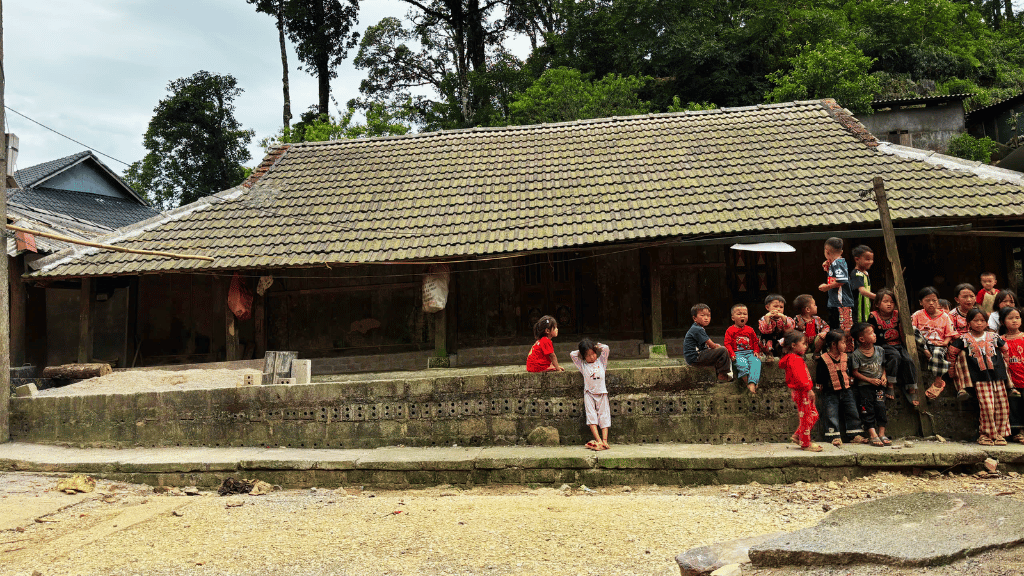
As part of the trip, the team brought small donations to share directly with residents. More than 90 children received simple gifts, handed out one by one. We also visited several elderly residents, walking to their homes to offer small support where we could.
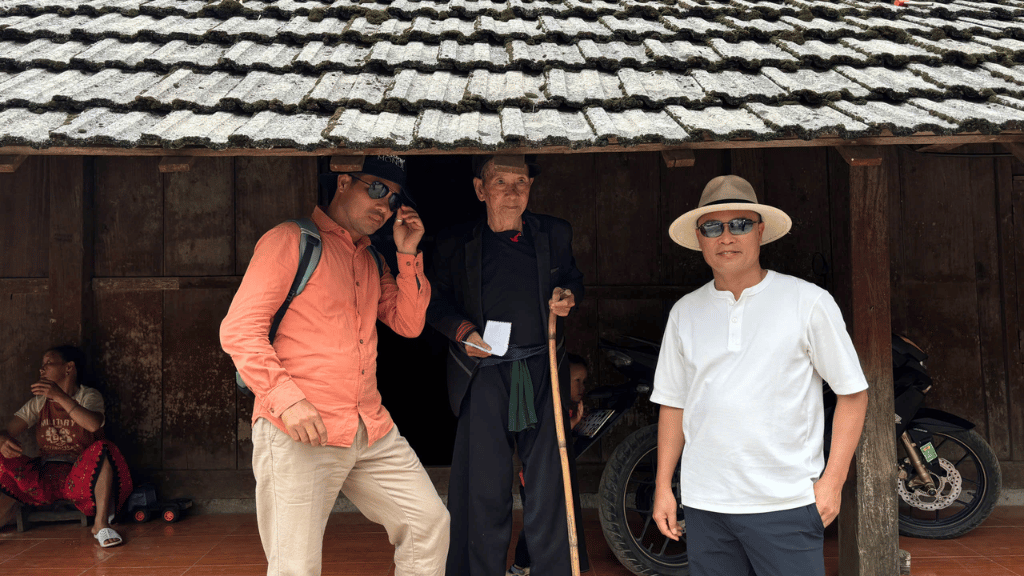
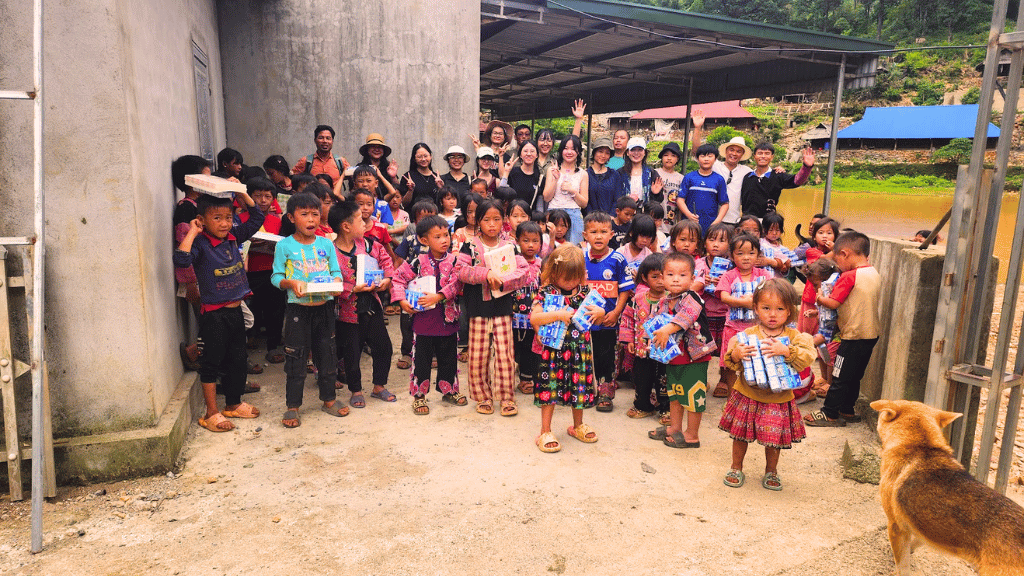
The interactions felt natural. The children were curious and quick to approach, while the older residents were more reserved at first, observing before gradually opening up. There wasn’t much need for conversation, a smile, a handshake, or just sitting together was enough.
That time in the village left a lasting impression on the whole team. Beyond the experience itself, it also opened up a conversation about the future. Places like this still hold their authenticity, untouched landscapes, strong cultural identity and a way of life that hasn’t been shaped by tourism.
In the long run, there may be opportunities to introduce this kind of destination to travelers who are looking for more responsible and meaningful experiences. Done carefully and with respect for the community, it can create small but positive changes without taking away what makes the place special.
Even though the trip only lasted a few days, it served as a reminder of why these journeys matter. Not just for the landscapes, but for the connections made along the way and the importance of approaching travel with understanding and respect.
Traveling through Mai Chau and Van Ho, what stayed with us wasn’t just the scenery though the landscapes were beautiful in their own quiet way. It was the people we met, the small moments we shared and the feeling of being welcomed into everyday life, even if only for a short time. The culture of communities like the H’Mong, still deeply rooted in tradition, made the experience feel real and grounded.
This trip wasn’t just a team getaway. It felt more like a pause, a chance to reconnect with the meaning behind our work. To remember that beyond itineraries and destinations, what truly matters is how we connect, how we listen and how we show up with respect. In the end, we didn’t just come back with photos or memories, but with a clearer sense of purpose. And that’s what we hope to pass on to every traveler who chooses to explore this place with us honestly, thoughtfully and with an open mind.




 Google
 Facebook
 Tripadvisor
 Trustindex


