


If you spend a week in Hanoi visiting temples and museums, you might still miss what truly makes the city special. The real experience begins much earlier, in the quiet hours of the morning, where street vendors in Hanoi bring the streets to life. From bamboo poles filled with fresh goods to bicycles loaded with colorful produce, these everyday scenes reveal a side of Hanoi that feels both authentic and deeply rooted in tradition.
For travelers who want more than just sightseeing, taking the time to notice street vendors in Hanoi offers a deeper understanding of local life, culture, and the rhythm of the city.
Table of Contents
Street vendors in Hanoi and the stories passed down through generations
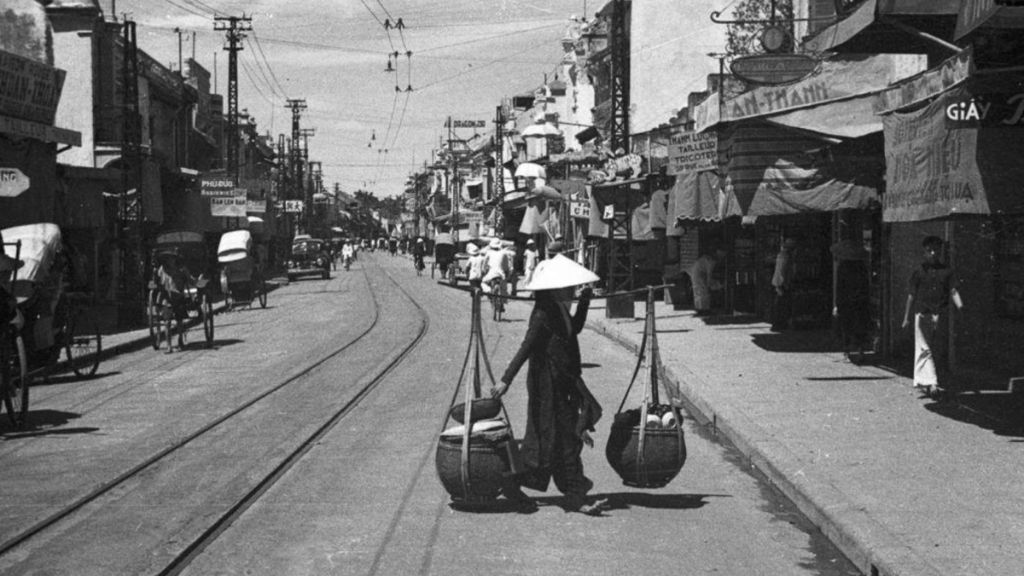
Street commerce in Hanoi is nothing new. It traces back to the very structure of the Old Quarter, where each street was traditionally dedicated to a single trade or product. When shops closed or residents couldn’t reach the markets, itinerant traders filled the gap. They went to the customer, rather than waiting for the customer to come to them.
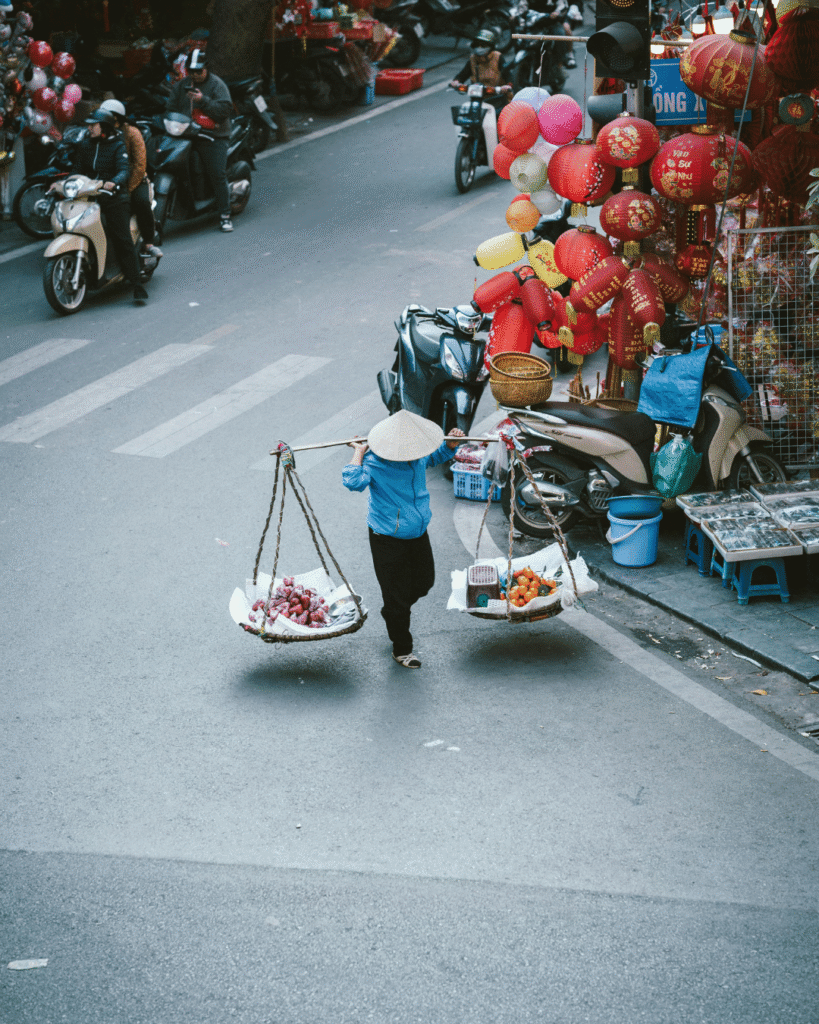
That model has survived through centuries, wars and economic upheaval. Today, in a city of eight million with supermarkets and delivery apps on every corner, street vendors remain a living institution not out of habit but because they offer something modern convenience hasn’t replaced: closeness, trust and the kind of relationship where a vendor knows a regular customer by name and by taste.
For travelers, that continuity is a gift. It opens a window into everyday Hanoi life that no tourist restaurant or souvenir shop can offer.
The Gánh and the bicycle: Two ways of carrying the street
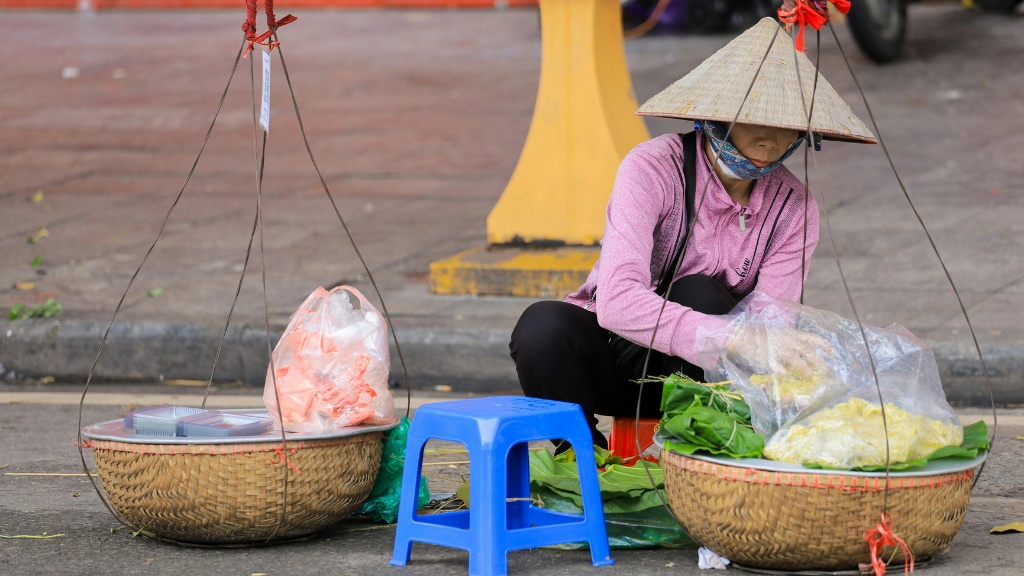
Before looking at what vendors sell, it’s worth understanding how they carry it. The gánh: a bamboo shoulder pole balanced with a basket on each end – is both a working tool and a powerful cultural symbol.
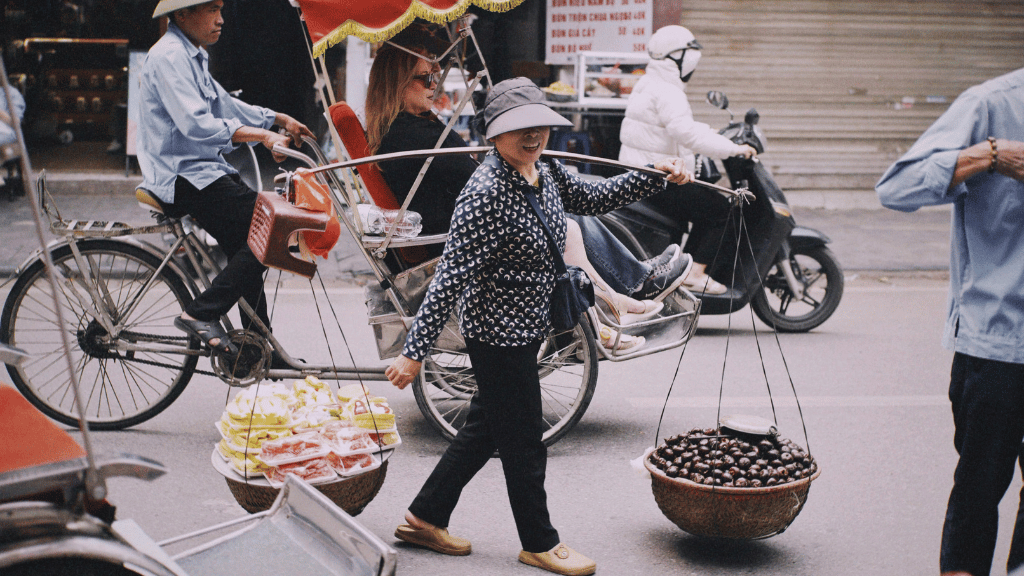
Carrying a gánh isn’t intuitive, it’s a skill learned young, often passed from mother to daughter across generations. The resulting walk has a distinct rhythm – a slight sway that absorbs the motion of the baskets without ever spilling them. Watching a vendor cross a busy intersection, her gánh perfectly steady amid the traffic, feels almost like choreography.
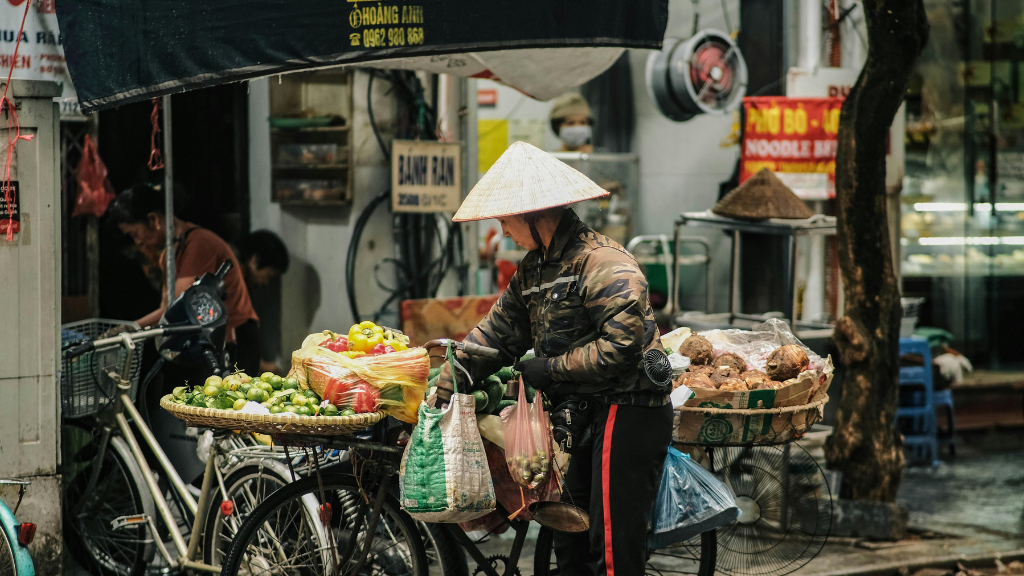
Many vendors today have adapted the tool to the times: the bicycle has replaced the shoulder pole for some. Loaded with overflowing baskets on either side, sometimes fitted with a small tray on the frame, the vendor’s bicycle has become its own iconic image of Hanoi’s streets – recognizable by its deliberate, unhurried pace as it hugs the curb, the vendor calling out softly what’s for sale. On foot with a gánh, or pedaling a loaded bike – both forms exist side by side on the same street, sometimes just meters apart, and both tell the same story: go to the customer, don’t wait for them.
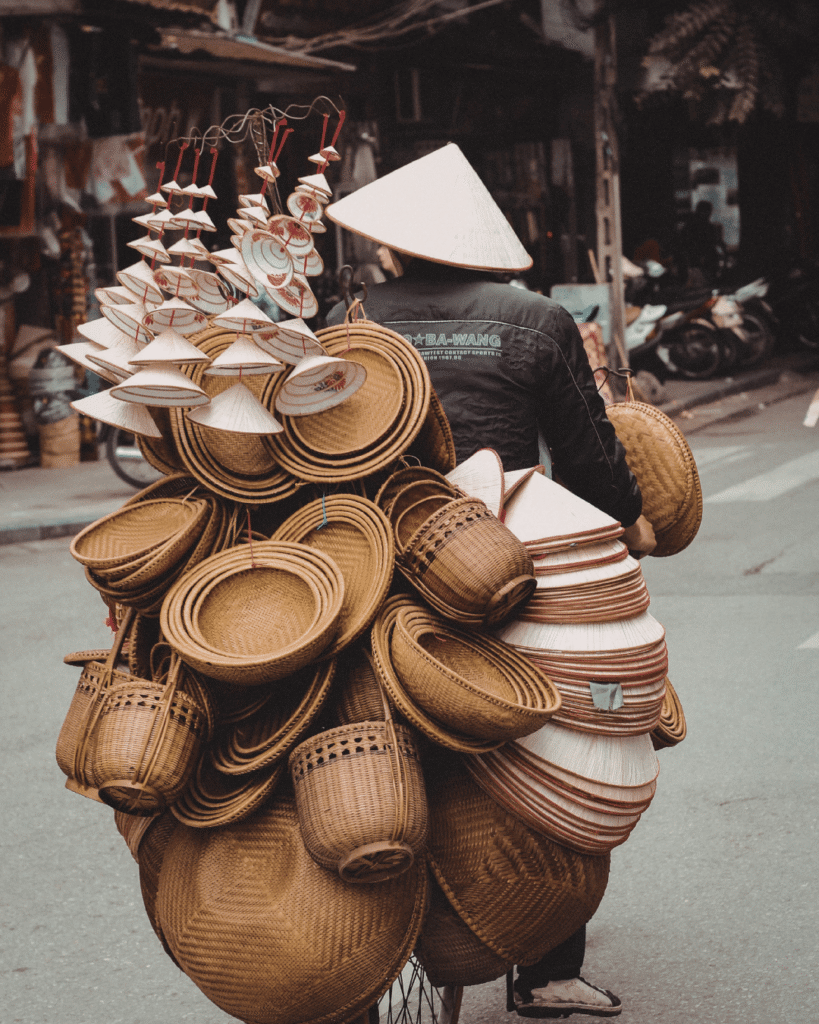
Following street vendors in Hanoi through every hour of the day
To truly understand Hanoi, follow its rhythm through the street vendors in Hanoi. From quiet dawn streets to lively evenings, they shape the city hour by hour. Spend a day alongside them, and you’ll discover a side of Hanoi that most travelers miss.
5:30–8:00 AM: The city at its most intimate
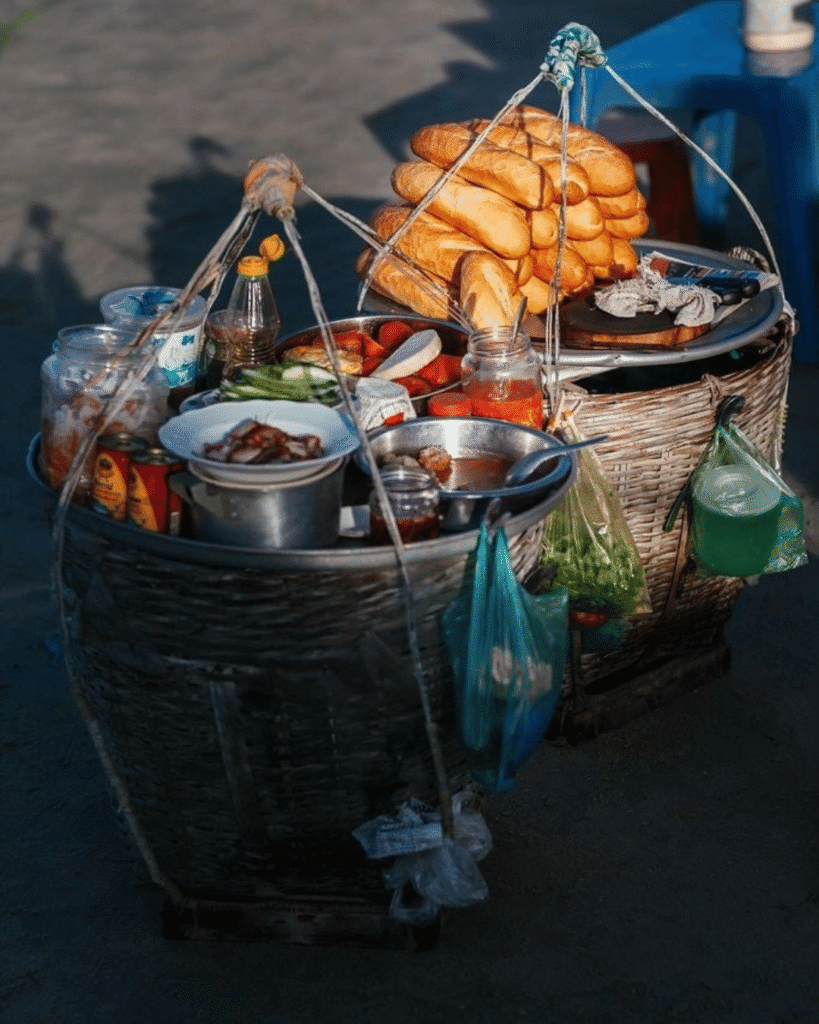
Nothing in Hanoi feels quite as personal as its breakfast hour. This isn’t really about the food it’s about routine. Women move through the alleys with a bamboo pole across their shoulders, a covered basket swaying from each end, filled with sticky rice still warm enough to fog up the lid, topped with pork sausage or a soft-boiled egg. A few doors down, a Banh Mi vendor is quietly building sandwiches to order crusty bread packed with pâté, fresh herbs, pickled carrot and daikon often adjusting the recipe without even being asked. That’s the giveaway of a regular: they don’t order. They’re simply remembered.
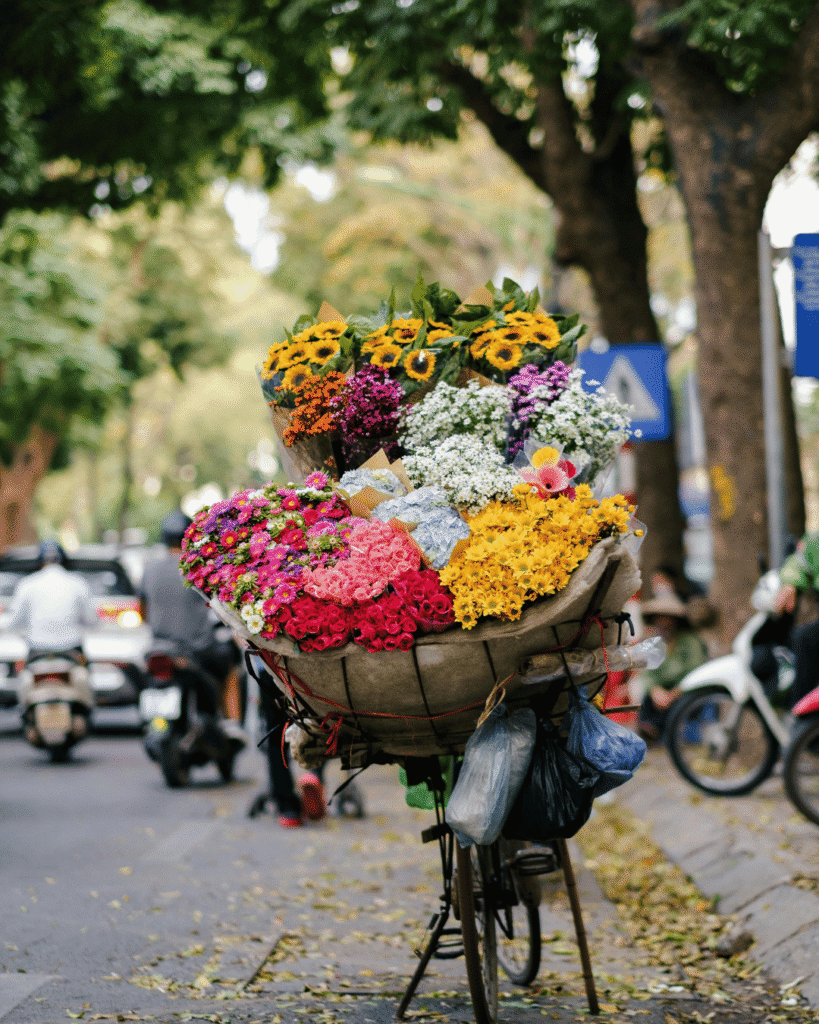
This same hour belongs to the flower sellers. Their bicycles, stacked absurdly high with lotus, chrysanthemum, or whatever’s blooming that season, move at a slow, deliberate pace through the Old Quarter. Flowers here aren’t saved for special occasions -they go on the family altar every morning, or get handed to a friend for no particular reason at all. Watching one of these bicycles pass by, petals spilling over the edges of the basket, is one of those small scenes that somehow says more about daily life in Hanoi than any monument could.
8:00 AM–12:00 PM: The street turns colorful
Late morning is fruit-seller territory and it shows baskets overflow with whatever’s in season: green mango in the summer heat, lychee and rambutan when temperatures peak, pomelo once things cool off. Here’s a detail most first-time visitors miss: fruit in Hanoi is rarely eaten plain. A slice of green mango dipped in chili salt hits sour, salty and spicy all at once – a small combination, but one that somehow sums up snacking in this city better than anything else could.
12:00–5:00 PM: The slow hours
As the heat builds, the street adjusts. This is when Che appears: a sweet, cooling mix that might include beans, coconut milk, jelly, or lotus seed, served in small plastic bowls perfect for a five-minute break in the shade. Ice cream vendors pass through with their distinctive boxes strapped to bicycle racks, and roasted peanuts, warm and lightly salted, get twisted into paper cones. None of this is a meal. It’s a pause a small excuse to stop moving for a minute in the middle of a hot afternoon.
After 6:00 PM: Smoke, sidewalks and conversation
Once the temperature finally drops, small charcoal stoves start appearing along the sidewalks. The menu simplifies again grilled corn, fried tofu, sometimes sweet potato but the real signature of this hour isn’t on the plate. It’s in the air. A light, faintly sweet smoke drifts through the streets, tangled up with the sound of motorbikes and conversation. It’s easy to miss the first time. Once you notice it, though, it’s one of those things you’ll remember long after you’ve left.
Travel tips for discovering Hanoi’s street vendors
Best time to go: If you want to see Hanoi’s street life at its most authentic, wake up early. From around 5:30 to 8:00 AM, the city feels softer, quieter, and full of small rituals: breakfast vendors, flower sellers, and fruit carts moving through sleepy streets. Late afternoon, from 4:30 PM onwards, is another good window when the energy picks up again, especially around parks and busy corners.
Where to find them: You don’t have to search too hard the Old Quarter, small alleys, and residential neighborhoods are the best places to start. Wander without a fixed plan. The more you drift away from main tourist streets, the more natural the encounters feel. Morning markets and areas around lakes are also full of vendors going about their daily routines.
What to try: Don’t overthink it just eat what you see locals eating. A simple portion of xôi wrapped in banana leaf, a freshly cut fruit cup, or a quick bánh mì on a low plastic stool often turns out to be the most memorable meal of the day. If a stall is busy, that’s usually a good sign.
How to sit and eat: Space is small and shared. Pull up a tiny stool, keep your belongings close, and don’t expect comfort that’s part of the experience. Meals are quick, casual, and often eaten right on the sidewalk. Just follow what others are doing.
Cash and small habits: Always carry small bills and pay directly after receiving your food. A simple “cảm ơn” (thank you) is always appreciated. No tipping is expected, but kindness and patience matter more than anything.
Respect the rhythm: These vendors have been doing the same routine for years. Try not to block their path, crowd their space, or interrupt when they’re busy. The best way to experience this world is to quietly step into it, not change it.
FAQs
1. What does a vendor’s gánh actually tell you about what they’re selling?
Quite a lot. A covered basket usually means cooked food kept warm. An open tray signals fresh fruit or snacks. A flower-laden bicycle is unmistakable.
2. Is it rude to walk away without buying?
Not at all. Vendors are used to it. A polite smile and a small head shake is enough, no explanation needed.
3. What should I try first as a complete beginner?
Start with a bánh mì, it’s easy to point at, cheap and universally delicious. Then work your way up to sticky rice or fresh tropical fruit with chili salt.
Hanoi’s street vendors offer far more than quick meals — they reveal the rhythm of daily life, local habits, and authentic human connections. Taking a moment to sit, taste, and observe can turn a simple stop into a meaningful travel experience.
As you plan your trip, make space for these small yet unforgettable encounters. From street food tastings to everyday interactions, this is where the true spirit of Hanoi comes alive. Want to experience Hanoi beyond the typical tourist trail? Start planning your journey today and discover the city through its most authentic moments.




 Google
 Facebook
 Tripadvisor
 Trustindex


