


In the mountains of northern Vietnam, Pa Co Market brings the highlands of Mai Chau to life every Sunday morning. This Pa Co Sunday market attracts Hmong people from nearby villages, who gather from dawn to sell their harvests, buy everyday essentials and share the latest village news. As a traditional ethnic market in Vietnam, it offers an authentic glimpse into Hmong culture through indigo-dyed fabrics, batik patterns, traditional Hmong clothing, agricultural produce and traditional handicrafts. Visitors can also browse a variety of local products in Vietnam while observing everyday life in this mountain community. Far more than a trading place, this Mai Chau market is a social and cultural meeting point that reveals another side of the country, away from the usual tourist routes.
Want to explore Pa Co Market and the landscapes of Hang Kia? Include this stop in your tailor-made trip through the mountains of northern Vietnam.
Table of Contents
Pa Co: a Hmong community in the mountains of Mai Chau
Located in the highlands of northern Vietnam, Pa Co Market is closely connected to the Hmong communities living across the mountainous area of Mai Chau. Beyond its weekly trading activities, the market reflects the region’s cultural identity, where traditional customs, agricultural practices and village life remain closely intertwined. The surrounding landscape of mountain villages, tea plantations and plum orchards also offers visitors a glimpse into the daily life of this highland community.
A mountain commune where Hmong culture remains strong
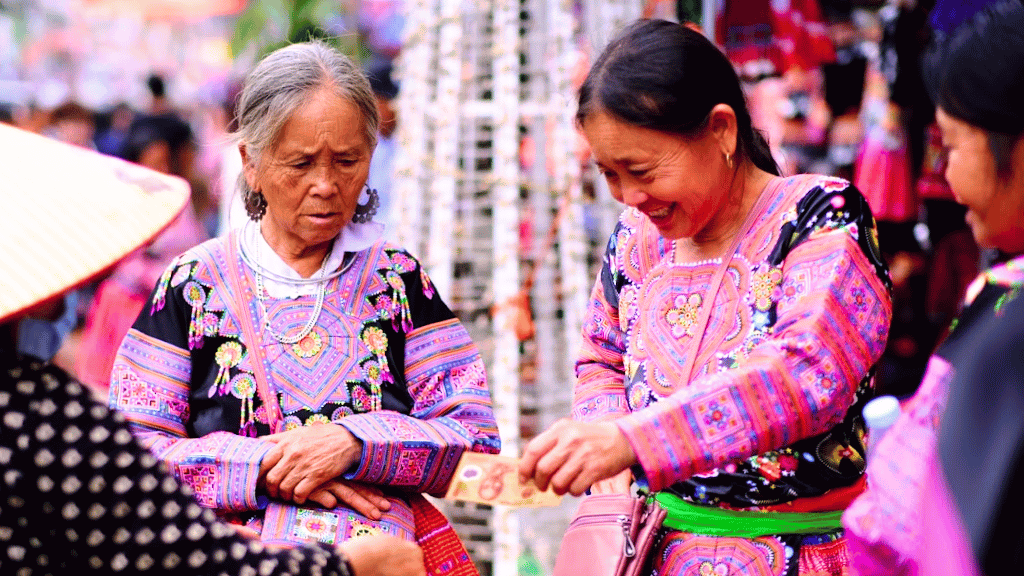
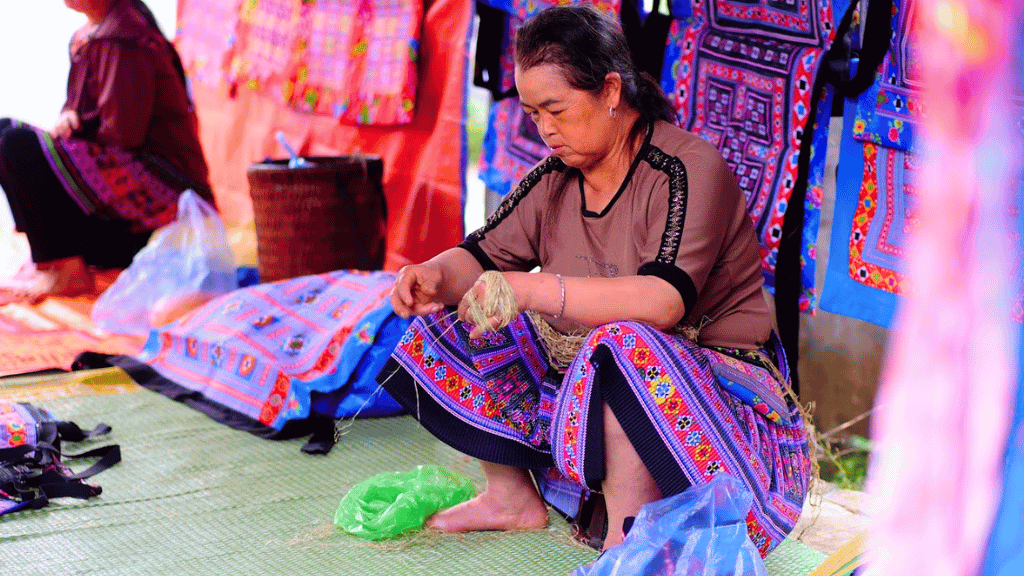
In Pa Co and neighbouring Hang Kia, traditional craftsmanship remains closely connected to family life, particularly among Hmong women. Hemp weaving is one of the most distinctive practices: the fibres are processed, spun into threads, woven into fabric and then dyed to produce the dark indigo colours associated with traditional Hmong clothing. Artisans also use embroidery and beeswax-resist techniques to decorate fabrics with geometric patterns. These skills require considerable patience, as several stages of production are carried out by hand.
Traditional craftsmanship is only one aspect of Hmong culture in the area. Local families also preserve distinctive customs through their houses, clothing and seasonal celebrations. During the Hmong New Year and the Gau Tao Festival, communities gather for traditional games, music and dancing, including khèn performances. These activities offer a closer look at how cultural practices remain part of community life rather than existing solely for visitors.
Misty valleys, limestone mountains and tea hills
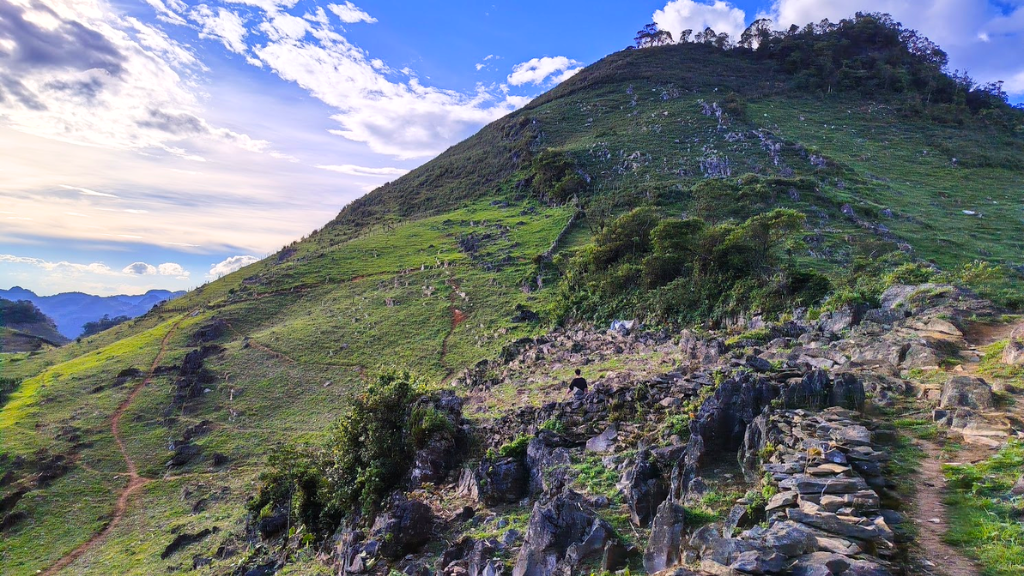
Unlike the lower rice-growing valley of Mai Chau, the Pa Co–Hang Kia plateau sits above 1,000 metres and has a noticeably cooler mountain climate. Mist often covers the hills in the early morning, while temperatures change considerably throughout the day. The landscape combines forested slopes, scattered settlements and cultivated hillsides, giving the area a rural character distinct from the busier tourist villages below.
Agriculture also shapes the scenery around the villages. Tea plantations occupy several hillsides, while plum and peach orchards are scattered around areas such as Thung A Lang, Thung Man and Thung Ang. In spring, plum and peach blossoms add colour to the mountain slopes, while the orchards later provide seasonal fruit for local households. These agricultural landscapes offer a glimpse into the livelihoods of residents beyond the weekly market.
A meeting place for local communities around Pa Co
Pa Co is closely connected to Hang Kia and Loong Luong, whose Hmong residents share cultural traditions and economic ties across the surrounding mountain area. The weekly market reflects these connections, drawing people from neighbouring settlements and parts of Moc Chau. For many families, the journey to Pa Co is part of their regular routine, with motorbikes and small vehicles carrying agricultural produce, household goods and livestock along the mountain roads.
The relationship between these settlements also explains why the market holds a wider role than a simple shopping destination. Residents exchange locally produced goods, purchase supplies that may be harder to find in smaller hamlets and maintain contact with people from other villages. For visitors, exploring this network of communities provides useful context for understanding the social and cultural importance of Pa Co Market within the highlands of Mai Chau.
What makes Pa Co Market special?
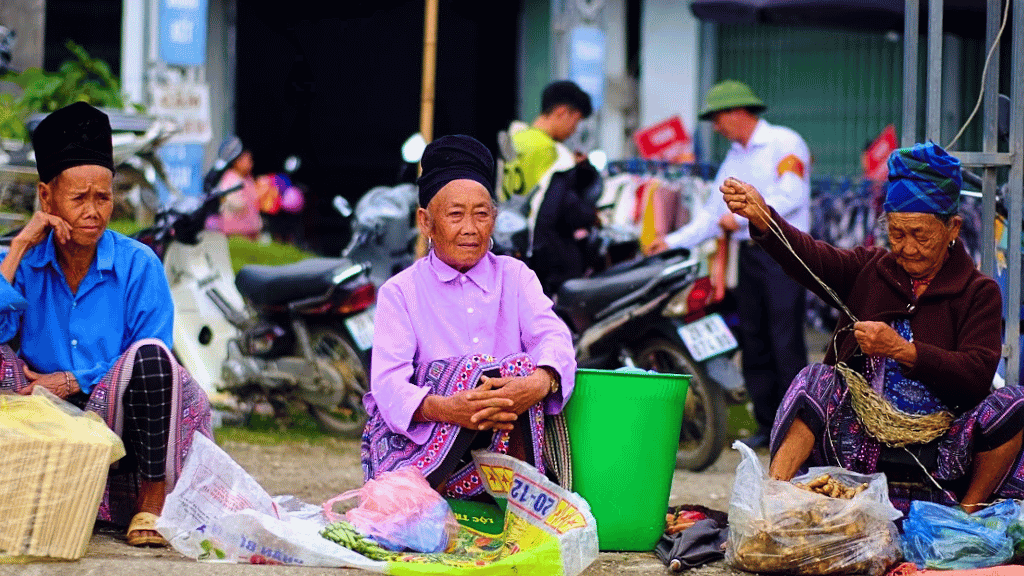
Unlike markets organised mainly for visitors, Pa Co Market remains a place where local communities gather for their weekly trade and social activities. Its appeal lies not only in the goods on sale but also in the everyday interactions, traditional customs and lively atmosphere that make it a distinctive ethnic market in Vietnam.
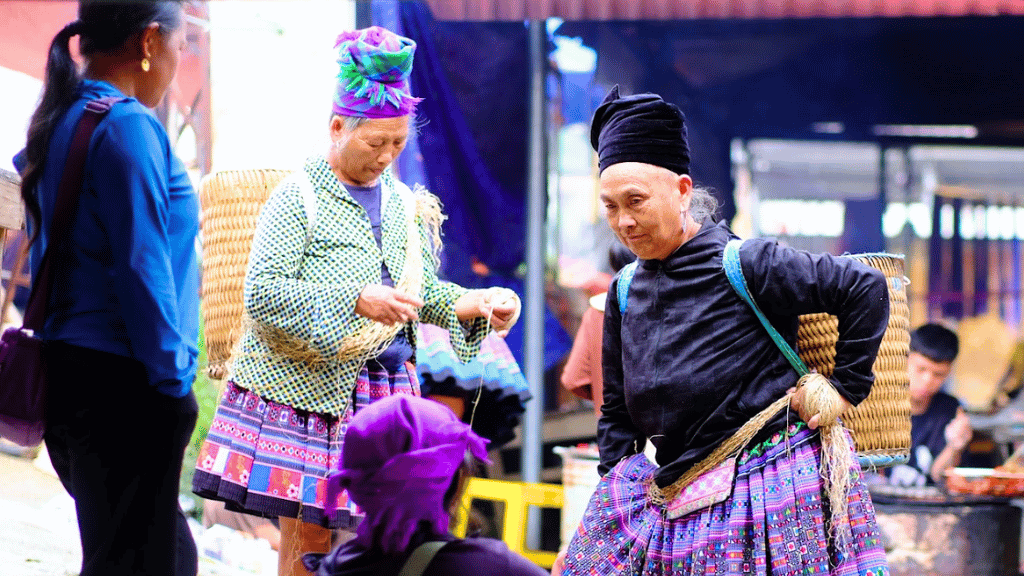
The market starts early in the morning, when residents from Pa Co, Hang Kia, Long Luong and neighbouring areas arrive with their agricultural produce, livestock and household goods. Some travel down from mountain villages carrying baskets on their backs, while others bring their products by motorbike. The market gradually fills with colourful traditional outfits, conversations between acquaintances and the sounds of vendors negotiating prices. For many Hmong families, this weekly gathering is an important part of community life.
Beyond buying and selling, visitors can observe several activities that reflect the everyday rhythm of the highlands:
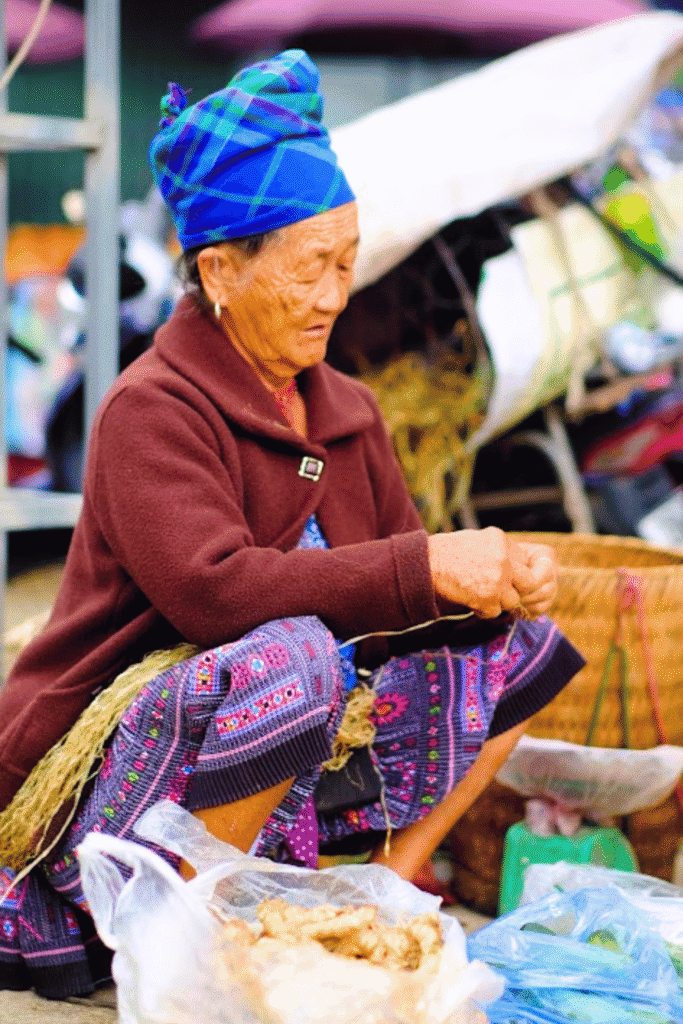
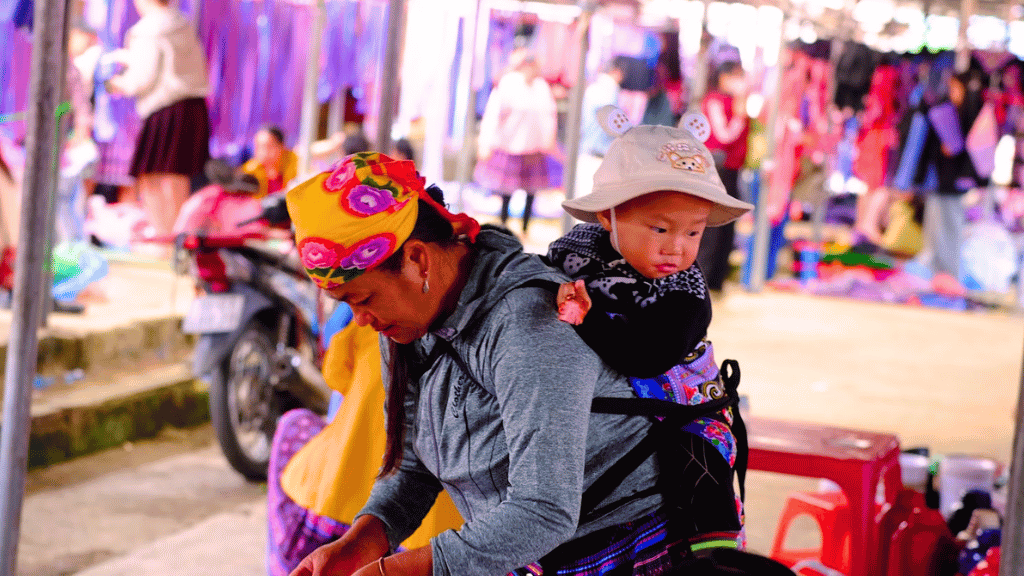
- Meeting friends and sharing local news: Residents use the weekly gathering to catch up with relatives and acquaintances from neighbouring villages. Some also stop to share a drink of corn wine before returning home.
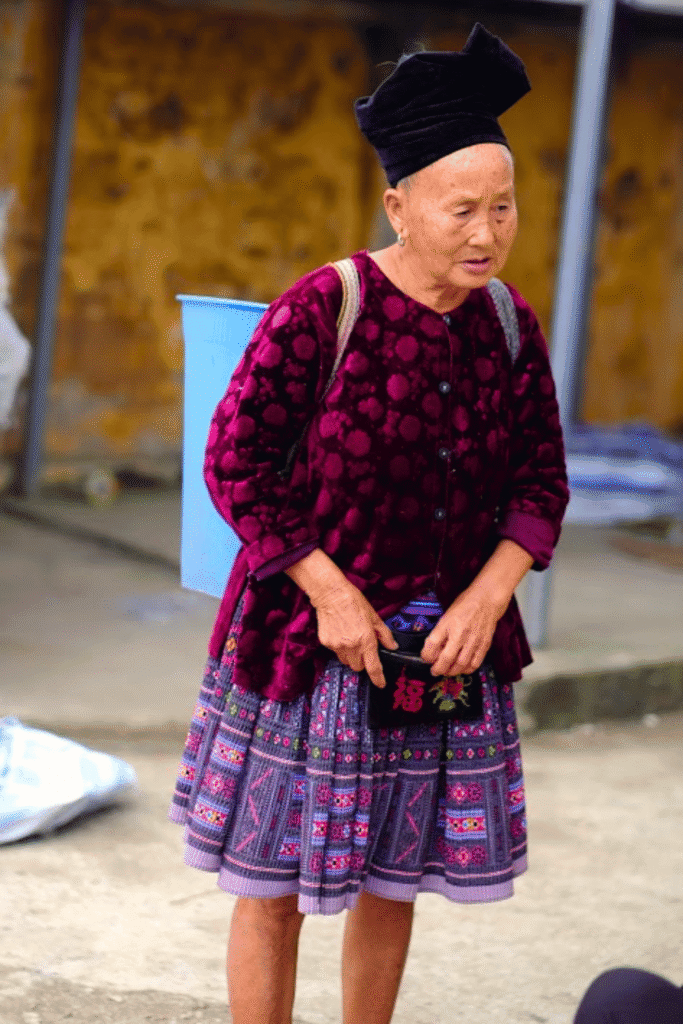
- Wearing traditional outfits: Many Hmong women attend the market in embroidered skirts, colourful headscarves and indigo-dyed jackets, creating a vivid display of traditional clothing.
- Bringing children to the market: Mothers often carry young children on their backs while shopping or selling goods, making the market part of ordinary family life.
- Trading livestock and agricultural goods: The market includes areas for poultry, pigs and other livestock, alongside vegetables, mountain herbs, farming tools and household supplies.
What distinguishes this Sunday market in Vietnam is the way commercial activities and social encounters take place side by side. Visitors are not simply looking at traditional products displayed for tourists; they are observing a working market that serves the needs of surrounding communities. Taking time to walk through the different stalls, watch local interactions and listen to the sounds of daily trading offers a more direct understanding of life in the northern highlands.
What to discover at Pa Co Market: local products and traditional handicrafts
The goods sold at Pa Co Market reflect both the agricultural activities and everyday needs of the Hmong communities in the surrounding mountains. From seasonal produce and livestock to embroidered fabrics and handmade objects, the stalls offer a varied selection that goes beyond typical tourist souvenirs.
Local products and everyday goods at Mai Chau market
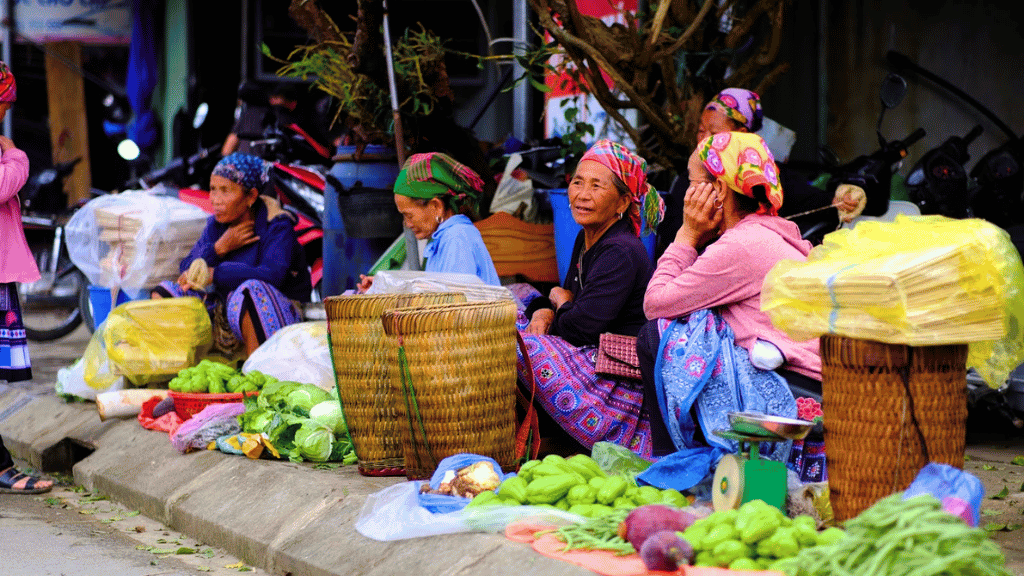
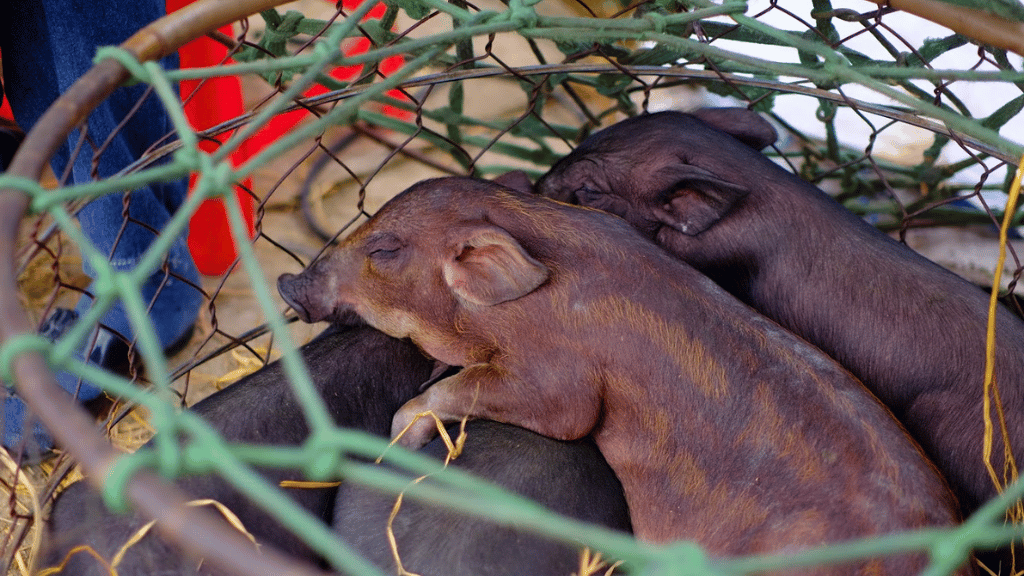
Agricultural produce occupies an important part of the market, with many vendors bringing goods grown or collected in the surrounding highlands. Depending on the season, visitors may find fresh vegetables, bamboo shoots, wild bananas, mountain herbs and locally raised poultry. Some stalls also sell pork, chickens and other livestock, reflecting the importance of small-scale farming in household economies.
Beyond food, the market stocks a range of practical items used in daily life. Visitors can browse:
- Farming equipment and tools: Items used for agricultural work and livestock care.
- Household goods: Kitchen utensils, flashlights and other everyday necessities.
- Sewing supplies: Threads, needles and accessories used to make or repair traditional garments.
- Small handicrafts: Woven baskets, bags, hats and other locally available objects.
The combination of agricultural goods, practical supplies and modern consumer products gives Mai Chau market a distinctly local character.
Traditional Hmong clothing and indigo-dyed hemp fabric
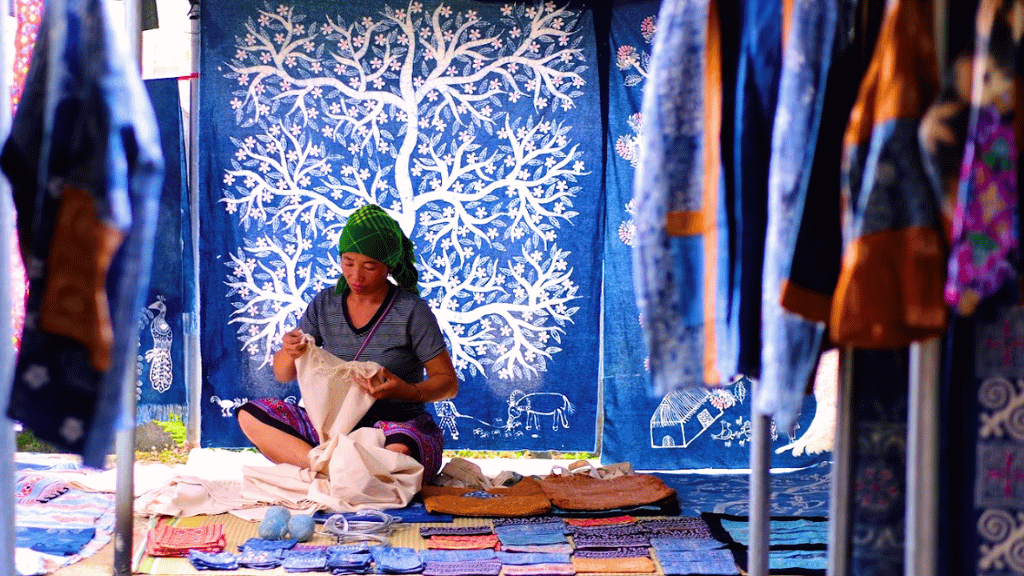
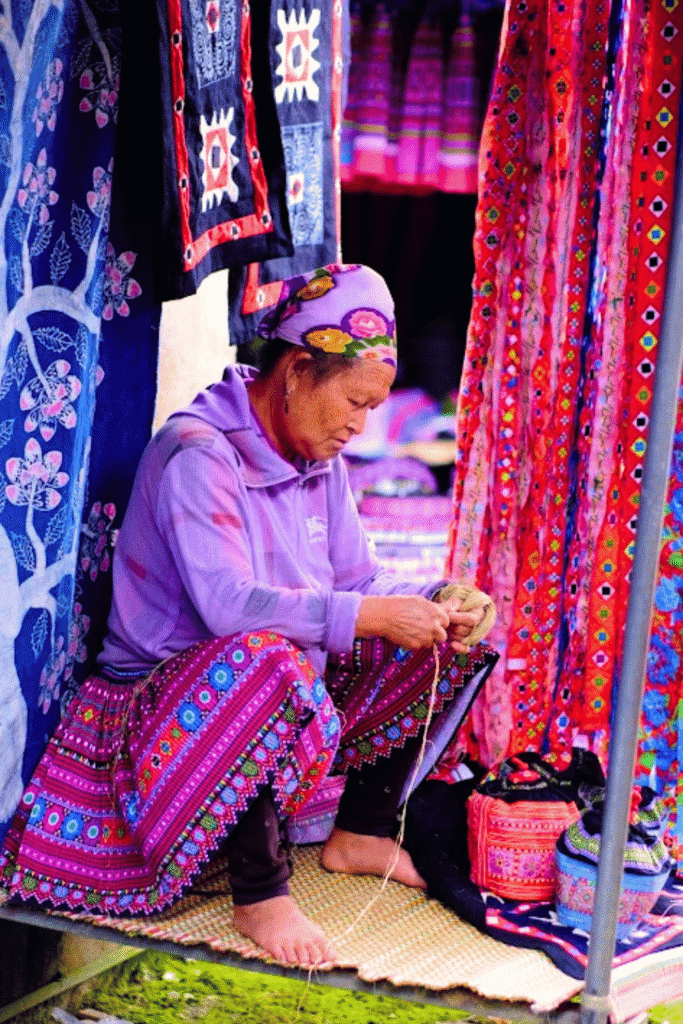
Textiles are among the most recognisable products at Pa Co Market. The Blue Hmong community is particularly known for its indigo-dyed hemp fabric, decorated with embroidery, appliqué and beeswax-resist batik patterns. Producing these materials involves several stages, including growing and processing hemp, spinning the fibres, weaving the threads and dyeing the finished fabric. Some women can still be seen spinning hemp fibres by hand while attending their stalls.
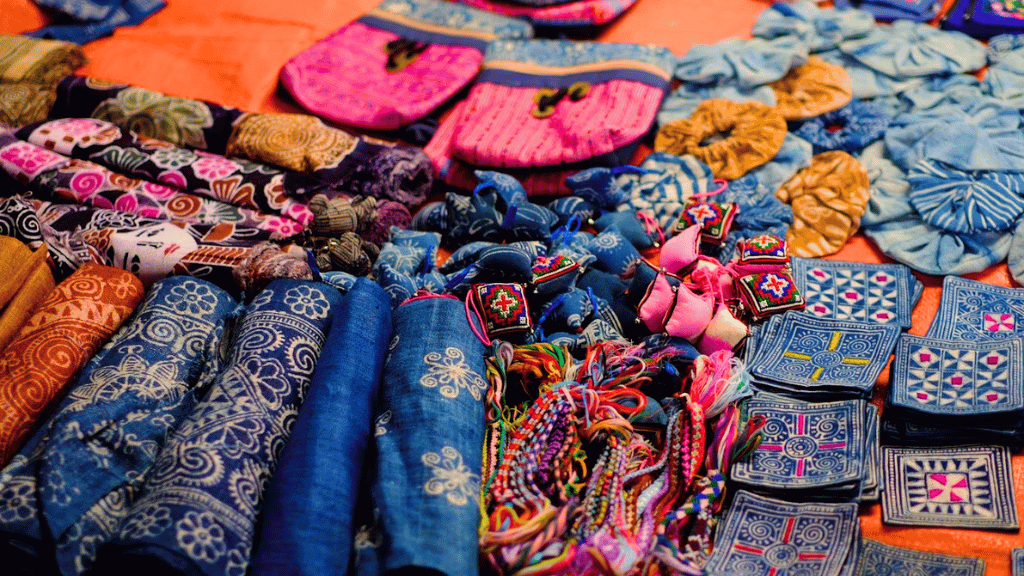
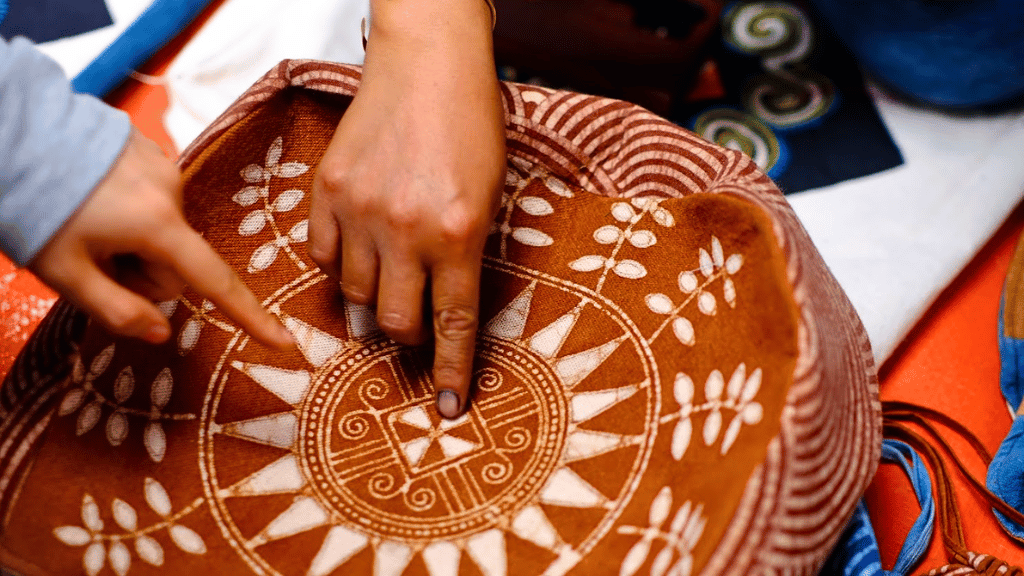
The textile stalls display a variety of items associated with traditional Hmong clothing, alongside materials for sewing and decoration. Visitors may come across:
- Indigo-dyed hemp fabric sold by the roll.
- Embroidered skirts, jackets and colourful traditional garments.
- Scarves, fabric bags, hats and smaller accessories.
- Embroidery threads and decorative sewing supplies.
Do paper: a traditional Vietnamese handicraft
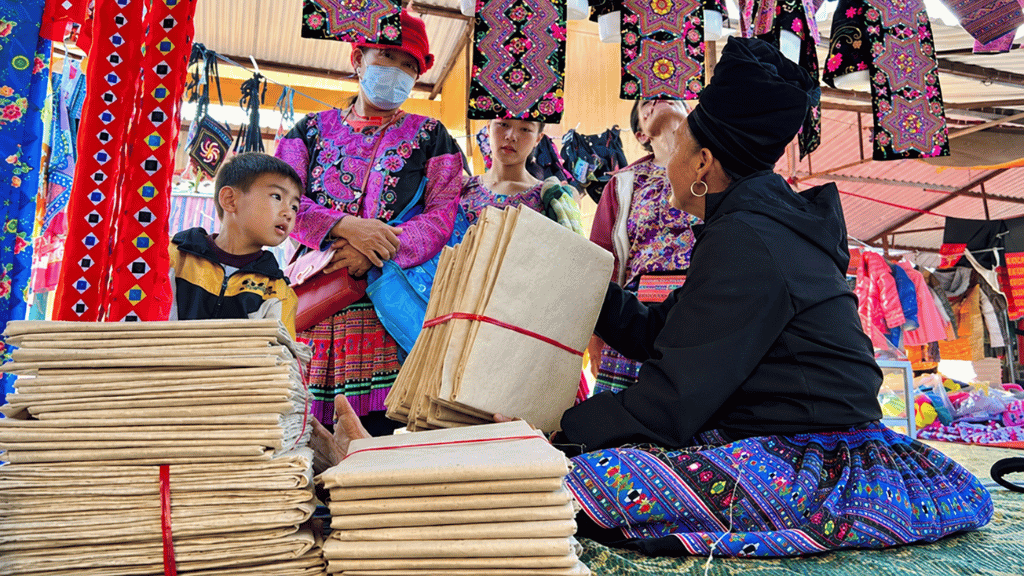
Alongside Hmong textiles, Do paper offers another perspective on the diversity of traditional handicrafts found in northern Vietnam. This handmade paper is traditionally produced from the bark of the Do tree, which is processed into fibres before being mixed with water to form a pulp. Craftspeople then spread the pulp into thin sheets and leave them to dry. The finished paper has a naturally fibrous texture, remains relatively lightweight and is known for its durability.
Although Do paper is not an exclusively Hmong craft, it is an interesting product to look for when exploring the market’s handmade goods. Its production reflects a wider Vietnamese paper-making tradition, distinct from the hemp weaving and beeswax batik associated with the local Hmong community. Availability may vary between market days, so visitors should not expect to find it at every stall.
What to see around Pa Co Market?
A visit to Pa Co Market can also be an opportunity to explore the surrounding highlands. Just beyond the market, tea-covered slopes, fruit orchards and Hmong villages offer a quieter perspective on life in this mountainous part of Mai Chau.
Tea hills and plum orchards
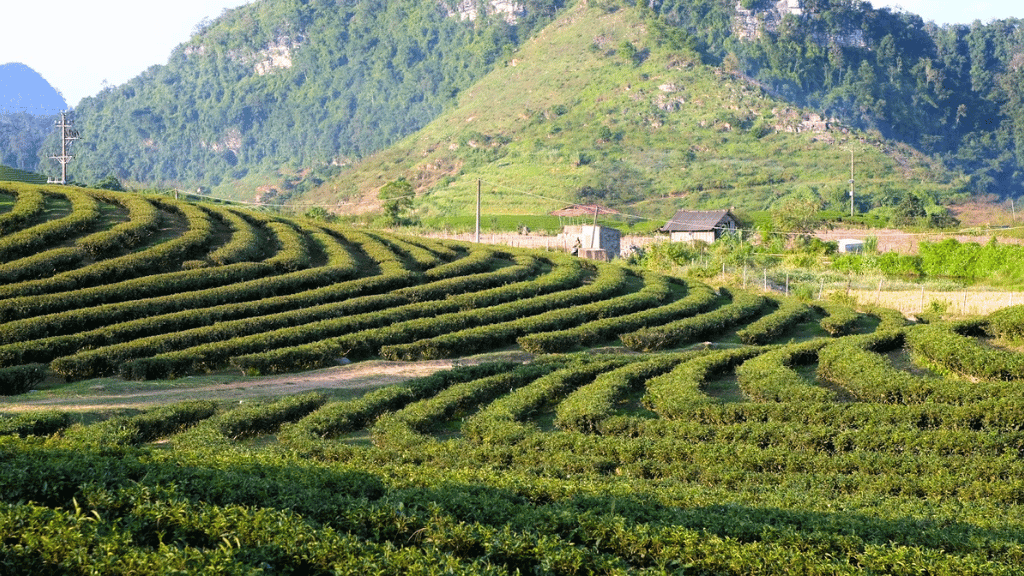
The roads around Pa Co wind past green tea hills and small plum orchards, creating a landscape that changes with the seasons. The orchards are especially attractive in spring, when plum and peach blossoms cover the hillsides with shades of white and pale pink.
Rather than treating the area as a large plantation destination, take time to observe the small farms along the village roads. Some tea gardens and orchards belong to local households, so visitors should ask permission before entering, picking fruit or taking photographs on private land.
Hang Kia villages and Hmong culture
A short journey from Pa Co leads to Hang Kia, a highland area where Hmong families maintain many of their traditional customs. The village landscape differs from the better-known Thai villages in the central Mai Chau valley: houses sit among hills and cultivated plots, while narrow roads connect scattered hamlets. Community-based tourism also gives visitors opportunities to learn about local daily life and traditional crafts, including hemp weaving, indigo dyeing and embroidery.
Visitors can arrange a homestay or a guided walk through the village to gain a closer understanding of Hmong culture. These encounters are best approached respectfully: ask before photographing residents or entering their homes, and consider booking activities directly with local hosts.
The sea of clouds in Hang Kia and Pa Co
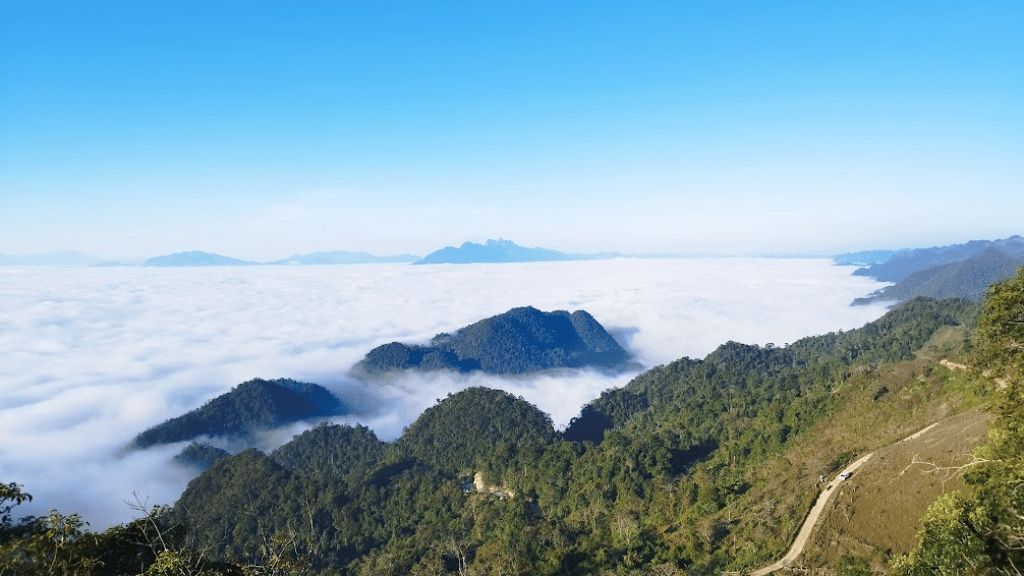
Hang Kia and Pa Co are also known for their high-altitude viewpoints, where clouds gather above the valleys and surrounding limestone mountains. The cloud-hunting season generally runs from October to April, with early morning offering the best chance of seeing a sea of white mist spread across the landscape. As the sun rises, the changing light reveals mountain ridges and village rooftops emerging through the clouds.
Several viewpoints are worth considering:
- Hang Kia viewpoint: a popular place to watch the sunrise above the clouds.
- Cong Troi: a mountain viewpoint overlooking the surrounding valleys.
- Pa Khom: another location known for its early-morning cloud formations.
Cloud cover depends on temperature, humidity and weather conditions, so the spectacle is never guaranteed. Staying overnight in the area makes an early departure easier and gives you more time to enjoy the scenery before the mist begins to clear.
Practical information for visiting Pa Co Market
When travelling in Vietnam, a little preparation will help you make the most of your visit to Pa Co Market. Plan around its Sunday opening, set off early and choose transport suited to the winding mountain roads.
When is Pa Co Sunday Market held?
Pa Co Market takes place every Sunday morning, when Hmong residents from Pa Co, Hang Kia, Long Luong and nearby villages gather to trade and meet. The market is usually busiest in the early hours, so aim to arrive between 7 and 9 a.m. By late morning, vendors gradually begin packing up and the atmosphere becomes quieter. There is no admission fee, making this Sunday market in Vietnam an easy stop to include in a trip through the northern highlands.
How to get to Pa Co Market from Mai Chau?
Pa Co lies roughly 25–30 km from the Ban Lac area, where many visitors stay in Mai Chau. The journey takes around 45 minutes to an hour by road, depending on traffic and weather. From Mai Chau, follow Highway 6 towards Moc Chau before turning towards the highland villages. The route passes through mountain scenery, but includes narrow, winding sections that can be foggy in the early morning.
You have several options for reaching the market:
- Private car with driver: A comfortable choice for families or groups, especially if you plan to visit Hang Kia afterwards. Arrange the vehicle in advance, as the market starts early.
- Motorbike: Suitable for experienced riders who are confident on steep, winding roads. Avoid this option if you are unfamiliar with mountain driving or if the weather is poor.
- Local guide or motorbike tour: A practical alternative for travellers who prefer not to navigate the route themselves and would like to learn more about the area.
What should you prepare for your visit?
Although Pa Co is a lively local market, it remains a place where residents come to shop and socialise rather than a tourist attraction designed around visitors. A few simple preparations will make the experience more comfortable and help you respect local customs.
- Bring cash: Small stalls may not accept cards, so carry Vietnamese dong in smaller denominations for food and purchases.
- Wear comfortable shoes and warm layers: The highland mornings can be chilly, particularly when mist settles over the roads and market.
- Arrive early: An early start gives you time to explore the stalls before traders begin leaving around midday.
- Ask before taking photographs: Some visitors may be happy to pose, but it is polite to seek permission before photographing people, especially children.
FAQ about Pa Co Market
1. What day is Pa Co Market held?
Pa Co Market is held every Sunday morning. For the liveliest atmosphere and the widest choice of goods, plan to arrive early, ideally between 7 and 9 a.m
2. What can you buy at Pa Co Market?
The stalls sell seasonal vegetables, fruit, livestock, household essentials and farming tools. Visitors can also find embroidered garments, indigo-dyed fabrics, sewing materials and other traditional handicrafts. The selection varies according to the season and the vendors attending that week
3. Can visitors discover traditional Hmong handicrafts at the market?
Yes. Textile stalls offer embroidered fabrics, clothing and accessories, while some Hmong women can be seen spinning hemp fibres during the market
4. How much money should you bring when visiting Pa Co Market?
Bringing around VND 200,000–500,000 (USD 8–20) per person is generally sufficient for buying local snacks, fresh produce and traditional handicrafts. If you plan to purchase handmade textiles, indigo-dyed fabrics or embroidered clothing, consider bringing extra cash. Most small vendors prefer cash payments, so it is best to prepare some Vietnamese dong in advance
Pa Co Market offers more than a chance to browse local produce and handmade textiles. Its Sunday gatherings provide a glimpse into Hmong culture, while the surrounding tea hills, mountain villages and cloud-covered valleys reveal the quieter side of northern Vietnam. Whether you are interested in traditional crafts or local ways of life, this highland market is a rewarding stop during a journey through Mai Chau.
Would you like to explore Pa Co and the neighbouring mountain villages? Plan your northern Vietnam journey with an itinerary tailored to your interests and travel pace.



 Google
 Facebook
 Tripadvisor
 Trustindex


